fbpx All | Page 102 | Science in the net

All

What Darwin Didn't Know

BBC
Scheda
Titolo originale: 
What Darwin Didn't Know (BBC)
Soggetto: 
Armand Marie Leroi talk about renaissance of Darwin's theory
Data: 
17 January, 2012

The theory of evolution by natural selection is now scientific orthodoxy, but when it was unveiled it caused a storm of controversy, from fellow scientists as well as religious people. They criticised it for being short on evidence and long on assertion and Darwin, being the honest scientist that he was, agreed with them. He knew that his theory was riddled with 'difficulties', but he entrusted future generations to complete his work and prove the essential truth of his vision, which is what scientists have been doing for the past 150 years.

Correlazione degli articoli
Informazioni per gli editor
stato: 
pronto
English
Read time: 1 min
Autori: 

Car Battery Recycling

Science Channel
Scheda
Titolo originale: 
Car Battery Recycling | How It's Made Minisodes
Soggetto: 
Find out how car batteries are stripped down and recycled to make new ones
Data: 
16 January, 2012

Find out how car batteries are stripped down and recycled to make new ones.

Informazioni per gli editor
stato: 
pronto
English
Read time: 1 min
Autori: 
Sezioni: 

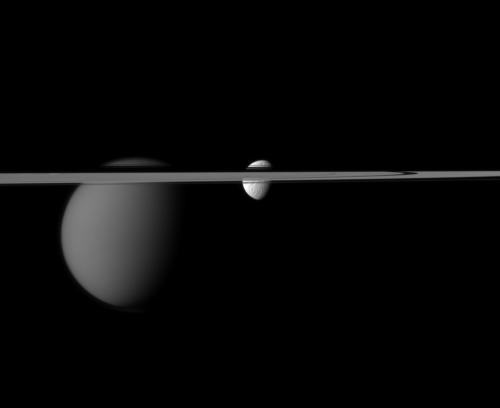
Welcome disruption

NASA/JPL-Caltech/Space Science Institute
Scheda
Miniatura: 
Welcome Disruption
Titolo originale: 
Welcome Disruption
Data: 
9 January, 2012

The line of Saturn's rings disrupts the Cassini spacecraft's view of the moons Tethys and Titan.

Cassini Solstice MissionLarger Titan (3,200 miles, or 5,150 kilometers across) is on the left. Tethys (660 miles, or 1,062 kilometers across) is near the center of the image. This view looks toward the Saturn-facing sides of Tethys and Titan. The angle also shows the northern, sunlit side of the rings from less than one degree above the ring plane.

Informazioni per gli editor
stato: 
pronto
English
Read time: 1 min
Autori: 
Sezioni: 

Peter Higgs

The Science Museum
Scheda
Titolo originale: 
Peter Higgs interview
Soggetto: 
Prof Peter Higgs interview by The Science Museum
Data: 
14 January, 2012

Interview to Peter Higgs, the man the boson was named after, answering questions like if he was confident that CERN would find the Higgs soon.

Informazioni per gli editor
stato: 
pronto
English
Read time: 1 min
Autori: 
Dossier: 
Indice: 

Darwin’s Finches

Carl Zimmer
Scheda
Miniatura: 
Titolo originale: 
Darwin’s Finches
Data: 
13 January, 2012

A graduate student in developmental biology at Tulane University decided to celebrate Darwin’s 200th birthday in 2009 with a tattoo of Darwin’s finches

Darwin’s finchesDarwin’s Finches Duygu Ozpolat, a graduate student in developmental biology at Tulane University, decided to celebrate Darwin’s 200th birthday in 2009 with a tattoo of Darwin’s finches. Darwin included engravings of his finches in his first book, “The Voyage of the Beagle.”


Credit: “Science Ink” by Carl Zimmer/Sterling Publishing

Informazioni per gli editor
stato: 
pronto
English
Read time: 1 min
Autori: 
Sezioni: 

Chromium Trioxide

Periodic Table of Videos
Scheda
Titolo originale: 
Chromium Trioxide (FAIL) - Periodic Table of Videos
Soggetto: 
A tremendous reaction with Chromium Trioxide
Data: 
13 January, 2012

The Professor Martyn Poliakoff shows a tremendous reaction but forgets to switch off the department smoke alarm.

Informazioni per gli editor
stato: 
pronto
English
Read time: 1 min
Autori: 

How it's made a magnet

Science Channel
Scheda
Titolo originale: 
Magnets | How It's Made Minisodes
Soggetto: 
Find out how magnets are created from molten copper, cobalt, sulfur, and more
Data: 
12 January, 2012

Find out how magnets are created from molten copper, cobalt, sulfur, and more.

Informazioni per gli editor
stato: 
pronto
English
Read time: 1 min
Autori: 

One Plastic Beach

Art and recycling
Scheda
Titolo originale: 
One Plastic Beach
Soggetto: 
Richard Lang and Judith Selby Lang have been collecting plastic for 10 years
Data: 
11 January, 2012

Richard Lang and Judith Selby Lang have been collecting plastic debris off one beach in Northern California for over ten years. Each piece of plastic Richard and Judith pick up comes back to their house, where it gets cleaned, categorized and stored before being used for their art. The couple make sculptures, prints, jewelry and installations with the plastic they find washed up, raising a deeper concern with the problem of plastic pollution in our seas. 

Informazioni per gli editor
stato: 
pronto
English
Read time: 1 min
Autori: