Just as happened in Italy after the VQR report has released, a counter-assessment was also given to the Jiao Tong University ranking, concerning the best universities in a global scenario, published on august 2013. "That ranking does not reflect our academic system" were the words of Genvieve Fioraso, French Minister of Higher Education and research. It seems that Fioraso did not intend to contest the French universities rank - which, indeed, earn position with respect to the latest rankings - but rather the criteria used to analize an academic system different than countries for what concer internal organization. The Shanghai ranking is based on four criteria: quality of teaching (ie how many faculty of a university have received a Nobel Prize or Fields Medal); quality of the academic staff (based on the rankings highly cited) scientific production (impact factor ), productivity (the first three criteria in relation to the total number of teachers). Doubts about the reliability of the Shanghai's ranking became more strong when compared with other three major rankings concerning the quality of universities around the world. Those are in disagreement, for example, even for the top positions.
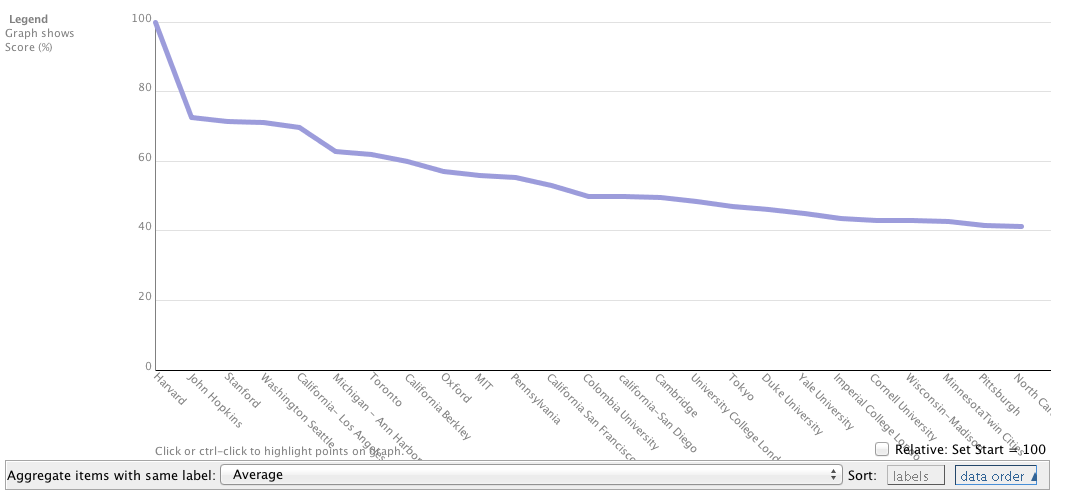
(click on the image above to open the graph)
Consulting the data, the most obvious differences are about the percentage of presence of individual countries in the rankings, the top positions (MIT QS, Harvard for the other three, as well as Johns Hopkins is ranked second only to the Taiwan Ranking). According to observers, those scenarios are so different beacause of the approaches to assessment variables based on different parameters used for individual methods. The Asian rankings, for example, are guilty of favoring studies in English and those with impact factor related to a small group of scientific journals.