



fbpx Clima, eventi estremi e media | Scienza in rete

Clima, eventi estremi e media

--
Tempo di lettura: 1 min

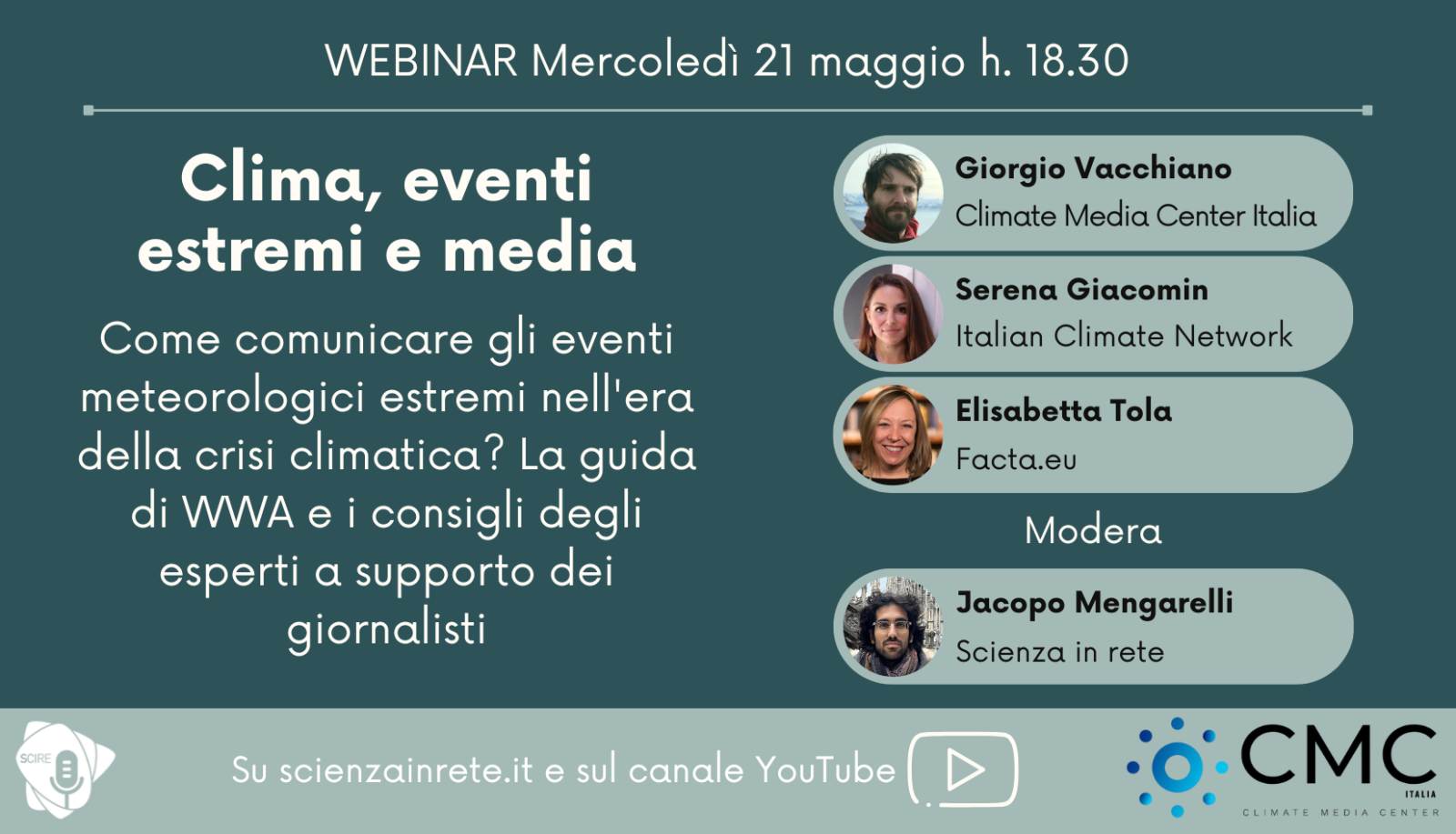
Mercoledì 21 maggio alle 18.30 webinar di Climate Media Center Italia e Scienza in rete su Clima, eventi estremi e media. Come comunicare gli eventi meteorologici estremi nell’era della crisi climatica? La guida redatta dagli esperti di World Weather Attribution (WWA), tradotta in italiano da Climate Media Center Italia (CMC Italia), dà una serie di consigli ai giornalisti. Ne discutono Giorgio Vacchiano (presidente CMC Italia, docente ecologia forestale Unimi), Serena Giacomin (direttrice scientifica Italian Climate Network), Elisabetta Tola (presidente Facta.eu, caporedattrice Il Bo Live e voce Radio3Scienza), moderati da Jacopo Mengarelli (Scienza in rete). Il webinar, gratuito, si può seguire sul sito e sul canale YouTube di Scienza in rete, con la possibilità di porre domande e partecipare con osservazioni e commenti.


Scienza in rete è un giornale senza pubblicità e aperto a tutti per garantire l’indipendenza dell’informazione e il diritto universale alla cittadinanza scientifica. Contribuisci a dar voce alla ricerca sostenendo Scienza in rete. In questo modo, potrai entrare a far parte della nostra comunità e condividere il nostro percorso. Clicca sul pulsante e scegli liberamente quanto donare! Anche una piccola somma è importante. Se vuoi fare una donazione ricorrente, ci consenti di programmare meglio il nostro lavoro e resti comunque libero di interromperla quando credi.


prossimo articolo

The Log and the Speck: The True Causes of Wildfires and Floods

The Parable of the Speck and the Log. Ottmar Ellinger the Younger

The wildfires in Los Angeles and other extreme events, as well as their media coverage, highlight how immediate causes often overshadow the real issue: climate change, which increases the intensity and frequency of catastrophic phenomena. Tackling this crisis requires urgent action to reduce greenhouse gas emissions using already available technologies and investments to strengthen territorial resilience. Only a combination of mitigation and adaptation can prevent irreversible damage, ensuring a sustainable future for the next generations.

In the image: The Parable of the Speck and the Log. Ottmar Ellinger the Younger

Even in the face of the vast Los Angeles wildfires—still ongoing—as in other recent circumstances, the media's attention is primarily focused on the most immediate and “proximal” causes: the malfunctioning of the power grid, insufficient water reserves, the unpreparedness of newly hired firefighters, and so on.