
fbpx Challenging the crisis: ths IZSV’s example | Page 8 | Science in the net

Challenging the crisis: ths IZSV’s example

Read time: 1 min

The Istituto Zooprofilattico Sperimentale delle Venezie (IZSV) not only managed to balance the books but was also able to get a final budget for 2012, approved at the end of May, with a gain of more than two milions of euro. Such a result is no small thing, considering the difficult period that the public administration is dealing with. Two millions of euro represents almost 5 per cent of the whole production, with a profit similar to that of an industry.

This gain comes as a consequence of an increase in the activities (9%) and, most of all, of strict cost avoidance, with particular attention to the expenses due to personnel, non-healthcare goods and external collaborations. All these successes were the result of the industriousness of the whole staff and of a careful planning based on concrete criteria, following a course pursued by all the managing authorities within the IZSV.
Autori: 

prossimo articolo

Discovered a New Carbon-Carbon Chemical Bond

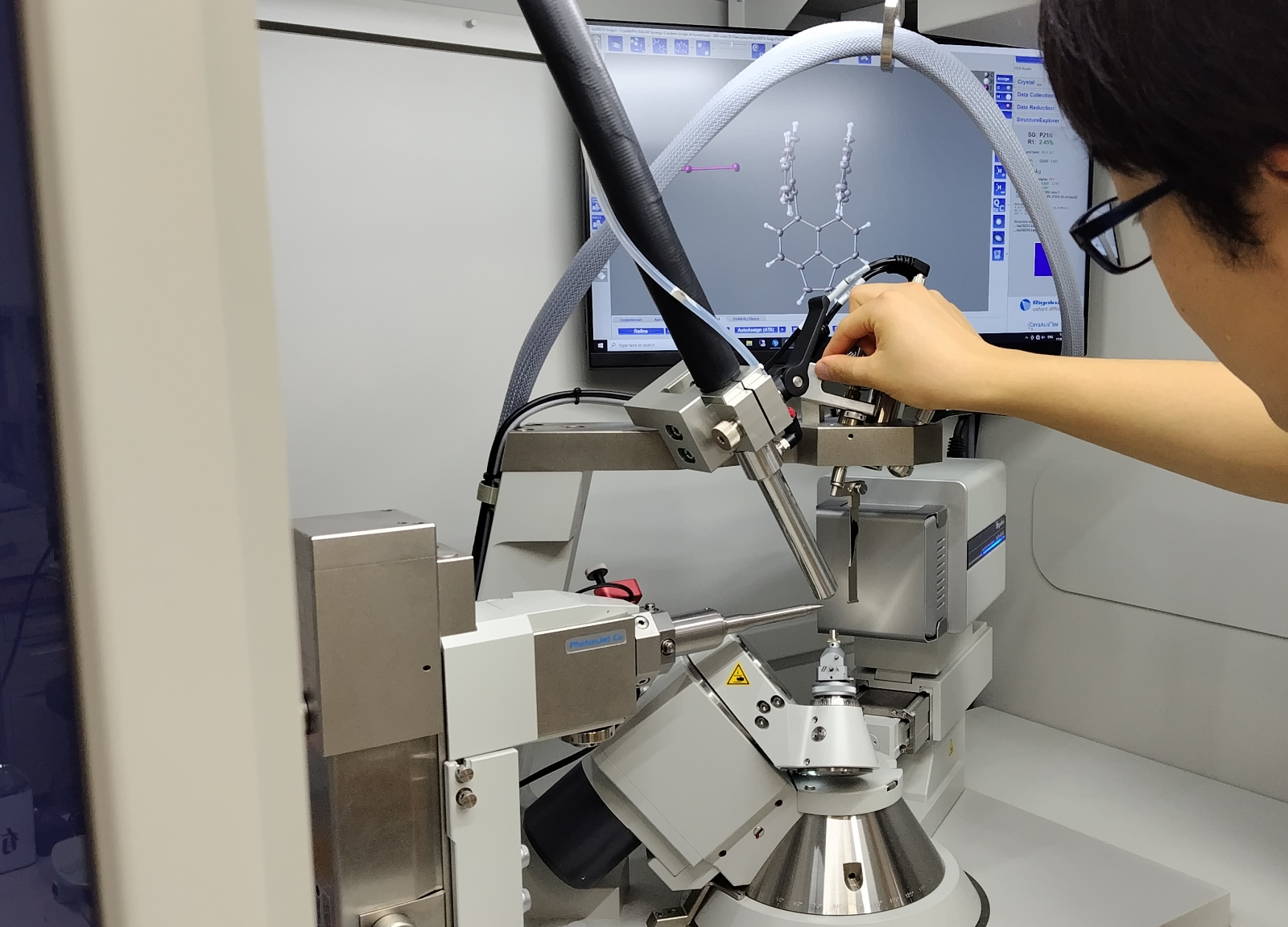
A group of researchers from Hokkaido University has provided the first experimental evidence of the existence of a new type of chemical bond: the single-electron covalent bond, theorized by Linus Pauling in 1931 but never verified until now. Using derivatives of hexaarylethane (HPE), the scientists were able to stabilize this unusual bond between two carbon atoms and study it with spectroscopic techniques and X-ray diffraction. This discovery opens new perspectives in understanding bond chemistry and could lead to the development of new materials with innovative applications.

In the cover image: study of the sigma bond with X-ray diffraction. Credits: Yusuke Ishigaki

After nearly a year of review, on September 25, a study was published in Nature that has sparked a lot of discussion, especially among chemists. A group of researchers from Hokkaido University synthesized a molecule that experimentally demonstrated the existence of a new type of chemical bond, something that does not happen very often.