
fbpx Challenging the crisis: ths IZSV’s example | Page 9 | Science in the net

Challenging the crisis: ths IZSV’s example

Read time: 1 min

The Istituto Zooprofilattico Sperimentale delle Venezie (IZSV) not only managed to balance the books but was also able to get a final budget for 2012, approved at the end of May, with a gain of more than two milions of euro. Such a result is no small thing, considering the difficult period that the public administration is dealing with. Two millions of euro represents almost 5 per cent of the whole production, with a profit similar to that of an industry.

This gain comes as a consequence of an increase in the activities (9%) and, most of all, of strict cost avoidance, with particular attention to the expenses due to personnel, non-healthcare goods and external collaborations. All these successes were the result of the industriousness of the whole staff and of a careful planning based on concrete criteria, following a course pursued by all the managing authorities within the IZSV.
Autori: 

prossimo articolo

Why have neural networks won the Nobel Prizes in Physics and Chemistry?

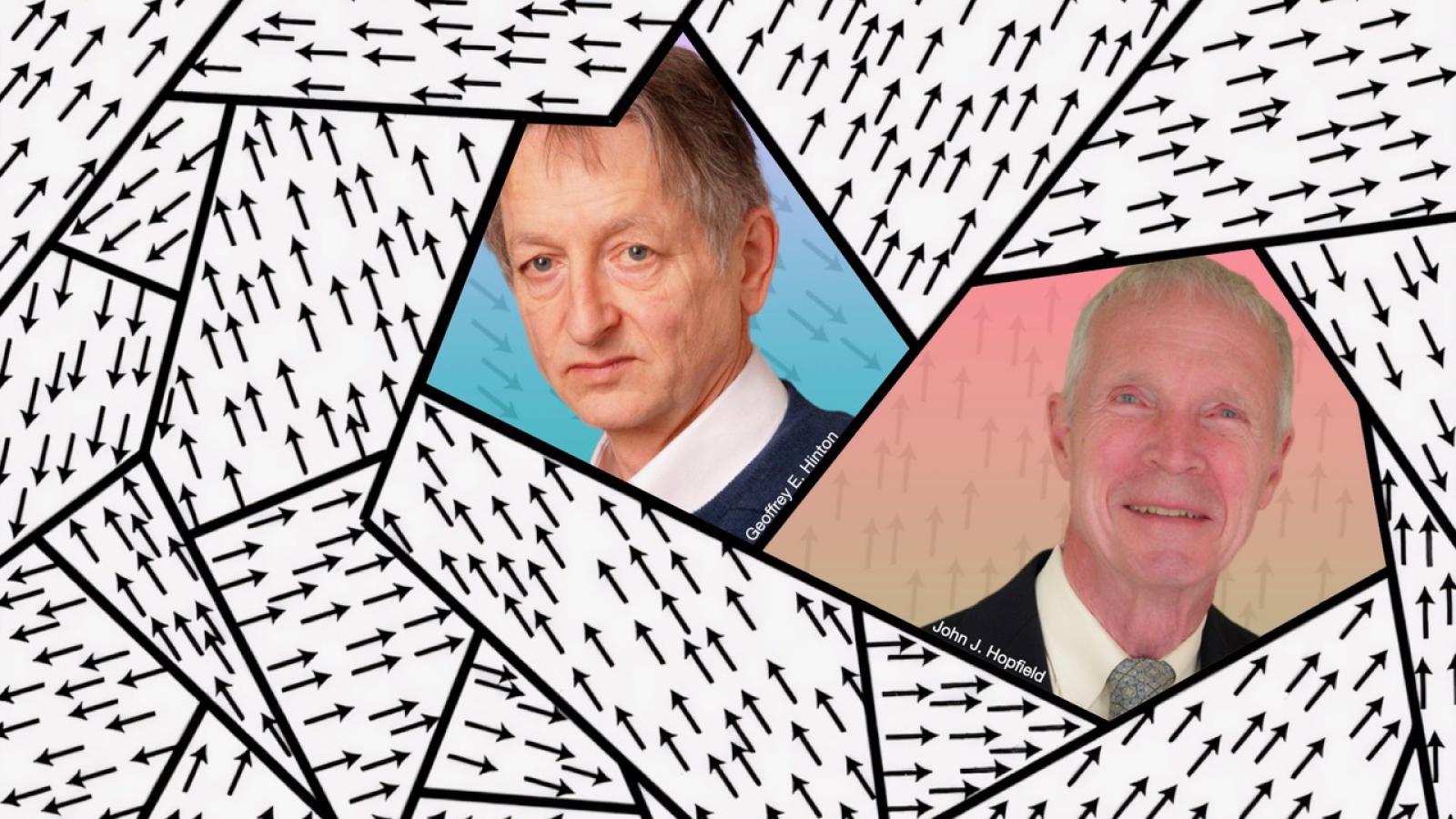
This year, Artificial Intelligence played a leading role in the Nobel Prizes for Physics and Chemistry. More specifically, it would be better to say machine learning and neural networks, thanks to whose development we now have systems ranging from image recognition to generative AI like Chat-GPT. In this article, Chiara Sabelli tells the story of the research that led physicist and biologist John J. Hopfield and computer scientist and neuroscientist Geoffrey Hinton to lay the foundations of current machine learning.

Image modified from the article "Biohybrid and Bioinspired Magnetic Microswimmers" https://onlinelibrary.wiley.com/doi/epdf/10.1002/smll.201704374

The 2024 Nobel Prize in Physics was awarded to John J. Hopfield, an American physicist and biologist from Princeton University, and to Geoffrey Hinton, a British computer scientist and neuroscientist from the University of Toronto, for utilizing tools from statistical physics in the development of methods underlying today's powerful machine learning technologies.