
fbpx How flu is spread | Page 8 | Science in the net

How flu is spread

Read time: 1 min

Avoiding close contacts with infected people could not be enough as a defense against flu. This is the conclusion of a recent study by scientists at the Wake Forest School of Medicine, published on the Journal of Infectious Diseases. The swab specimens of 94 subjects, admitted to the hospital with influenza-like illness, have been analyzed and their medical history recorded, revealing that 61 of them were actually positive for flu. Researchers then collected air samples from each patient, looking for infectious particles. This allowed to discover that 26 of them released virus particles into the air, with 5 being highly infectious, emitting up to 32 times more virus than others. Patients who reported severe illness and major interference with daily life also emitted more influenza virus.
These results thus seem to question the conventional wisdom that flu is mainly spread through close contact with others and by touching contaminated surfaces.

http://jid.oxfordjournals.org/content/early/2013/01/29/infdis.jis773.abstract
Autori: 
Sezioni: 
Dossier: 
Indice: 
Influenza

prossimo articolo

Discovered a New Carbon-Carbon Chemical Bond

A group of researchers from Hokkaido University has provided the first experimental evidence of the existence of a new type of chemical bond: the single-electron covalent bond, theorized by Linus Pauling in 1931 but never verified until now. Using derivatives of hexaarylethane (HPE), the scientists were able to stabilize this unusual bond between two carbon atoms and study it with spectroscopic techniques and X-ray diffraction. This discovery opens new perspectives in understanding bond chemistry and could lead to the development of new materials with innovative applications.

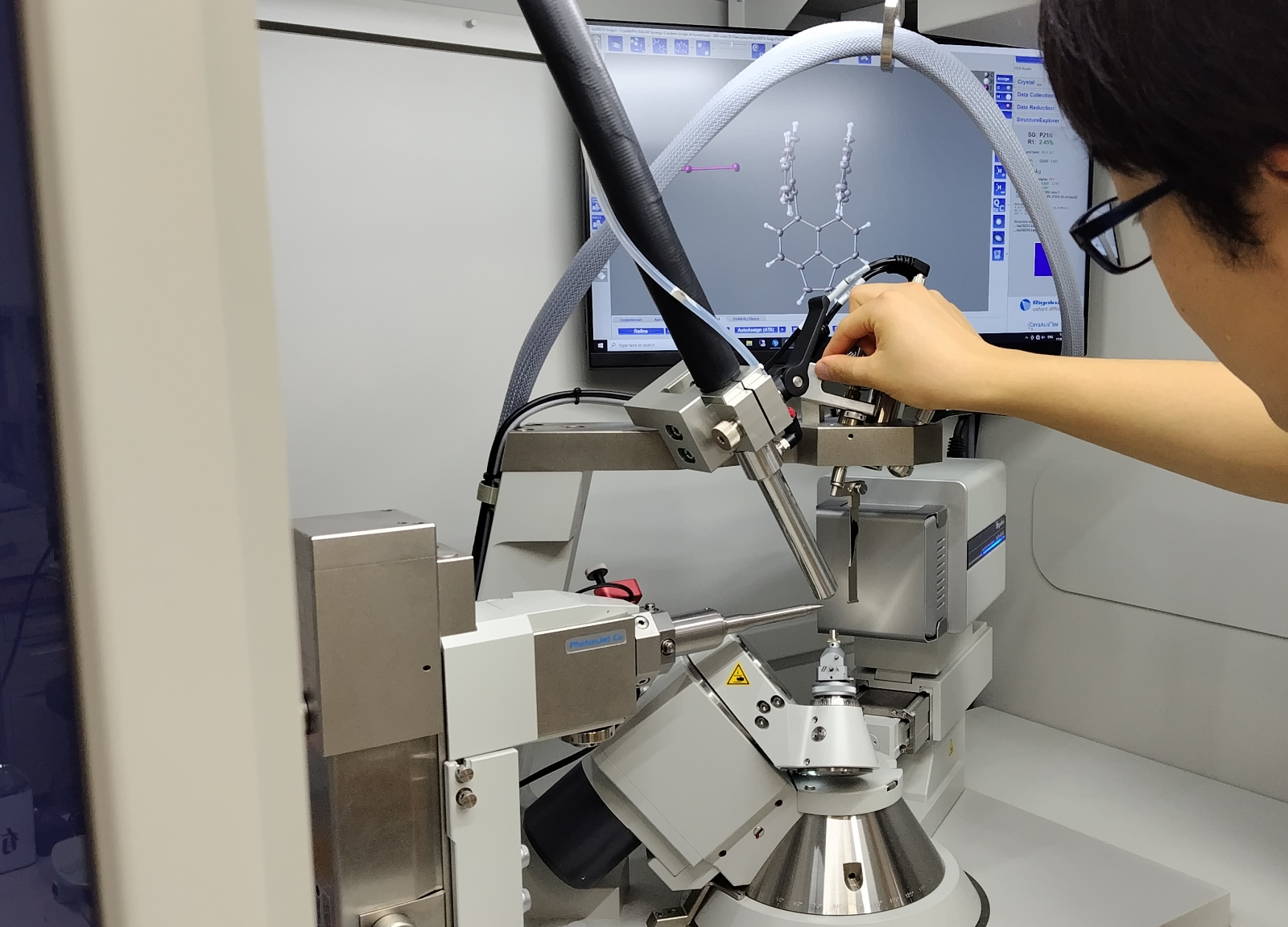
In the cover image: study of the sigma bond with X-ray diffraction. Credits: Yusuke Ishigaki

After nearly a year of review, on September 25, a study was published in Nature that has sparked a lot of discussion, especially among chemists. A group of researchers from Hokkaido University synthesized a molecule that experimentally demonstrated the existence of a new type of chemical bond, something that does not happen very often.