
fbpx How flu is spread | Page 9 | Science in the net

How flu is spread

Read time: 1 min

Avoiding close contacts with infected people could not be enough as a defense against flu. This is the conclusion of a recent study by scientists at the Wake Forest School of Medicine, published on the Journal of Infectious Diseases. The swab specimens of 94 subjects, admitted to the hospital with influenza-like illness, have been analyzed and their medical history recorded, revealing that 61 of them were actually positive for flu. Researchers then collected air samples from each patient, looking for infectious particles. This allowed to discover that 26 of them released virus particles into the air, with 5 being highly infectious, emitting up to 32 times more virus than others. Patients who reported severe illness and major interference with daily life also emitted more influenza virus.
These results thus seem to question the conventional wisdom that flu is mainly spread through close contact with others and by touching contaminated surfaces.

http://jid.oxfordjournals.org/content/early/2013/01/29/infdis.jis773.abstract
Autori: 
Sezioni: 
Dossier: 
Indice: 
Influenza

prossimo articolo

Why have neural networks won the Nobel Prizes in Physics and Chemistry?

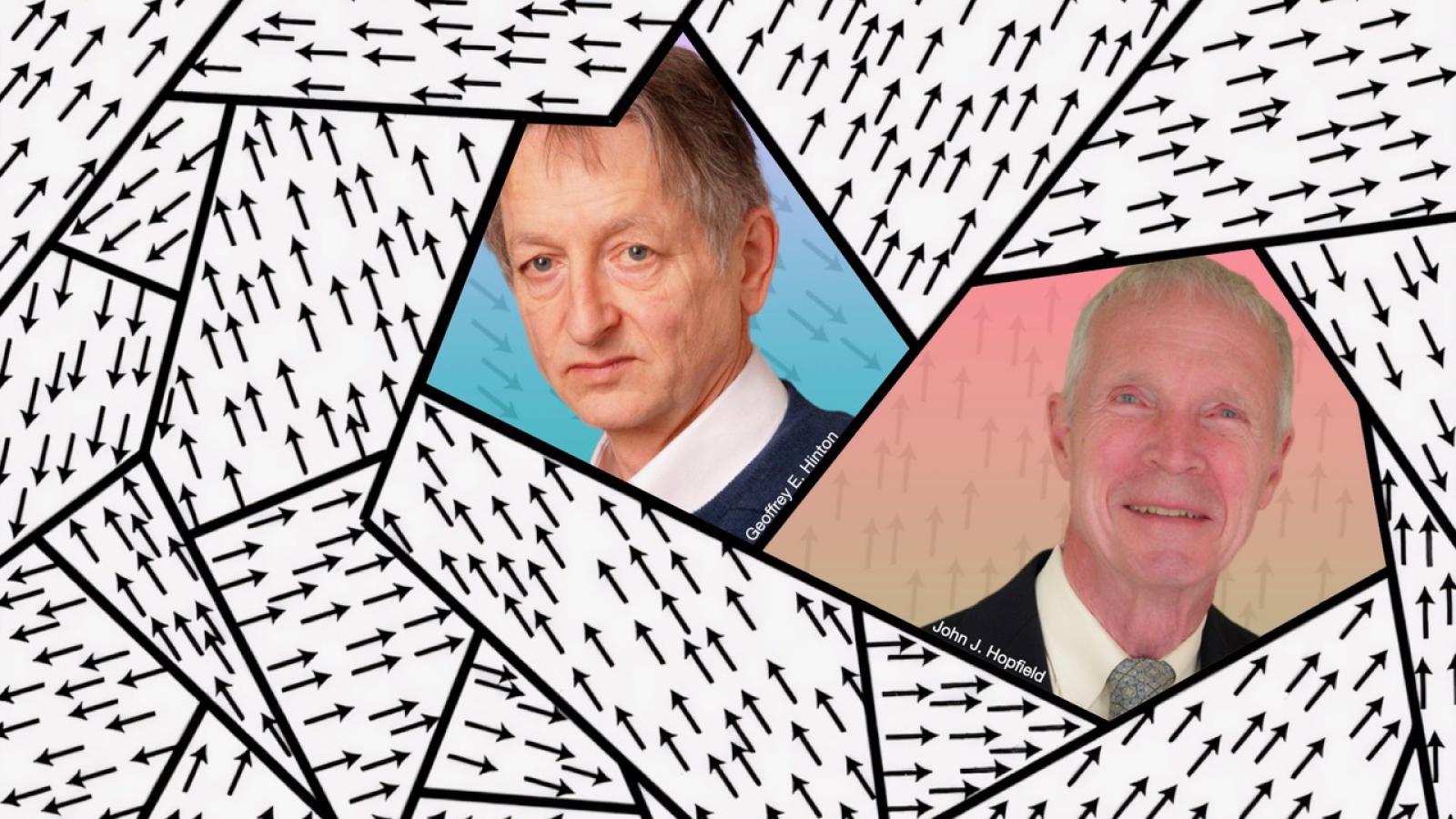
This year, Artificial Intelligence played a leading role in the Nobel Prizes for Physics and Chemistry. More specifically, it would be better to say machine learning and neural networks, thanks to whose development we now have systems ranging from image recognition to generative AI like Chat-GPT. In this article, Chiara Sabelli tells the story of the research that led physicist and biologist John J. Hopfield and computer scientist and neuroscientist Geoffrey Hinton to lay the foundations of current machine learning.

Image modified from the article "Biohybrid and Bioinspired Magnetic Microswimmers" https://onlinelibrary.wiley.com/doi/epdf/10.1002/smll.201704374

The 2024 Nobel Prize in Physics was awarded to John J. Hopfield, an American physicist and biologist from Princeton University, and to Geoffrey Hinton, a British computer scientist and neuroscientist from the University of Toronto, for utilizing tools from statistical physics in the development of methods underlying today's powerful machine learning technologies.