
fbpx APRE organizes the ERC National Day's Call Launch | Page 8 | Science in the net

APRE organizes the ERC National Day's Call Launch

Read time: 1 min

APRE, the Agency for the Promotion of European Research, on behalf of the Italian Ministry of Education, University and Research (MIUR) and in collaboration with the European Commission and the University of Rome La Sapienza, has scheduled on may 26th 2014 the National Day launch of the call Advanced Grant from the European Research Council's National Day Call Launch.  

The ERC Advanced Grant call (MA) allows to established research leaders of any age and nationality to pursue innovative projects and high risk able to open new directions in their respective and others as weel research areas.  

Advanced Grants are born with the aim of supporting excellence, encourage studies of frontier and fund innovative proposals of the best researchers.  
The event will be held at the Aula E. Amaldi the Department of Physics (Building Marconi).

You can register here for the event


Source: Apre
Autori: 
Sezioni: 
Events

prossimo articolo

Discovered a New Carbon-Carbon Chemical Bond

A group of researchers from Hokkaido University has provided the first experimental evidence of the existence of a new type of chemical bond: the single-electron covalent bond, theorized by Linus Pauling in 1931 but never verified until now. Using derivatives of hexaarylethane (HPE), the scientists were able to stabilize this unusual bond between two carbon atoms and study it with spectroscopic techniques and X-ray diffraction. This discovery opens new perspectives in understanding bond chemistry and could lead to the development of new materials with innovative applications.

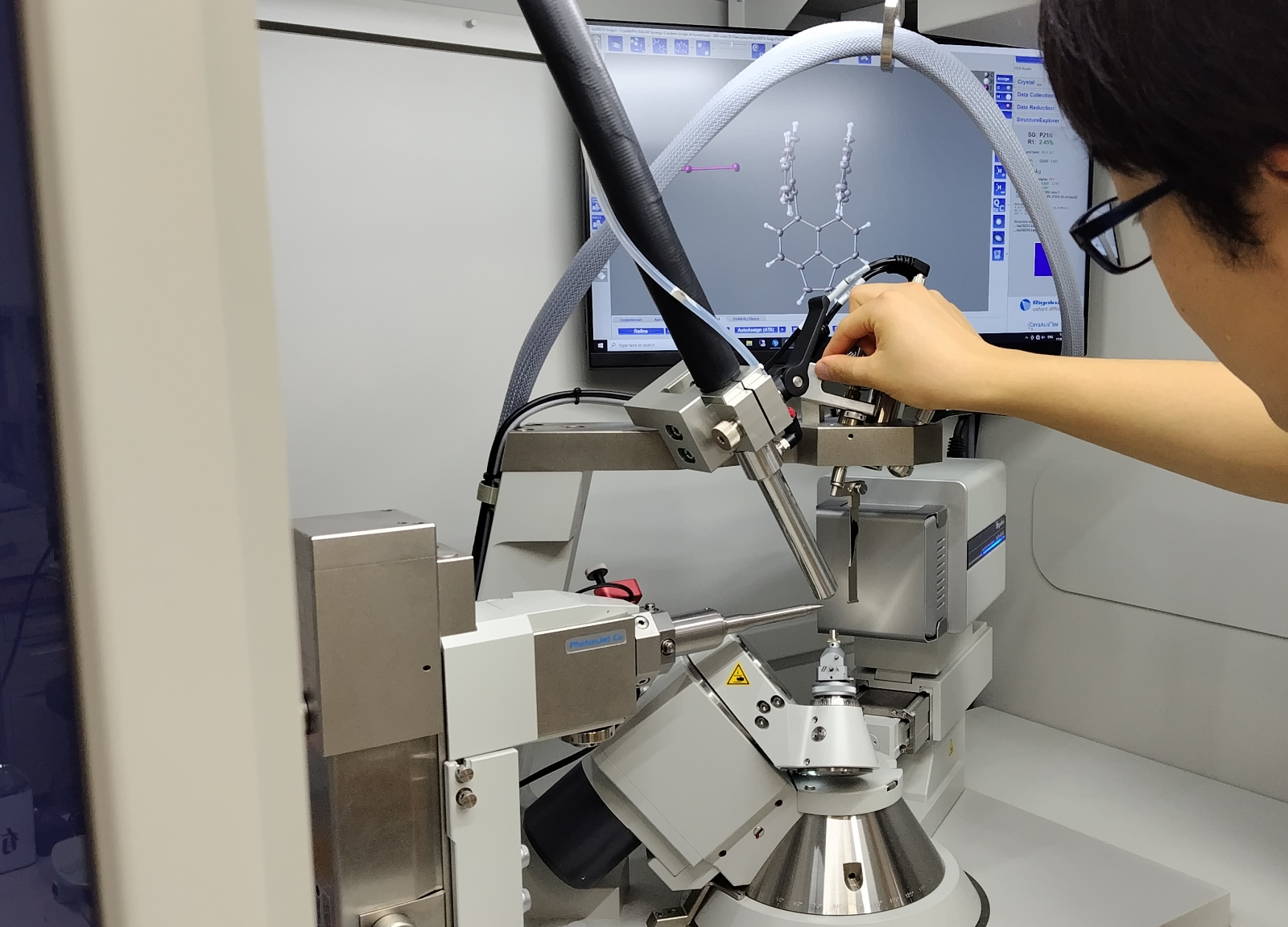
In the cover image: study of the sigma bond with X-ray diffraction. Credits: Yusuke Ishigaki

After nearly a year of review, on September 25, a study was published in Nature that has sparked a lot of discussion, especially among chemists. A group of researchers from Hokkaido University synthesized a molecule that experimentally demonstrated the existence of a new type of chemical bond, something that does not happen very often.