
fbpx APRE organizes the ERC National Day's Call Launch | Page 9 | Science in the net

APRE organizes the ERC National Day's Call Launch

Read time: 1 min

APRE, the Agency for the Promotion of European Research, on behalf of the Italian Ministry of Education, University and Research (MIUR) and in collaboration with the European Commission and the University of Rome La Sapienza, has scheduled on may 26th 2014 the National Day launch of the call Advanced Grant from the European Research Council's National Day Call Launch.  

The ERC Advanced Grant call (MA) allows to established research leaders of any age and nationality to pursue innovative projects and high risk able to open new directions in their respective and others as weel research areas.  

Advanced Grants are born with the aim of supporting excellence, encourage studies of frontier and fund innovative proposals of the best researchers.  
The event will be held at the Aula E. Amaldi the Department of Physics (Building Marconi).

You can register here for the event


Source: Apre
Autori: 
Sezioni: 
Events

prossimo articolo

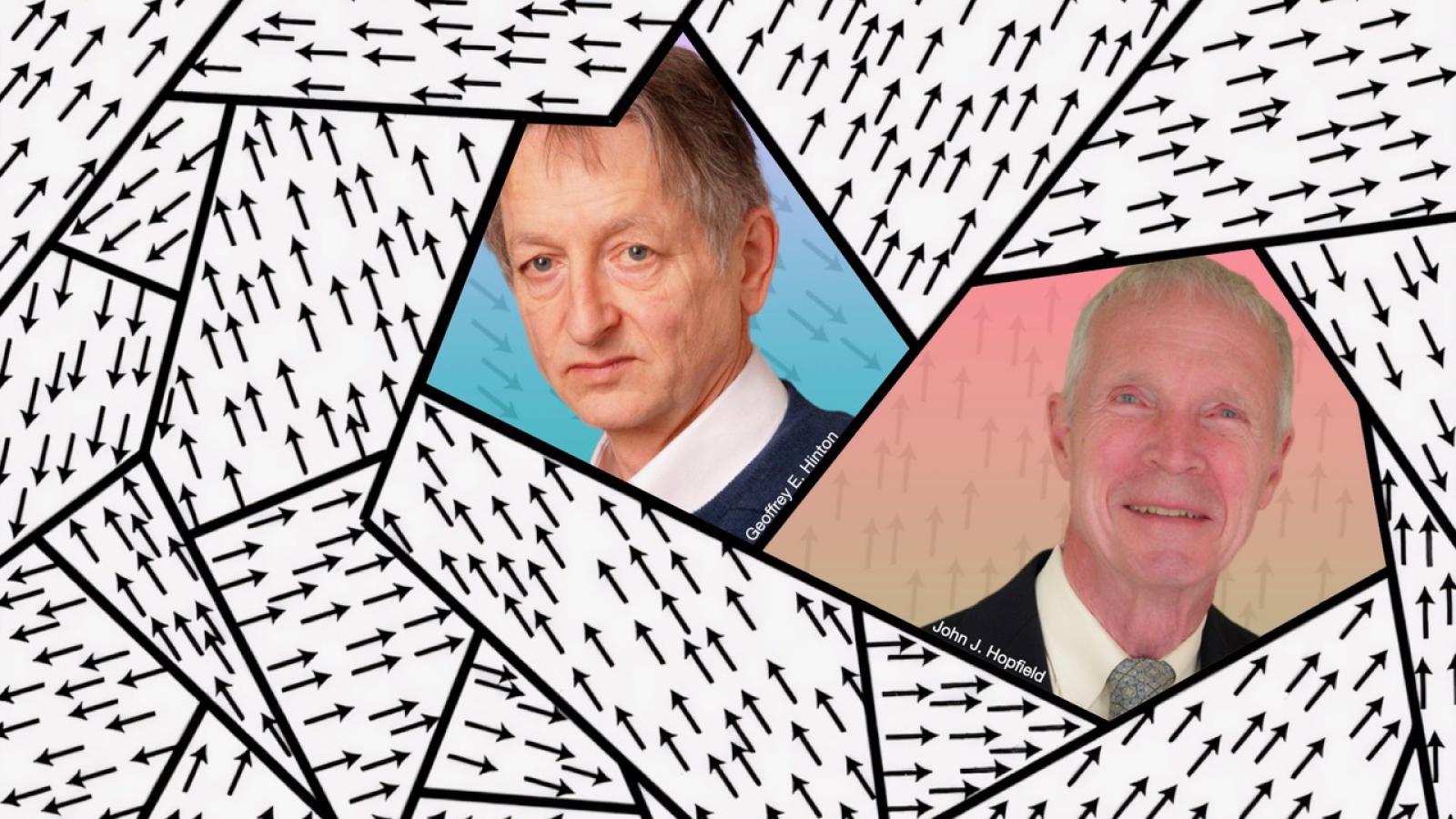
Why have neural networks won the Nobel Prizes in Physics and Chemistry?

This year, Artificial Intelligence played a leading role in the Nobel Prizes for Physics and Chemistry. More specifically, it would be better to say machine learning and neural networks, thanks to whose development we now have systems ranging from image recognition to generative AI like Chat-GPT. In this article, Chiara Sabelli tells the story of the research that led physicist and biologist John J. Hopfield and computer scientist and neuroscientist Geoffrey Hinton to lay the foundations of current machine learning.

Image modified from the article "Biohybrid and Bioinspired Magnetic Microswimmers" https://onlinelibrary.wiley.com/doi/epdf/10.1002/smll.201704374

The 2024 Nobel Prize in Physics was awarded to John J. Hopfield, an American physicist and biologist from Princeton University, and to Geoffrey Hinton, a British computer scientist and neuroscientist from the University of Toronto, for utilizing tools from statistical physics in the development of methods underlying today's powerful machine learning technologies.