fbpx Tre chimici contro i batteri | Page 9 | Science in the net

Tre chimici contro i batteri

Read time: 2 mins

Per gli studi sulla struttura e la funzione dei ribosomi, i complessi che traducono il codice genetico in proteine.

Venkatraman Ramakrishnan (wikipedia)
venkatraman

Scheda del Nobel Prize:

  • motivazione: "for studies of the structure and function of the ribosome"
  • 1/3 del premio
  • paese: Gran Bretagna
  • istituto: MRC Laboratory of Molecular Biology, Cambridge (Gran Bretagna)
  • anno e luogo di nascita:1952 (Chidambaram, Tamil Nadu, India)

Ada E. Yonath (wikipedia)

yonathyonath

Scheda del Nobel Prize:

  • motivazione: "for studies of the structure and function of the ribosome"
  • 1/3 del premio
  • paese: Israele
  • istituto: Weizmann Institute of Science, Rehovot (Israele)
  • anno di nascita: 1939

Thomas A. Steitz (wikipedia)
thomas steitz

Scheda del Nobel Prize:

  • motivazione: "for studies of the structure and function of the ribosome"
  • 1/3 del premio
  • paese: USA
  • istituto: Yale University, New Haven (CT, USA); Howard Hughes Medical Institute
  • anno di nascita: 1940


Autori: 
Sezioni: 
Nobel

prossimo articolo

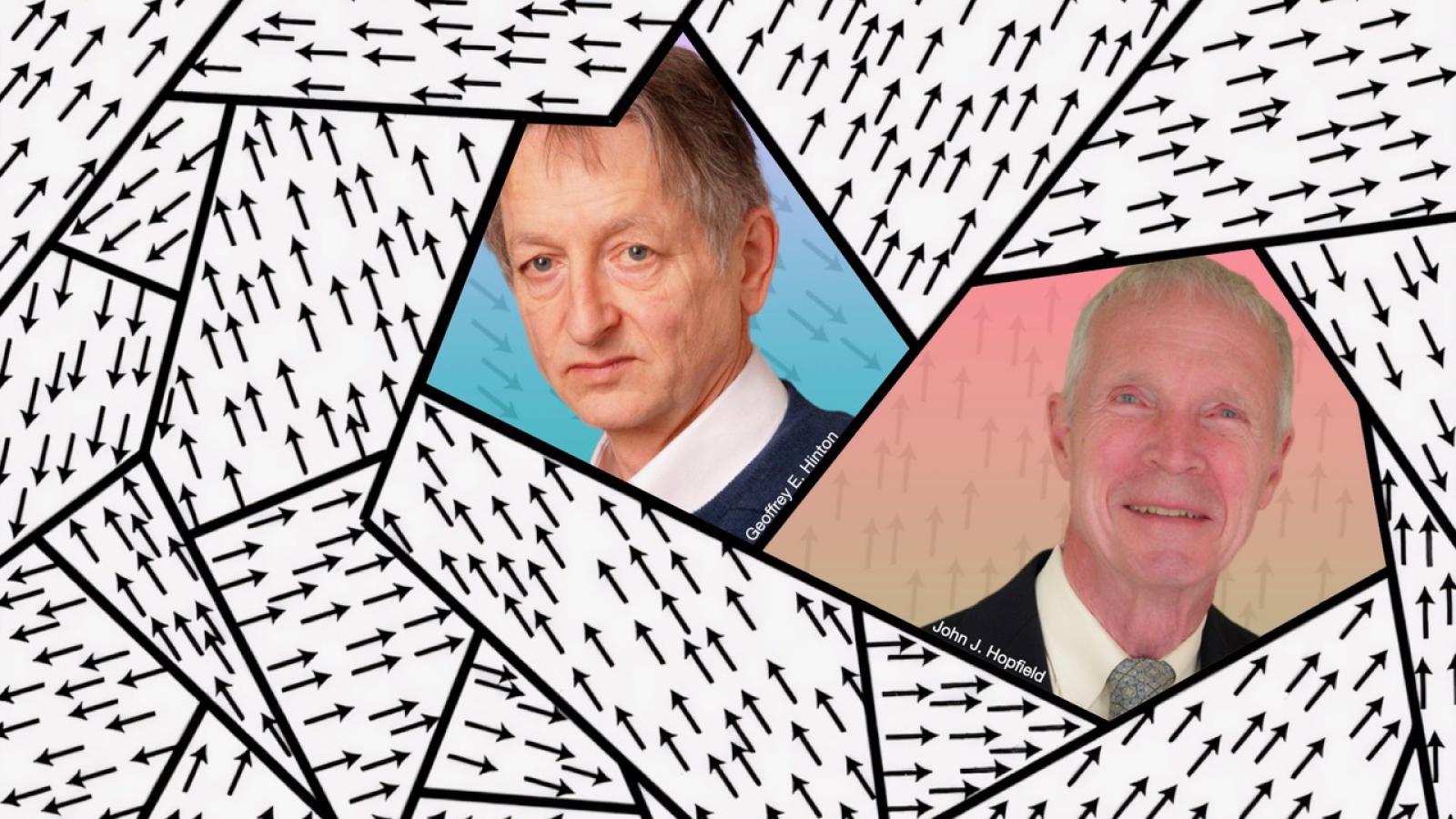
Why have neural networks won the Nobel Prizes in Physics and Chemistry?

This year, Artificial Intelligence played a leading role in the Nobel Prizes for Physics and Chemistry. More specifically, it would be better to say machine learning and neural networks, thanks to whose development we now have systems ranging from image recognition to generative AI like Chat-GPT. In this article, Chiara Sabelli tells the story of the research that led physicist and biologist John J. Hopfield and computer scientist and neuroscientist Geoffrey Hinton to lay the foundations of current machine learning.

Image modified from the article "Biohybrid and Bioinspired Magnetic Microswimmers" https://onlinelibrary.wiley.com/doi/epdf/10.1002/smll.201704374

The 2024 Nobel Prize in Physics was awarded to John J. Hopfield, an American physicist and biologist from Princeton University, and to Geoffrey Hinton, a British computer scientist and neuroscientist from the University of Toronto, for utilizing tools from statistical physics in the development of methods underlying today's powerful machine learning technologies.