I ribosomi sono quegli organelli diffusi nella cellula, dove le informazione contenute nel codice genetico vengono "tradotte" e utilizzate per la biosintesi delle proteine. Per questo i ribosomi sono chiamati "fabbriche delle proteine". Le proteine, a loro volta, sono le macromolecole che caratterizzano la vita, assolvendo a un'infinità di funzioni. Prima fra tutte quella di enzimi, ovvero di molecole che accelerano le reazioni chimiche nella cellula. Ma sono proteine anche gli anticorpi, gli ormoni, il collagene, l'emoglobina.
I tre vincitori del premio Nobel 2009 si sono distinti nello studio fine della "fabbrica delle proteine", analizzando, mappando e collocando nello spazio tridimensionale le centinaia di migliaia di atomi di cui sono composti i ribosomi batterici. La ricerca è stata utile in particolare per lo studio degli antibiotici che possono bloccare i ribosomi nei batteri patogeni rendendoli, di fatto, innocui.
Premio Nobel per la chimica 2009 in dettaglio:
information for the public (pdf)
scientific background (pdf)
Venkatraman Ramakrishnan (wikipedia)

Scheda del Nobel Prize:
- motivazione: "for studies of the structure and function of the ribosome"
- 1/3 del premio
- paese: Gran Bretagna
- istituto: MRC Laboratory of Molecular Biology, Cambridge (Gran Bretagna)
- anno e luogo di nascita:1952 (Chidambaram, Tamil Nadu, India)
Ada E. Yonath (wikipedia)


Scheda del Nobel Prize:
- motivazione: "for studies of the structure and function of the ribosome"
- 1/3 del premio
- paese: Israele
- istituto: Weizmann Institute of Science, Rehovot (Israele)
- anno di nascita: 1939
Thomas A. Steitz (wikipedia)
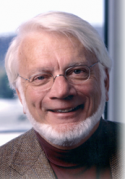
Scheda del Nobel Prize:
- motivazione: "for studies of the structure and function of the ribosome"
- 1/3 del premio
- paese: USA
- istituto: Yale University, New Haven (CT, USA); Howard Hughes Medical Institute
- anno di nascita: 1940