
By combining epidemiology and informatics, it is possible to assess scenarios and predict epidemic evolutions, thus allowing policy makers and health institutions to better manage health emergencies. This is the core concept of GLEAM, an online informatics tool that simulates the unfolding of epidemics across the world.
GLEAM combines data from different sources – distribution of the world-wide population, their daily interactions and journeys, international air traffic – with models of infection dynamics, in order to simulate and possibly predict the spreading pattern of infectious diseases epidemics. This approach has been validated against historical epidemic outbreaks including the SARS epidemic in 2002 and proved to be effective when used to produce real time forecast of the spatial and temporal evolution of the H1N1 pandemic in 2009.
The software system is publicly available and is the result of the combined efforts of a cooperation between some institutions in Italy, France and USA. At the moment, the project is hosted by the Northeastern University in Boston and the Institute for Scientific Interchange (ISI) in Turin, and is partially founded by the National Institute of Health and the Defense Threat Reduction Agency.
Forecasting epidemic: GLEAM
Primary tabs
Autori:
Sezioni:
Dossier:
Indice:
Epidemiology
prossimo articolo
COVID-19 in Italy: lessons learnt and points for immediate discussion
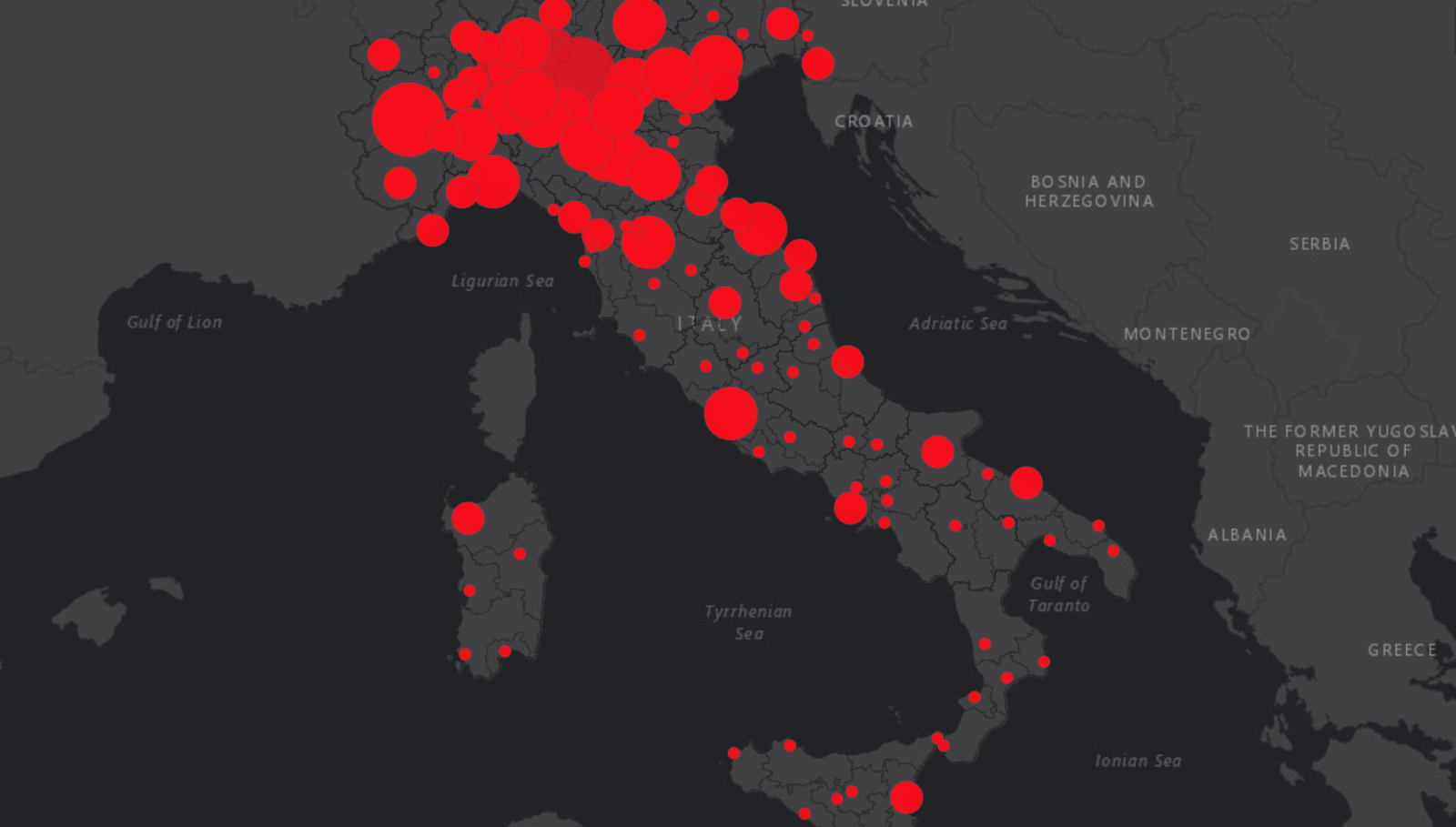
These notes are strictly personal but express ideas which are shared by a vast community of researchers, including epidemiologists, clinicians, immunologists and lab scientists. This is meant to be a working document.