
Marzo 1954, Isole Marshall, Oceano Pacifico, Yoshio Misaki su una tonnara giapponese assiste a uno strano spettacolo: un sole che sorge
a ovest. Ma non si tratta di un sole ma della luce prodotta dall’esplosione nucleare di un test americano effettuato in prossimità
dell’atollo Bikini a 85 miglia a ovest della tonnara. La nube radioattiva raggiunge la tonnara e il vicino atollo di Rongelap. E nessun civile è stato avvertito. Che conseguenze avrà questo drammatico episodio sul rapporto tra scienza e società?
Atollo di Bikini, la cicatrice della bomba atomica
Primary tabs
prossimo articolo
Discovered a New Carbon-Carbon Chemical Bond
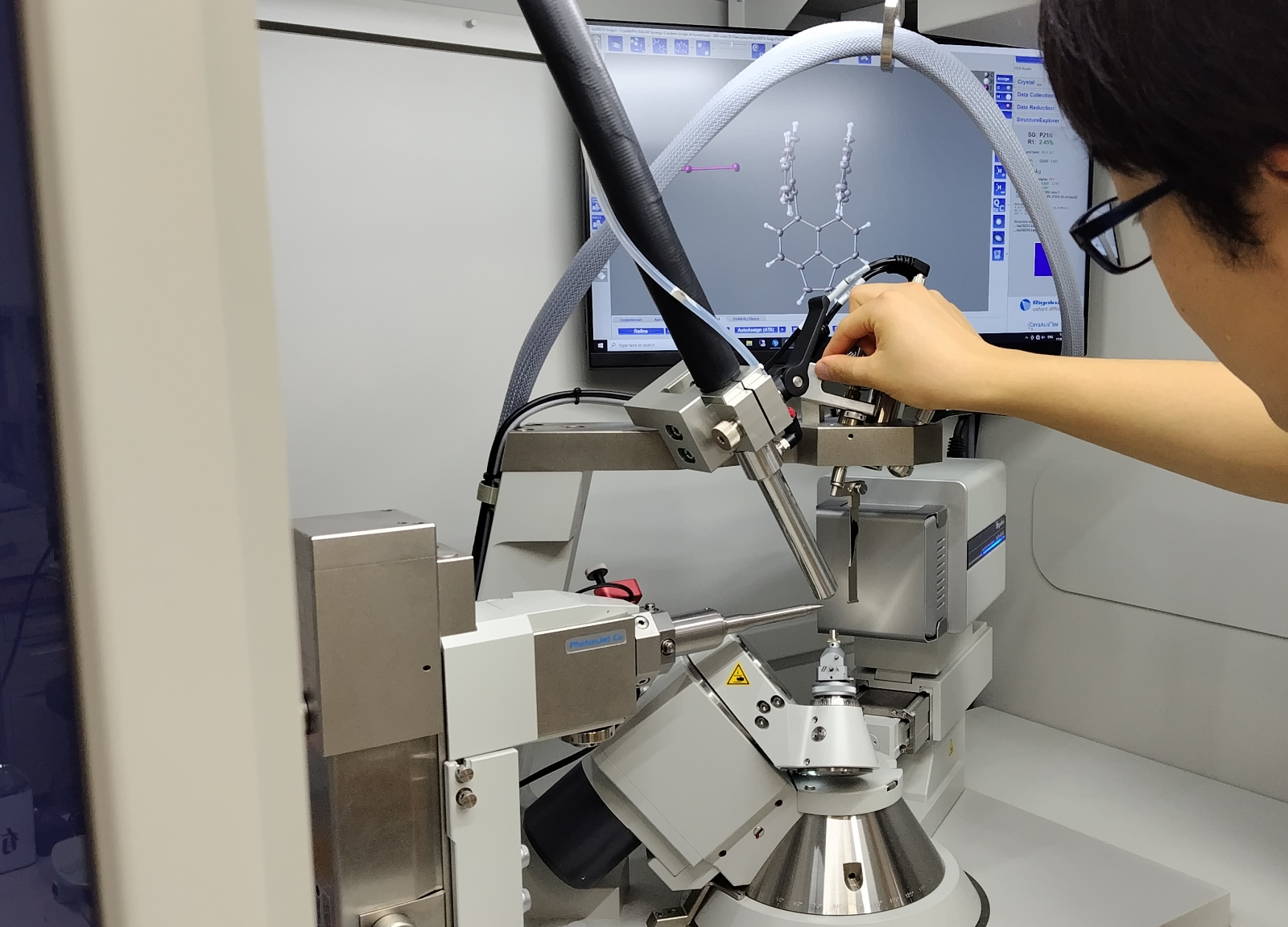
A group of researchers from Hokkaido University has provided the first experimental evidence of the existence of a new type of chemical bond: the single-electron covalent bond, theorized by Linus Pauling in 1931 but never verified until now. Using derivatives of hexaarylethane (HPE), the scientists were able to stabilize this unusual bond between two carbon atoms and study it with spectroscopic techniques and X-ray diffraction. This discovery opens new perspectives in understanding bond chemistry and could lead to the development of new materials with innovative applications.
In the cover image: study of the sigma bond with X-ray diffraction. Credits: Yusuke Ishigaki
After nearly a year of review, on September 25, a study was published in Nature that has sparked a lot of discussion, especially among chemists. A group of researchers from Hokkaido University synthesized a molecule that experimentally demonstrated the existence of a new type of chemical bond, something that does not happen very often.