
Marzo 1954, Isole Marshall, Oceano Pacifico, Yoshio Misaki su una tonnara giapponese assiste a uno strano spettacolo: un sole che sorge
a ovest. Ma non si tratta di un sole ma della luce prodotta dall’esplosione nucleare di un test americano effettuato in prossimità
dell’atollo Bikini a 85 miglia a ovest della tonnara. La nube radioattiva raggiunge la tonnara e il vicino atollo di Rongelap. E nessun civile è stato avvertito. Che conseguenze avrà questo drammatico episodio sul rapporto tra scienza e società?
Atollo di Bikini, la cicatrice della bomba atomica
Primary tabs
prossimo articolo
Why have neural networks won the Nobel Prizes in Physics and Chemistry?
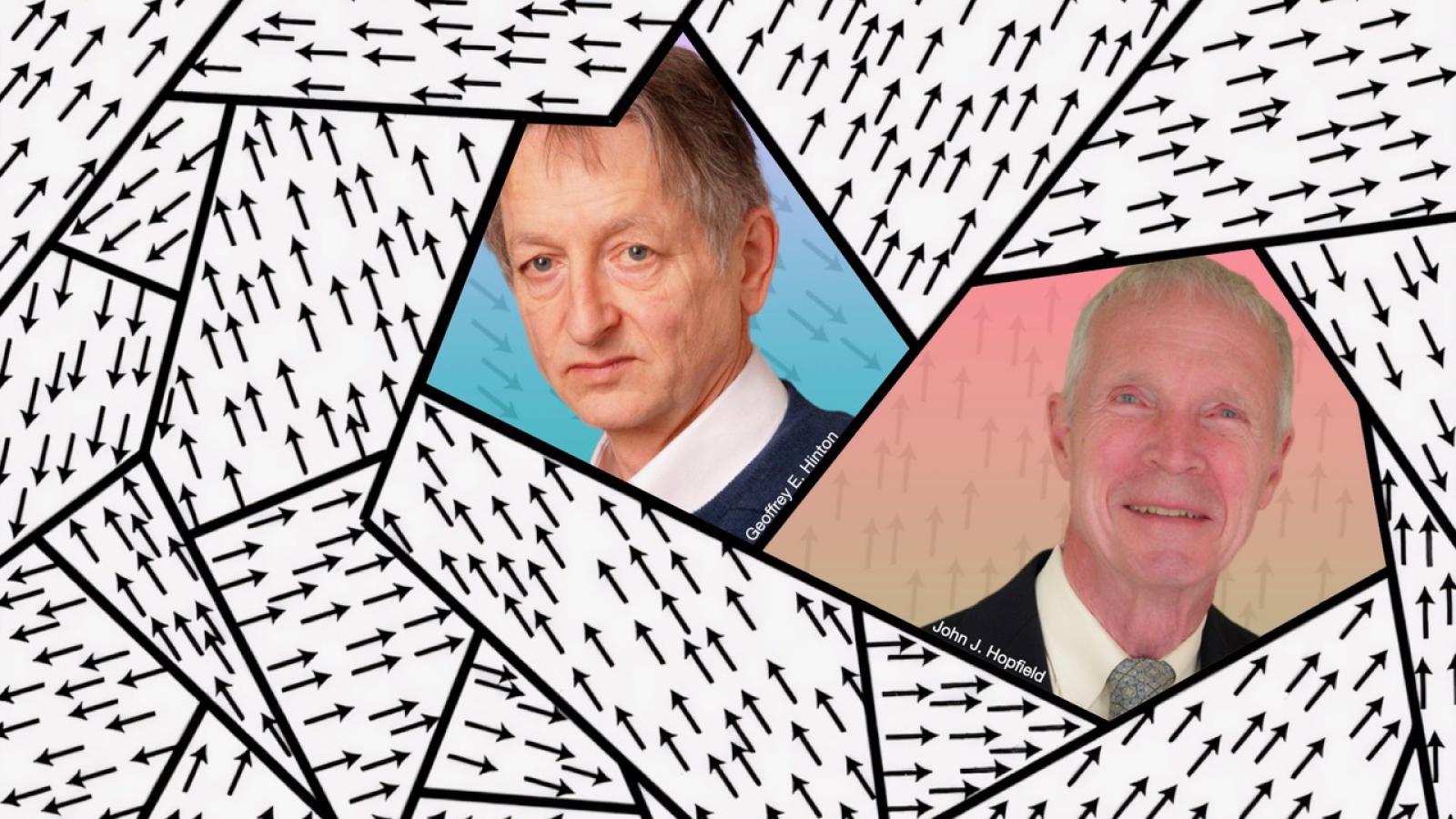
This year, Artificial Intelligence played a leading role in the Nobel Prizes for Physics and Chemistry. More specifically, it would be better to say machine learning and neural networks, thanks to whose development we now have systems ranging from image recognition to generative AI like Chat-GPT. In this article, Chiara Sabelli tells the story of the research that led physicist and biologist John J. Hopfield and computer scientist and neuroscientist Geoffrey Hinton to lay the foundations of current machine learning.
Image modified from the article "Biohybrid and Bioinspired Magnetic Microswimmers" https://onlinelibrary.wiley.com/doi/epdf/10.1002/smll.201704374
The 2024 Nobel Prize in Physics was awarded to John J. Hopfield, an American physicist and biologist from Princeton University, and to Geoffrey Hinton, a British computer scientist and neuroscientist from the University of Toronto, for utilizing tools from statistical physics in the development of methods underlying today's powerful machine learning technologies.