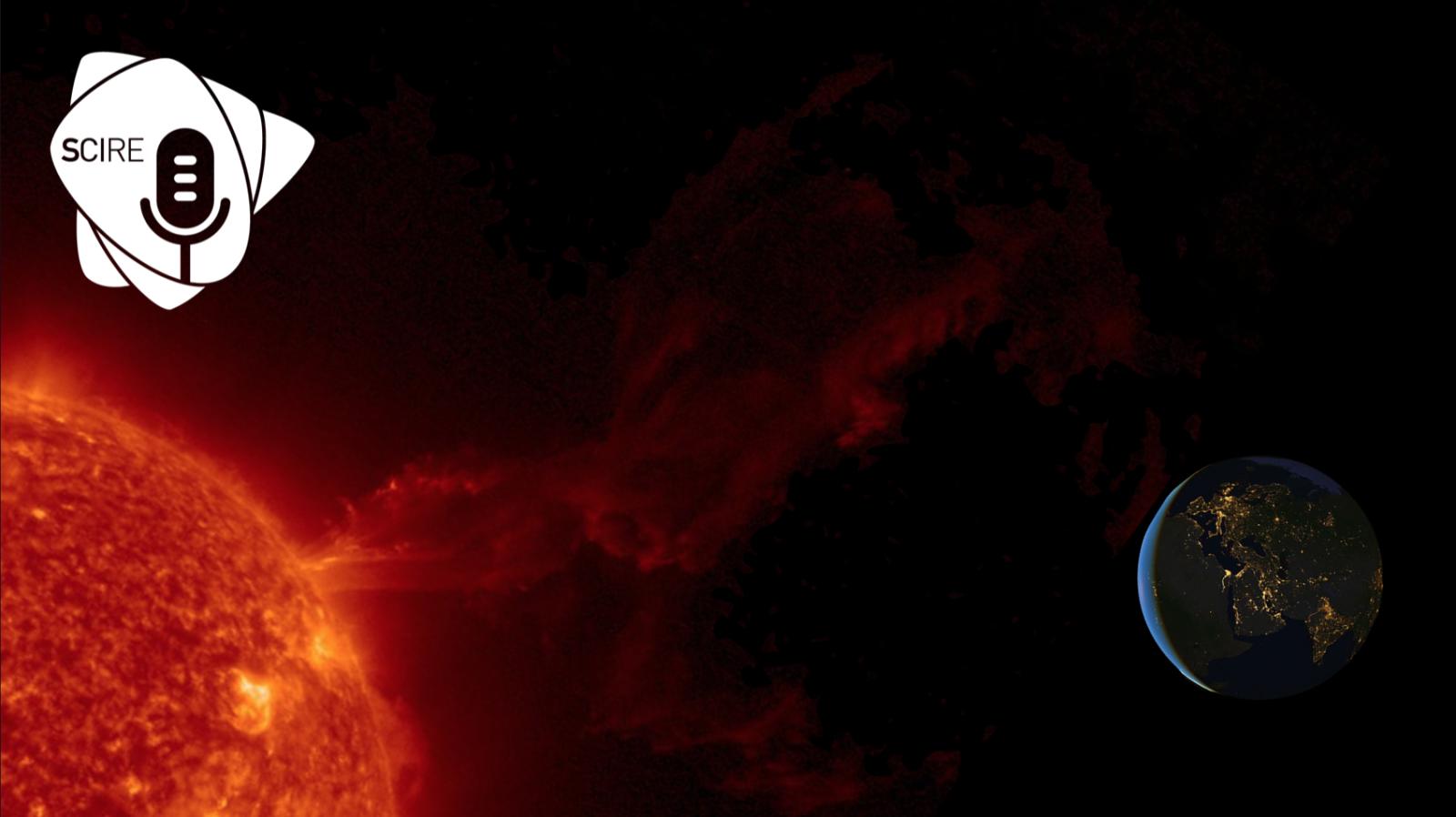
Il tema di questo episodio è lo Space Weather, cioè la meteorologia spaziale, che ci consente di dare risposta a molte domande. Cosa è successo nel passato sulla Terra a causa delle tempeste solari? E soprattutto: potrebbero ripetersi? e quali sarebbero i rischi? Vi accompagneremo in un viaggio che ci porterà a conoscere tre protagonisti: il Sole, le particelle cariche accelerate e la magnetosfera terrestre; partendo dalla nostra stella fino ad arrivare sulla Terra, comprenderemo i processi che creano le tempeste solari e cosa potrebbe succedere se improvvisamente una di esse colpisse il nostro pianeta.
"Space Weather: dalla luce al blackout" è un podcast di Mariachiara Falco, astrofisica che occupa di fisica solare e divulgazione scientifica. Questo episodio è stato realizzato per il workshop “Le Voci della Scienza”: esperienza formativa che ha aperto le porte ad un modo diverso di divulgare la scienza, solo per mezzo di voci e suoni. Attraverso il podcast ogni momento è buono per incuriosirsi e aggiornarsi sull’Universo che ci circonda.
Crediti
Voce di Mariachiara Falco. Il podcast è stato scritto da Mariachiara Falco e prodotto e montato da Benjamin Cucchi. Un ringraziamento va a Salvatore Luigi Guglielmino (INAF-OACt) per la revisione del testo.
Fonti e crediti
- Sorvegliati Spaziali - INAF
- Science Advances, The source of the major solar energetic particle events from super active region 11944 di David H. Brooks e Stephanie L. Yardley: https://www.science.org/doi/10.1126/sciadv.abf0068
- INGV Ambiente - Magnetosfera terrestre
- ESC Solar Weather
- Le Scienze, La tempesta solare "perfetta" (che mancò la Terra)
Suoni
- Thunderbolt by Lars Leonhard, courtesy of artist
- New Scientist, What a solar storm sounds like
- BBC News Science, Fears of disruption as big solar storm strikes the Earth
- Lumina by Pétur Jónsson
- VideoFromSpace, Solar Storm Would Have Wreaked Havoc On Earth - Multiple Views