
fbpx Golden Rice, Frankenfood, and the torch-wielding mob | Page 8 | Science in the net

Golden Rice, Frankenfood, and the torch-wielding mob

Primary tabs

Read time: 1 min

Most scientists hate the term “Frankenfood” applied to genetically engineered (GE) crops. Activists certainly use it as an insult. But did those activists actually read Mary Shelley’s book?
Mary Shelley’s creature is not at first a monster of despicable evil; quite the contrary, he is agentile and sensitive creature condemned to solitude and neglect and chased everywhere he goes by bigoted mobs that dislike him only for aesthetic reasons, because he seems to them a monstrosity. Listen at the creature’s lament when, after secretly helping a family of poor farmers, he finally decides to reveal himself:
“The more I saw of them, the greater became my desire to claim their protection and kindness; my heart yearned to be known and loved by these amiable creatures; to see their sweet looks directed towards me with affection, was the utmost limit of my ambition. I dared not think that they would turn from me with disdain and horror.” Continue reading on Sci-Phy

Follow the discussion on LinkedIn


Ariel Polandri (@ArielPoliandri) is Senior Post-doctoral Researcher in Stem Cell Disease Modelling at the Imperial College in London. 
Autori: 
Sezioni: 
GMO debate

prossimo articolo

Discovered a New Carbon-Carbon Chemical Bond

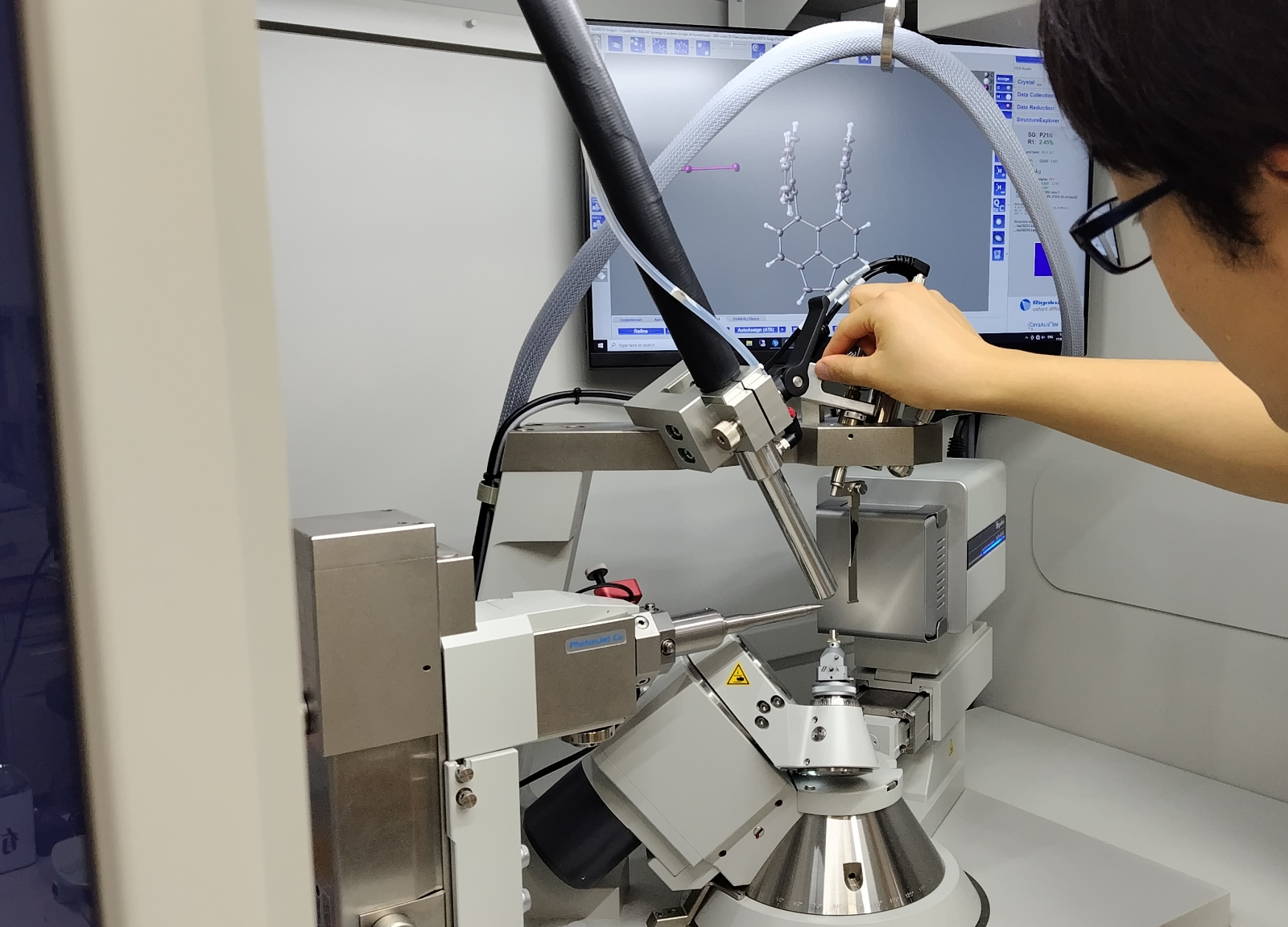
A group of researchers from Hokkaido University has provided the first experimental evidence of the existence of a new type of chemical bond: the single-electron covalent bond, theorized by Linus Pauling in 1931 but never verified until now. Using derivatives of hexaarylethane (HPE), the scientists were able to stabilize this unusual bond between two carbon atoms and study it with spectroscopic techniques and X-ray diffraction. This discovery opens new perspectives in understanding bond chemistry and could lead to the development of new materials with innovative applications.

In the cover image: study of the sigma bond with X-ray diffraction. Credits: Yusuke Ishigaki

After nearly a year of review, on September 25, a study was published in Nature that has sparked a lot of discussion, especially among chemists. A group of researchers from Hokkaido University synthesized a molecule that experimentally demonstrated the existence of a new type of chemical bond, something that does not happen very often.