
fbpx Golden Rice, Frankenfood, and the torch-wielding mob | Page 9 | Science in the net

Golden Rice, Frankenfood, and the torch-wielding mob

Primary tabs

Read time: 1 min

Most scientists hate the term “Frankenfood” applied to genetically engineered (GE) crops. Activists certainly use it as an insult. But did those activists actually read Mary Shelley’s book?
Mary Shelley’s creature is not at first a monster of despicable evil; quite the contrary, he is agentile and sensitive creature condemned to solitude and neglect and chased everywhere he goes by bigoted mobs that dislike him only for aesthetic reasons, because he seems to them a monstrosity. Listen at the creature’s lament when, after secretly helping a family of poor farmers, he finally decides to reveal himself:
“The more I saw of them, the greater became my desire to claim their protection and kindness; my heart yearned to be known and loved by these amiable creatures; to see their sweet looks directed towards me with affection, was the utmost limit of my ambition. I dared not think that they would turn from me with disdain and horror.” Continue reading on Sci-Phy

Follow the discussion on LinkedIn


Ariel Polandri (@ArielPoliandri) is Senior Post-doctoral Researcher in Stem Cell Disease Modelling at the Imperial College in London. 
Autori: 
Sezioni: 
GMO debate

prossimo articolo

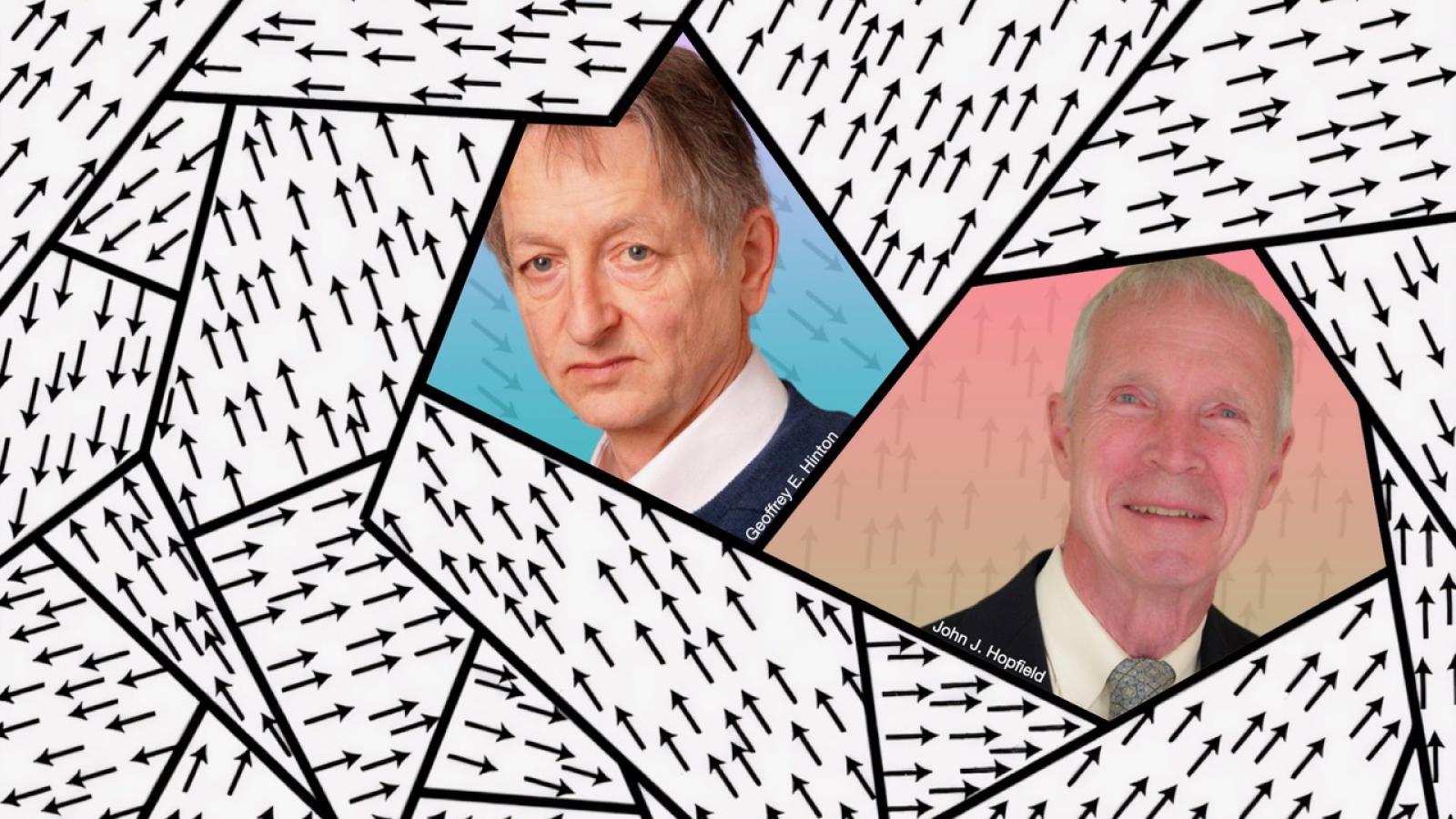
Why have neural networks won the Nobel Prizes in Physics and Chemistry?

This year, Artificial Intelligence played a leading role in the Nobel Prizes for Physics and Chemistry. More specifically, it would be better to say machine learning and neural networks, thanks to whose development we now have systems ranging from image recognition to generative AI like Chat-GPT. In this article, Chiara Sabelli tells the story of the research that led physicist and biologist John J. Hopfield and computer scientist and neuroscientist Geoffrey Hinton to lay the foundations of current machine learning.

Image modified from the article "Biohybrid and Bioinspired Magnetic Microswimmers" https://onlinelibrary.wiley.com/doi/epdf/10.1002/smll.201704374

The 2024 Nobel Prize in Physics was awarded to John J. Hopfield, an American physicist and biologist from Princeton University, and to Geoffrey Hinton, a British computer scientist and neuroscientist from the University of Toronto, for utilizing tools from statistical physics in the development of methods underlying today's powerful machine learning technologies.