fbpx Information Days about SMEs in Horizon 2020 | Page 9 | Science in the net

Information Days about SMEs in Horizon 2020

Read time: 1 min

This fall, the European Commission will host two Information Days – on October 18th and November 29th – about SMEs participation to Horizon 2020. The event will be specifically tailored for those organization supporting governmental and non-governmental SMEs.

Participants will:

  • Acquire the practical information regarding the actions provided within the Horizon 2020 Programme to support the SMEs, including the new financial tools and the access to venture capitals.
  • Identify the framework within which Horizon 2020 will operate.
  • Be able to engage into a dialogue with EU officials, in order to identify the best opportunities for SMEs in Horizon 2020.

The event is free of charge prior registration, which can be done by sending an e-mail to [email protected]. It is required to indicate which of the two events will be attended. Seats at these events will be limited, and will be distributed on a first-come, first-served basis.

Deadline: 18/10/2013 (for the first Info Day), 29/11/2013 (for the second Info Day).

Autori: 
Sezioni: 
Horizon 2020

prossimo articolo

Why have neural networks won the Nobel Prizes in Physics and Chemistry?

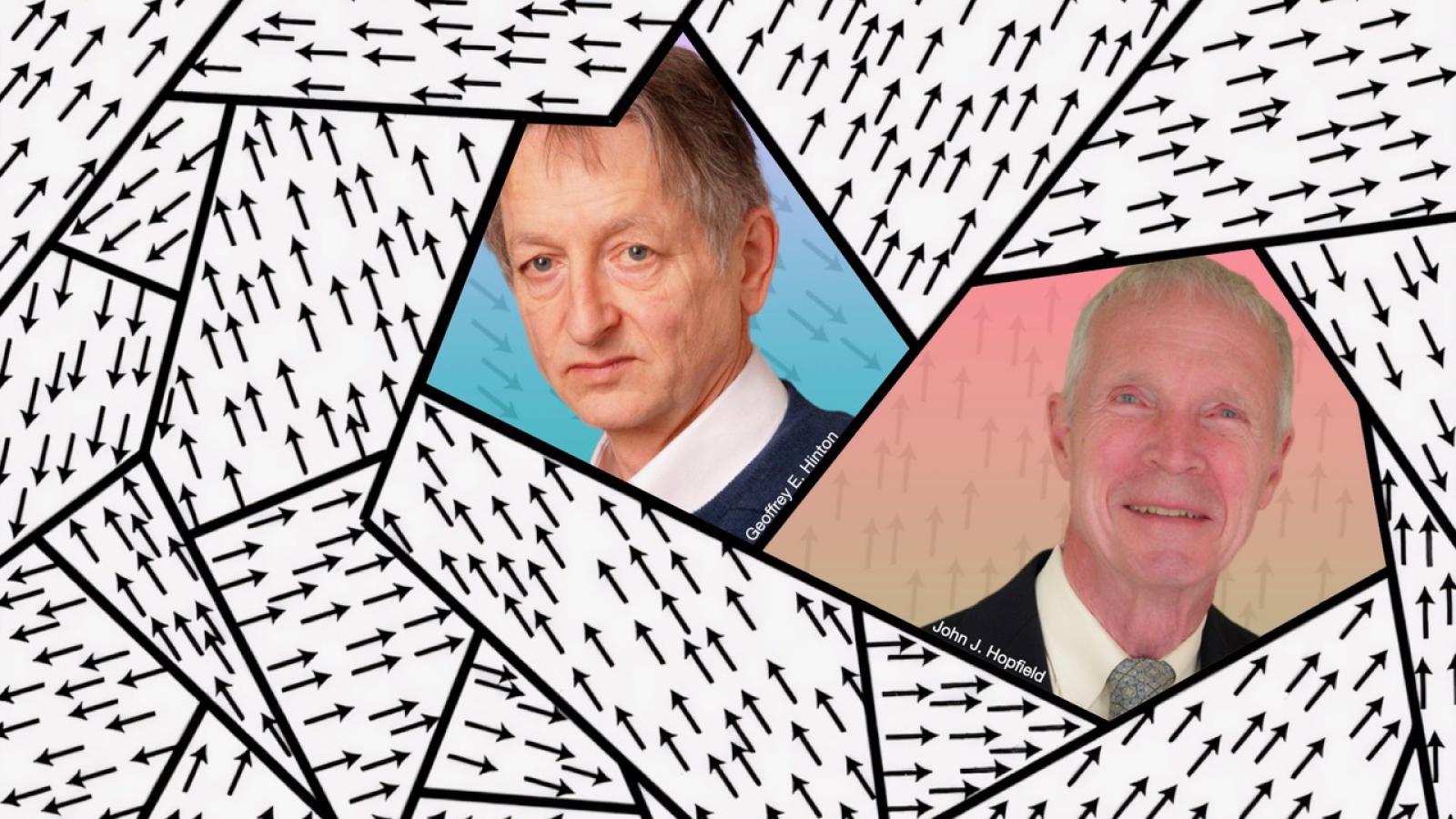
This year, Artificial Intelligence played a leading role in the Nobel Prizes for Physics and Chemistry. More specifically, it would be better to say machine learning and neural networks, thanks to whose development we now have systems ranging from image recognition to generative AI like Chat-GPT. In this article, Chiara Sabelli tells the story of the research that led physicist and biologist John J. Hopfield and computer scientist and neuroscientist Geoffrey Hinton to lay the foundations of current machine learning.

Image modified from the article "Biohybrid and Bioinspired Magnetic Microswimmers" https://onlinelibrary.wiley.com/doi/epdf/10.1002/smll.201704374

The 2024 Nobel Prize in Physics was awarded to John J. Hopfield, an American physicist and biologist from Princeton University, and to Geoffrey Hinton, a British computer scientist and neuroscientist from the University of Toronto, for utilizing tools from statistical physics in the development of methods underlying today's powerful machine learning technologies.