Pregnant women who were given H1N1 influenza vaccine in 2009 were less likely to face adverse fetal outcomes such as preterm birth. Also, they gave birth to heavier infants. These are the conclusions of a study published on Clinical Infectious Diseases, coordinated by Dr. Saad Omer, of the Rollins School of Public Health at Emory University, Atlanta. He and his colleagues conducted a retrospective cohort study of live births during the period of 2009 influenza A (H1N1) virus circulation, finding that infants of vaccinated mothers had 37% lower probability of being born preterm than infants of unvaccinated mothers. As for the birth weight difference, infants of vaccinated mothers weighed 45.1 grams more than those with unvaccinated mothers.
Vaccines and pregnancy
prossimo articolo
Discovered a New Carbon-Carbon Chemical Bond

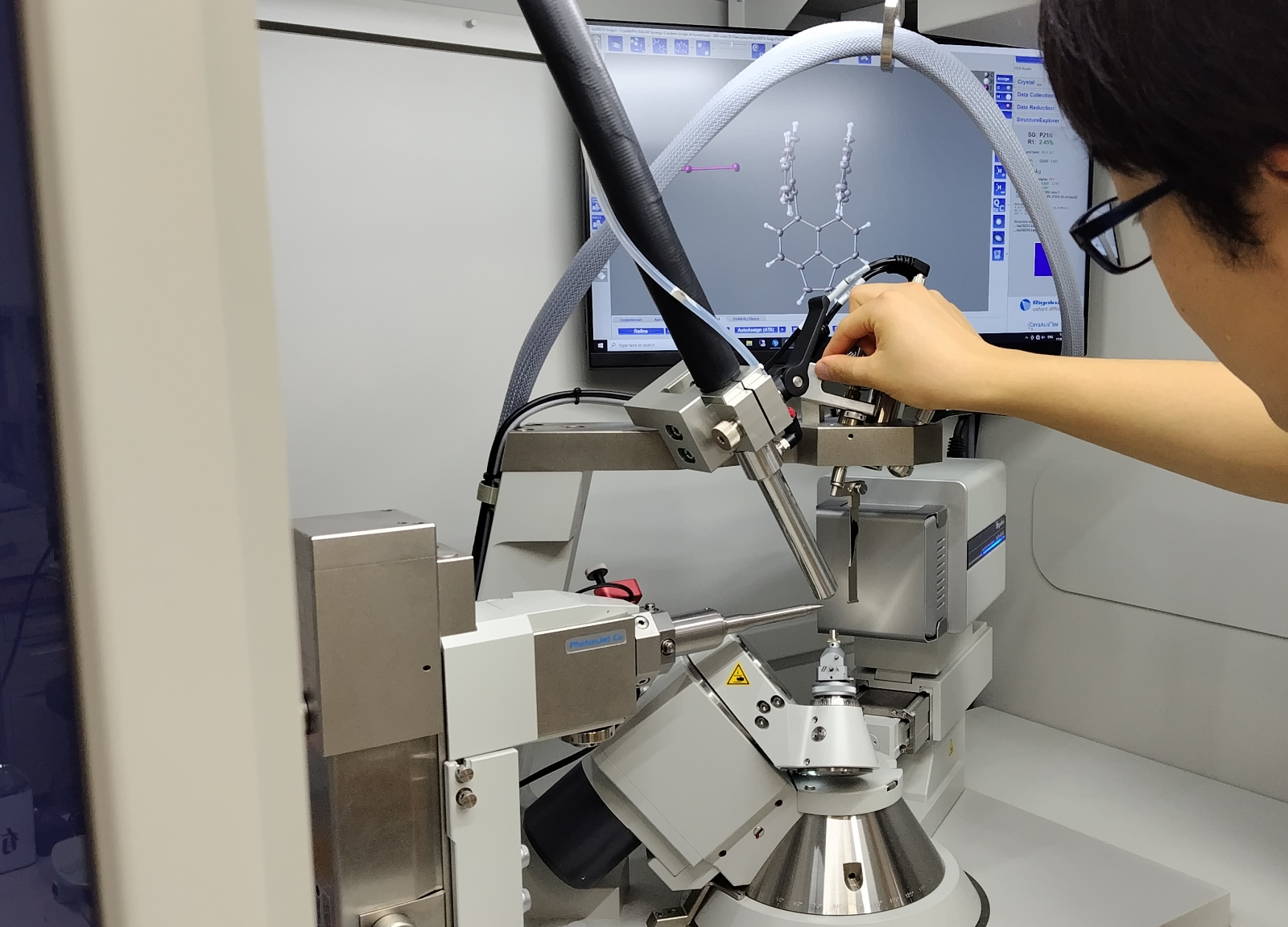
A group of researchers from Hokkaido University has provided the first experimental evidence of the existence of a new type of chemical bond: the single-electron covalent bond, theorized by Linus Pauling in 1931 but never verified until now. Using derivatives of hexaarylethane (HPE), the scientists were able to stabilize this unusual bond between two carbon atoms and study it with spectroscopic techniques and X-ray diffraction. This discovery opens new perspectives in understanding bond chemistry and could lead to the development of new materials with innovative applications.
In the cover image: study of the sigma bond with X-ray diffraction. Credits: Yusuke Ishigaki
After nearly a year of review, on September 25, a study was published in Nature that has sparked a lot of discussion, especially among chemists. A group of researchers from Hokkaido University synthesized a molecule that experimentally demonstrated the existence of a new type of chemical bond, something that does not happen very often.