
Measles, mumps and rubella outbreaks still represent an healthcare issue, even though major advancements have been done towards their eradication. A poor inclination towards Mmr (measles-mumps-rubella) vaccination may constitutes a major cause of increased risk to contract one of these diseases amongst specific population groups like migrants, alternative medicine users, some religious groups, healthcare professionals.
Information on Mmr vaccines coverage amongst these and others “hard-to-reach” groups was included in a document made and published Ecdc in range of the European project Venice II (Vaccine European New Integrated Collaboration Effort II). Main aim of the document was to provide a complete review of measles, mumps and rubella focuses which have been reported in the last twenty years in Europe.
An update on Mmr
prossimo articolo
Discovered a New Carbon-Carbon Chemical Bond
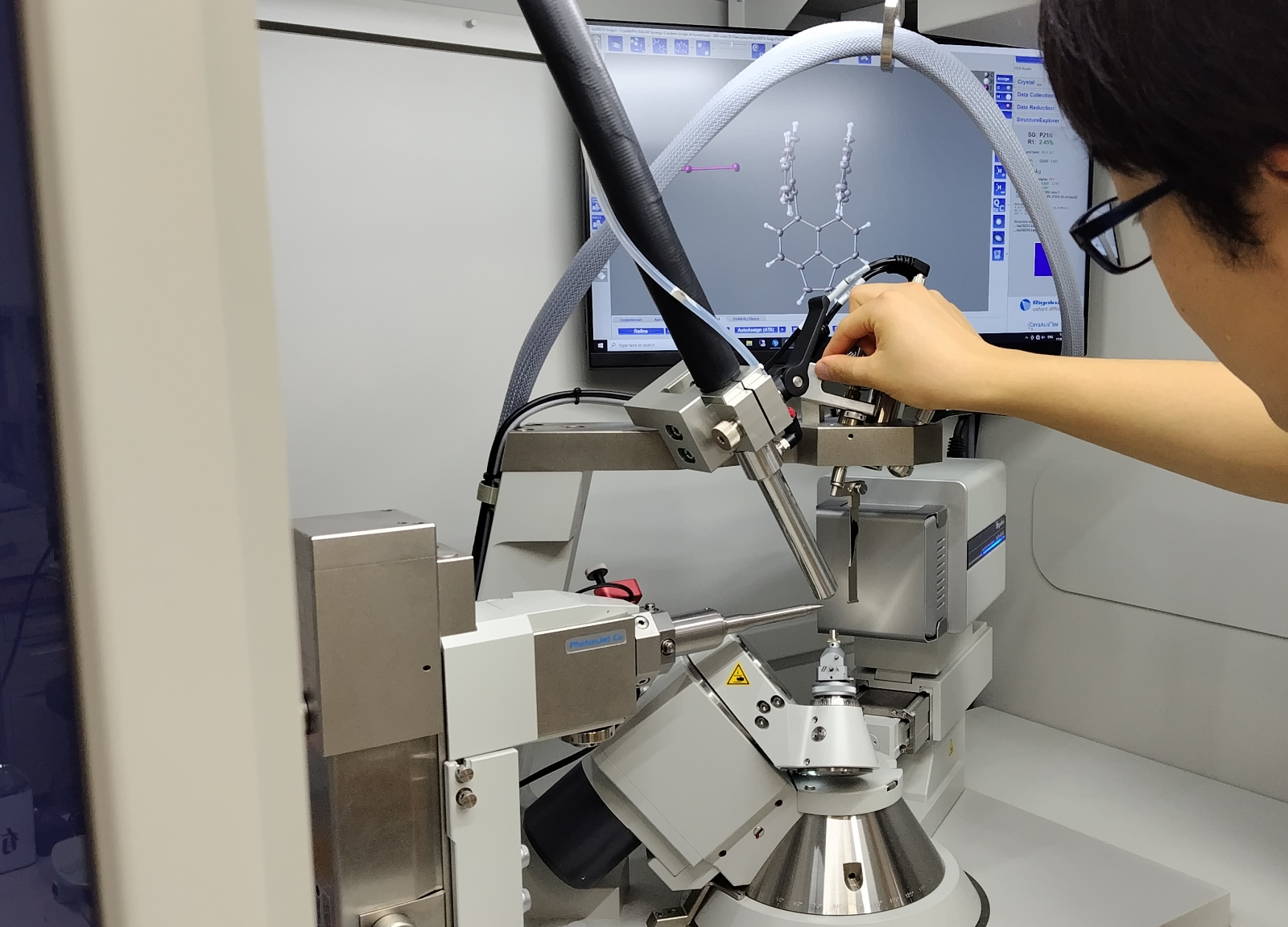
A group of researchers from Hokkaido University has provided the first experimental evidence of the existence of a new type of chemical bond: the single-electron covalent bond, theorized by Linus Pauling in 1931 but never verified until now. Using derivatives of hexaarylethane (HPE), the scientists were able to stabilize this unusual bond between two carbon atoms and study it with spectroscopic techniques and X-ray diffraction. This discovery opens new perspectives in understanding bond chemistry and could lead to the development of new materials with innovative applications.
In the cover image: study of the sigma bond with X-ray diffraction. Credits: Yusuke Ishigaki
After nearly a year of review, on September 25, a study was published in Nature that has sparked a lot of discussion, especially among chemists. A group of researchers from Hokkaido University synthesized a molecule that experimentally demonstrated the existence of a new type of chemical bond, something that does not happen very often.