
A large team of researchers from the World Health Organization (WHO) and many other institutions performed a new analysis of serologic studies from 19 countries in order to estimate the infection rate of the 2009 H1N1 influenza during the first year of the pandemic. The study, published in Influenza and Other Respiratory Viruses, showed that about 24% of the population were infected with the H1N1 virus during the first wave of the pandemic. Of these infected, approximately 0.02% died.These results are slightly higher than the official estimates made by the US Centers for Disease Control and Prevention (CDC) in the period immediately following the outbreak of the virus, and confirm the age-related distribution of H1N1 incidence, with the children being the most affected when compared to the over 65. One of the possible limitations of the study, as highlighted by the authors themselves, is that the vaccine might had little impact on their results, due to conflicting results and low vaccine coverage in most countries.
http://onlinelibrary.wiley.com/doi/10.1111/irv.12074/abstract;jsessionid...
An evaluation of 2009 pandemic infection rate
prossimo articolo
Discovered a New Carbon-Carbon Chemical Bond
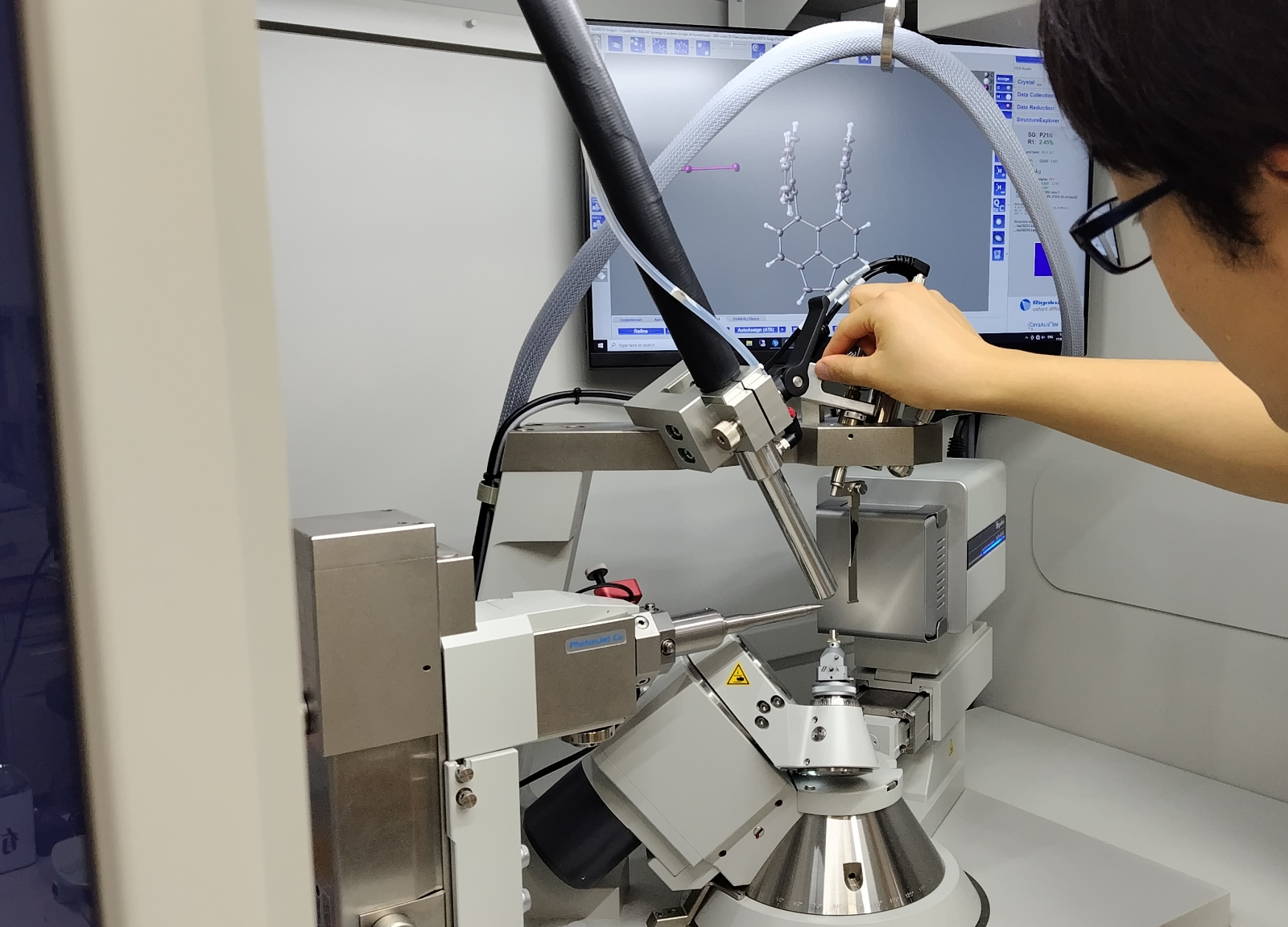
A group of researchers from Hokkaido University has provided the first experimental evidence of the existence of a new type of chemical bond: the single-electron covalent bond, theorized by Linus Pauling in 1931 but never verified until now. Using derivatives of hexaarylethane (HPE), the scientists were able to stabilize this unusual bond between two carbon atoms and study it with spectroscopic techniques and X-ray diffraction. This discovery opens new perspectives in understanding bond chemistry and could lead to the development of new materials with innovative applications.
In the cover image: study of the sigma bond with X-ray diffraction. Credits: Yusuke Ishigaki
After nearly a year of review, on September 25, a study was published in Nature that has sparked a lot of discussion, especially among chemists. A group of researchers from Hokkaido University synthesized a molecule that experimentally demonstrated the existence of a new type of chemical bond, something that does not happen very often.