fbpx Minds of Modern Mathematics | Science in the net

Minds of Modern Mathematics

Read time: 1 min

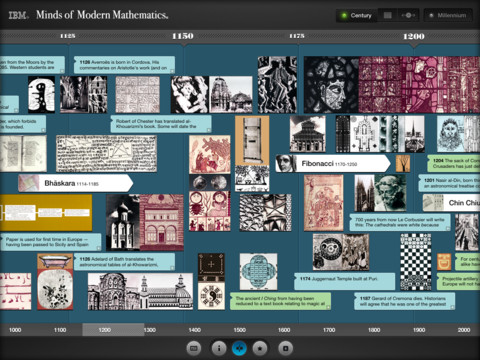
Minds of Modern Mathematics is the app created by IBM to describe as mathematicians and mathematics have shaped the world we live. An interactive journey through the centuries (almost 1,000 years) to discover how mathematics has influenced music, science, art, architecture and culture.

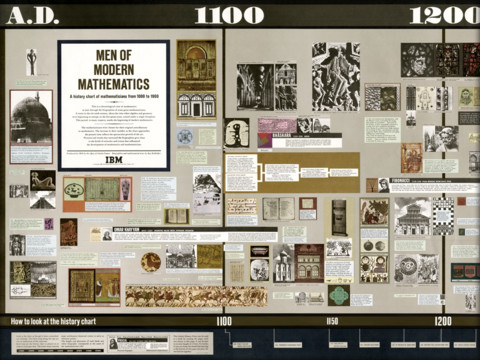
Minds of Modern Mathematics is a digital recreation of a 50-foot-wide wall installation that was part of the groundbreaking 1961 Mathematica: A World of Numbers ... and Beyond, sponsored by IBM and designed by the design team Charles e Ray Eames.
The exhibition was displayed at the Los Angeles Museum of Science and Industry in the Exposition Park (now the California Science Center).

Pollini_01

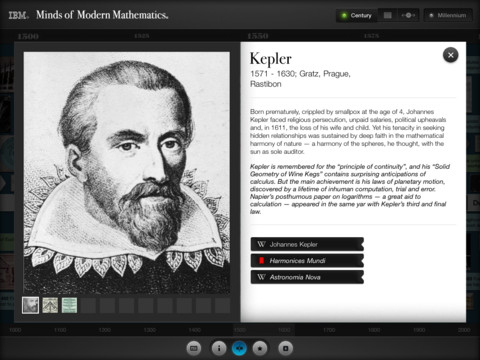
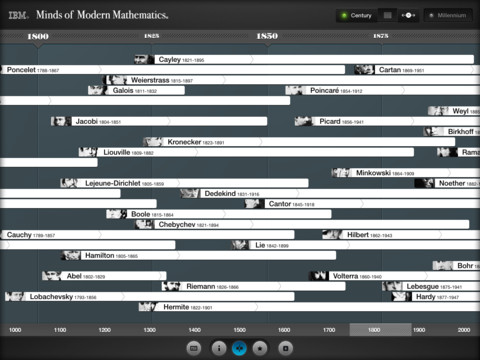
The app provides a wealth of historical information, high-resolution portrait and detailed personal biography of mathematicians who lived between 1000 and 1960.
Among other things contains 495 high-resolution images of artifacts selected and painstakingly retouched from the original exhibit Mathematica: A World of Numbers ... and Beyond and 9 original Eames educational films about Mathematica.

[video:http://www.youtube.com/watch?v=txHp-Z3bG3Q]

Previews of the app:
IBM 3 IBM 1IBM 2

IBM 4


Scienza in rete è un giornale senza pubblicità e aperto a tutti per garantire l’indipendenza dell’informazione e il diritto universale alla cittadinanza scientifica. Contribuisci a dar voce alla ricerca sostenendo Scienza in rete. In questo modo, potrai entrare a far parte della nostra comunità e condividere il nostro percorso. Clicca sul pulsante e scegli liberamente quanto donare! Anche una piccola somma è importante. Se vuoi fare una donazione ricorrente, ci consenti di programmare meglio il nostro lavoro e resti comunque libero di interromperla quando credi.


prossimo articolo

The Indi Gregory case: some questions for reflection

"The 'Indi Gregory Case' encompasses various levels of reflection (medical, ethical, legal, and political) that are interconnected but often confused in media debates. The philosopher of science and bioethicist Giovanni Boniolo analyzes them through a series of questions, the answers to which may also help us in similar cases that may arise in the future. Image: Twilight, by Dilma Freddi.

There has been, and continues to be, much talk about the "Indi Gregory Case." Indi was an eight-month-old baby suffering from a severe, and so far fatal, rare disease. More specifically, Indi was affected by D,L-2-hydroxyglutaric aciduria: a genetic disease with autosomal recessive inheritance caused by defects in the SLC25A1 gene.