




fbpx Facciamo luce sugli investimenti pubblici e privati sui vaccini Covid-19 | Scienza in rete

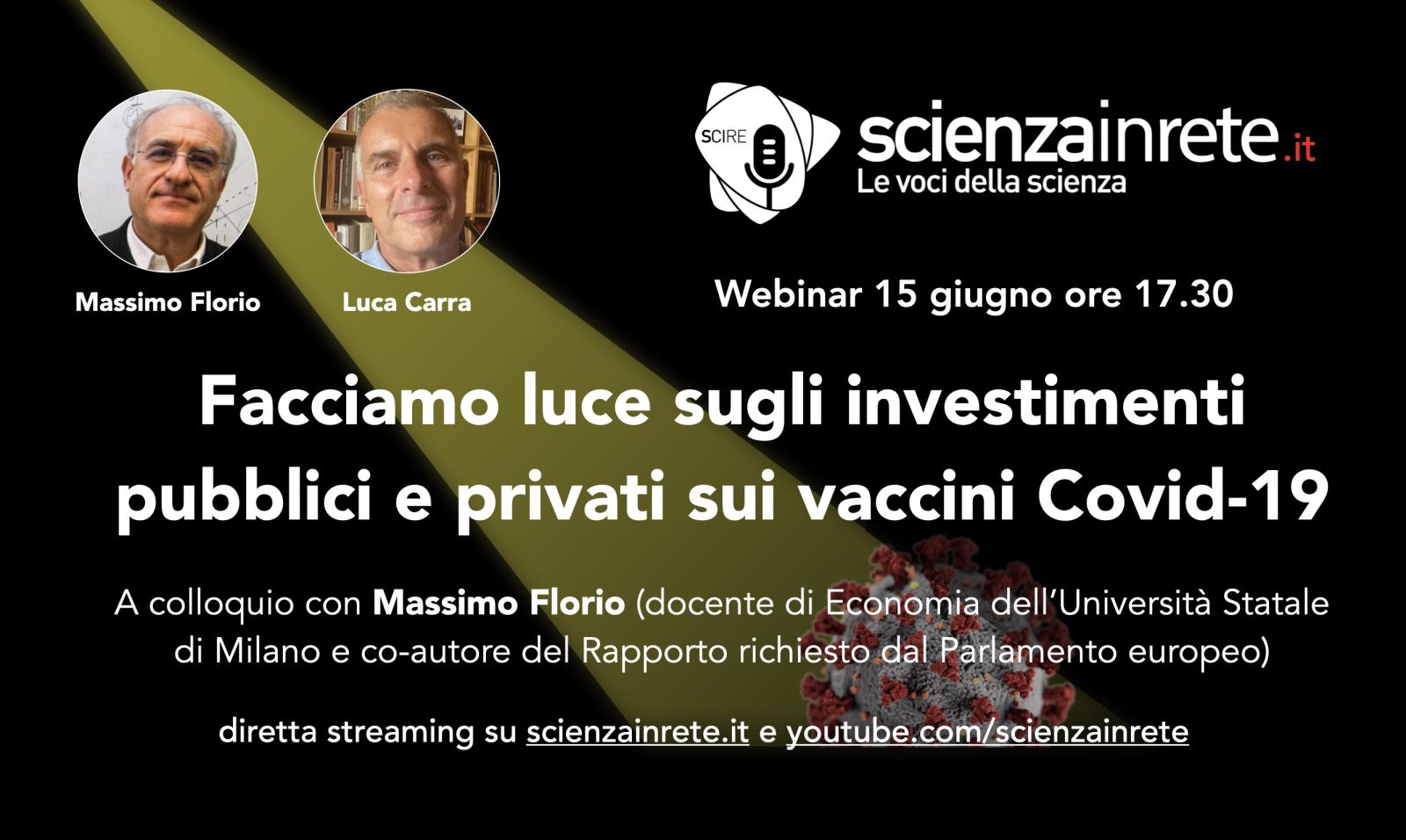
Facciamo luce sugli investimenti pubblici e privati sui vaccini Covid-19

--
Tempo di lettura: 1 min

Luca Carra intervista Massimo Florio, dell'Università degli studi di Milano, che insieme ai suoi colleghi ha prodotto un report per ricostruire la mappa degli investimenti pubblici e privati sulla ricerca e sviluppo dei vaccini su richiesta del Parlamento europeo. Il Comitato speciale del Parlamento UE sul Covid ha approvato il 13 giugno delle raccomandazioni per migliorare la risposta alle minacce pandemiche.



Scienza in rete è un giornale senza pubblicità e aperto a tutti per garantire l’indipendenza dell’informazione e il diritto universale alla cittadinanza scientifica. Contribuisci a dar voce alla ricerca sostenendo Scienza in rete. In questo modo, potrai entrare a far parte della nostra comunità e condividere il nostro percorso. Clicca sul pulsante e scegli liberamente quanto donare! Anche una piccola somma è importante. Se vuoi fare una donazione ricorrente, ci consenti di programmare meglio il nostro lavoro e resti comunque libero di interromperla quando credi.


prossimo articolo

Oppenheimer, a film that equally addresses science and ethics

The story of the physicist Robert Oppenheimer is a controversial one, filled with both highlights and shadows. Although it has already been the subject of numerous biographies, it is now the focus of the eponymous film directed by Christopher Nolan. Fabio Terragni reviews it for 'Scienza in rete'.

It's true: Robert Oppenheimer didn't "invent" the atomic bomb. The most tragic achievement of 20th-century science and technology was the result of the first example of Big Science: the Manhattan Project, an unprecedented effort by the American government to outpace Nazi Germany, which cost over two billion dollars and involved tens of thousands of top-tier physicists, engineers, and technicians.