
fbpx ERC annuonces Work Programme 2015 details | Page 9 | Science in the net

ERC annuonces Work Programme 2015 details

Read time: 1 min

The European Commission has announced details of the 2015 Work Programme, including the ones for Horizon 2020.

The 2015 programme is allocating a total of 2.7 billion euros to the Excellent Science pillar, down from e billion in 2014, and 2.3 billion to the Societal Challenges, a decrease from 2.8 billion euros; the total budget of Horizon 2020 remains the same at 78.6 billion euors, but there are still annual fluctuations in funding.
Máire Geoghegan-Quinn, European Commissioner for Research, Innovation and Science, said: “We are also firing the starting gun on the 2015 calls, and I am confident they will meet equally strong demand.”

Within the Work Programme, the EU Commission has announced the opening and closing date of new 2015 calls as well:

STARTING GRANT

Opening:  ottobre 7th 2014
Closing:  febrary 3th 2015

CONSOLIDATOR GRANT:

Opening: novembre 13th 2014
Scadenza: march 12th 2015

ADVANCED GRANT:

Opening: febraury 10th 2015
Scadenza: june 2th 2015

PROOF OF CONCEPT:

Opening: november 7th 2014
Closing: ebraury 5th 2015 - may 28th 2015 -  ottobre 1st 2015

You can download the entire programme document here
Sezioni: 
Research Policy

prossimo articolo

Why have neural networks won the Nobel Prizes in Physics and Chemistry?

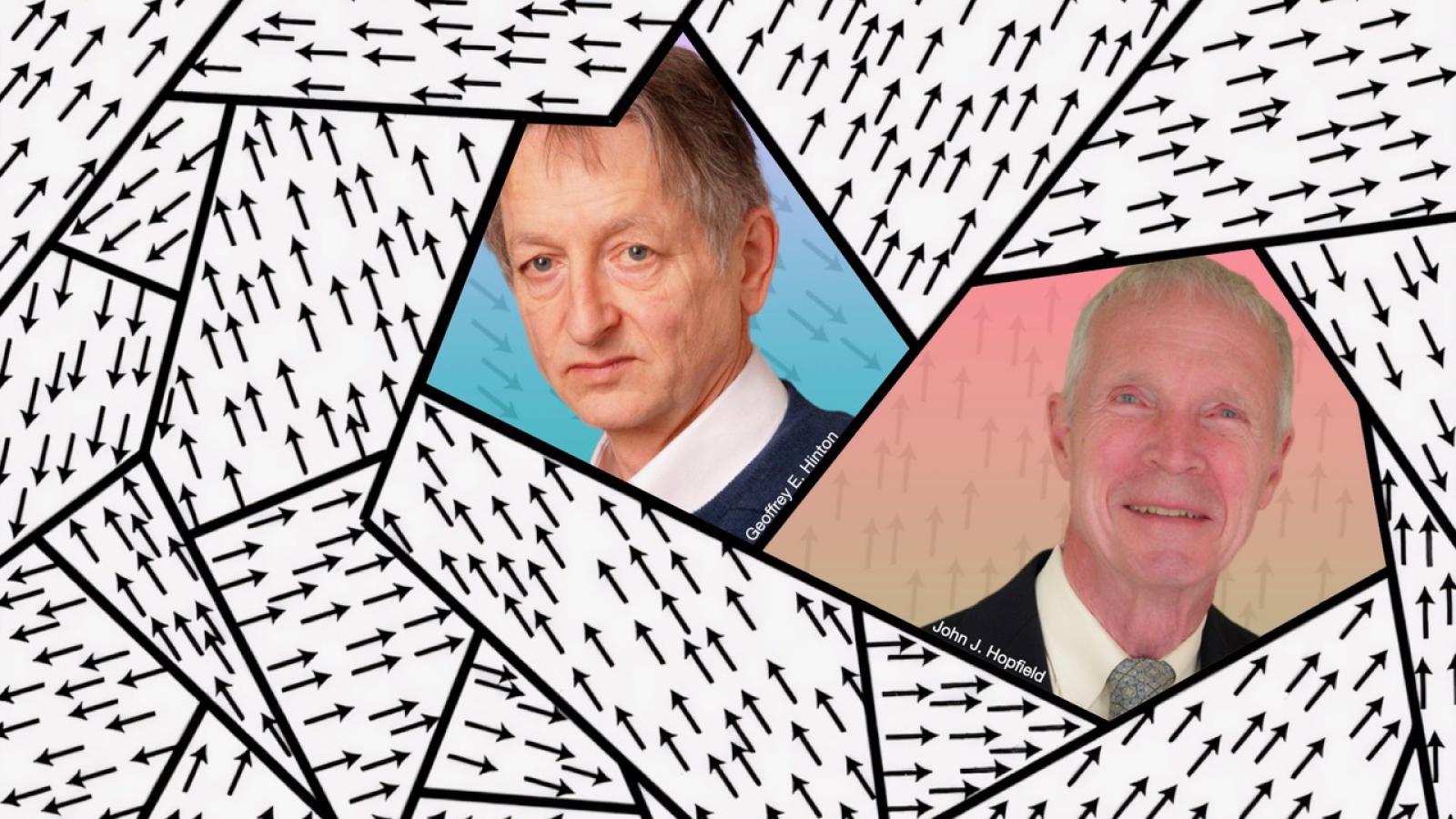
This year, Artificial Intelligence played a leading role in the Nobel Prizes for Physics and Chemistry. More specifically, it would be better to say machine learning and neural networks, thanks to whose development we now have systems ranging from image recognition to generative AI like Chat-GPT. In this article, Chiara Sabelli tells the story of the research that led physicist and biologist John J. Hopfield and computer scientist and neuroscientist Geoffrey Hinton to lay the foundations of current machine learning.

Image modified from the article "Biohybrid and Bioinspired Magnetic Microswimmers" https://onlinelibrary.wiley.com/doi/epdf/10.1002/smll.201704374

The 2024 Nobel Prize in Physics was awarded to John J. Hopfield, an American physicist and biologist from Princeton University, and to Geoffrey Hinton, a British computer scientist and neuroscientist from the University of Toronto, for utilizing tools from statistical physics in the development of methods underlying today's powerful machine learning technologies.