
The news was officially announced almost simultaneously with the International Women's Day: the United Nations Office for Outer Space Affairs (Unoosa) new Director is the Italian astrophysics Simonetta Di Pippo. For the first time our country is at the top of the body responsible for the programs of the UN to promote international cooperation in the space sector and cut this milestone thanks to the extraordinary professionalism of a woman.
"We are particularly proud of this nomination - said the special commissioner of the Italian Space Agency, Aldo Sandrulli - which will further luster to our country and ASI. It's a job - said Sandrulli - high responsibility to which the Di Pippo came thanks to his undoubted skills and proven professionalism."
"Great satisfaction" was expressed by Foreign Minister Federica Mogherini: "It is a significant recognition - said the Mogherini - Italian excellence in science at an international level."
The astrophysics Italian - born in Rome in 1959 and entered the ASI fine since its founding in 1988 - was director of Human Spaceflight at the European Space Agency and Special Adviser to the Director General, as is the current Head Observatory for the European Space Policy for the Italian Space Agency.
To date, the Di Pippo is also, among other things, co-founder President of the International Women in Aerospace Europe (WIA -E). The Unoosa is based in Vienna and operates mainly through the COPUOS, the Committee of the General Assembly for the peaceful uses of outer space. The Italian ambassador to the United Nations in Vienna Filippo Formica emphasized the value of the appointment of Di Pippo for Italy, which " demonstrates, once more, that the Italian excellence are highly competitive on the international level."
Source: Italian Space Agency
Simonetta Di Pippo is the new UNOOSA Director
Autori:
di redazione
Sezioni:
Indice:
International Organization
prossimo articolo
COP28: It's Up to the Oil Tycoon to Say Goodbye to Fossils
di Luca Carra
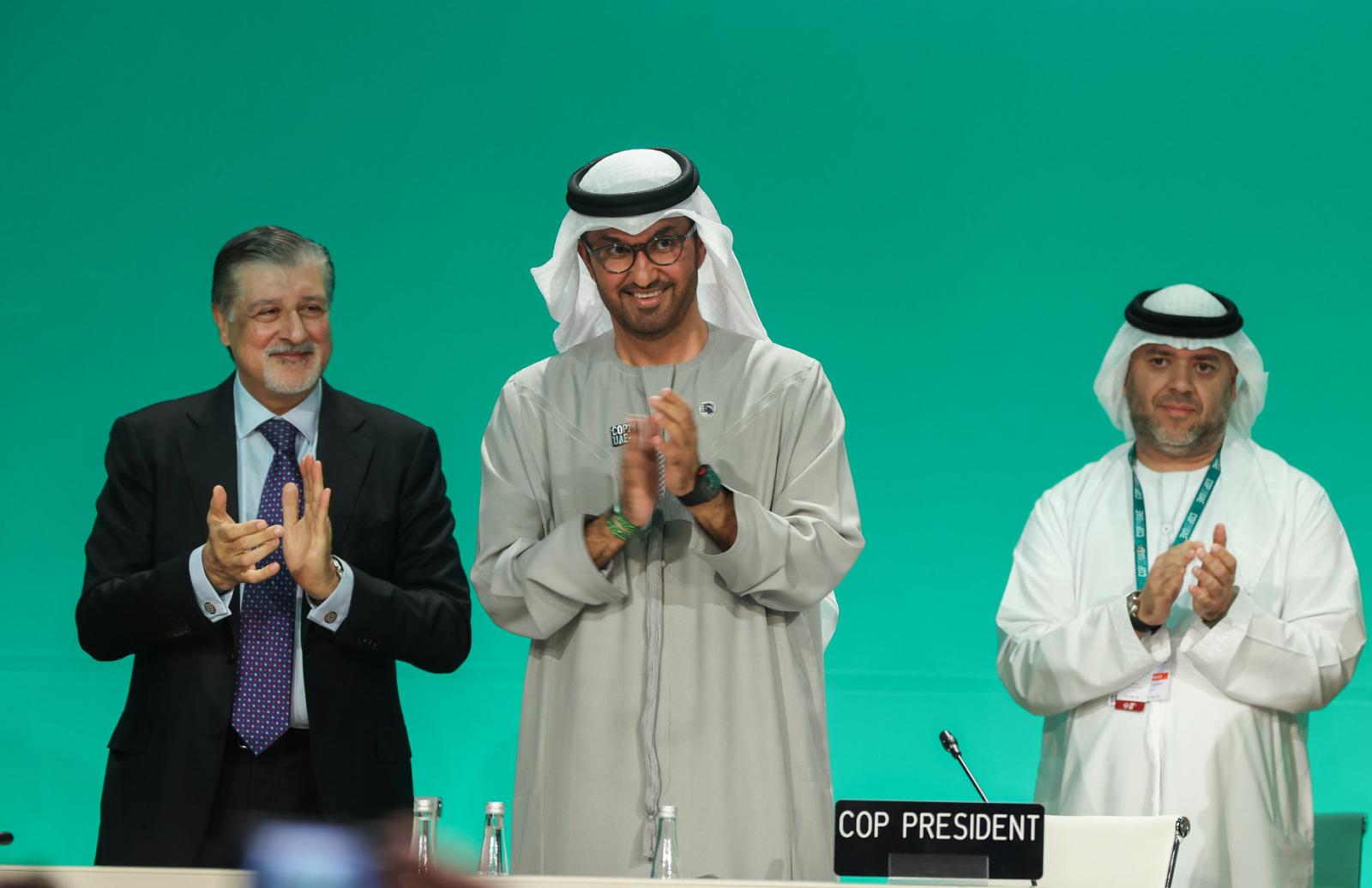
Source: UNFCCC.
It had to be an oil tycoon to say goodbye to fossils, like the smoker extinguishing his last cigarette and the alcoholic giving up the Negroni. And so it was: for the first time at a United Nations climate change Conference of the Parties, we declare in black and white our desire to abandon coal, gas, and oil. COP28 was held in Dubai, one of the countries most dependent on fossil fuels, and was coordinated by the extremely capable Sultan al-Jaber, president of the largest oil company, ADNOC.