
fbpx A SPACE event for European SMEs | Page 9 | Science in the net

A SPACE event for European SMEs

Read time: 1 min

Within the framework of the European SME Week 2013, APRE on behalf of Ministry for Education, University and Research (MIUR), in collaboration with the Italian Space Agency (ASI) and with the support of COSMOS+, the SPACE National Contact Points network and the Enterprise Europe Network (EEN), is organizing the “Countdown on Horizon 2020 Space International Information and brokerage event”, which will take place in Rome on the 27th of November 2013.

The international event will provide anticipations on the first calls for proposals under the Space theme and the SME programme in Horizon 2020 as well as brokerage sessions and a Canadian SMEs delegation to Italy, thanks to the collaboration with the Canadian Embassy in Rome and co-organized by the EEN Canadian node. The event will be addressed to universities, research centres, industry, SMEs and SMEs associations, local administrations, providing new opportunities and competitive advantages for the participants offering strategic networking opportunities.

For more information and registering, visit the event page.
Autori: 
Sezioni: 
Horizon 2020

prossimo articolo

Why have neural networks won the Nobel Prizes in Physics and Chemistry?

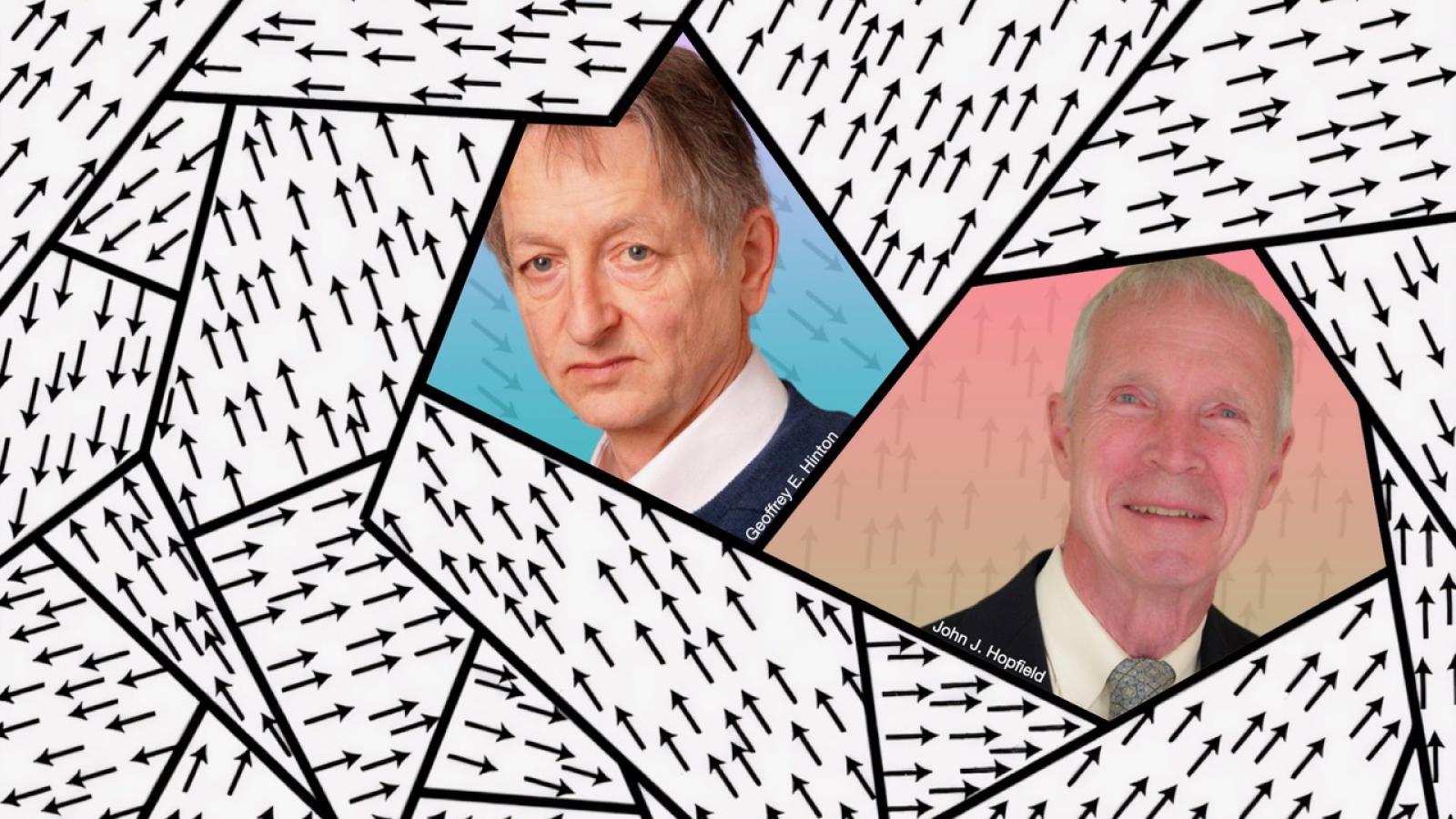
This year, Artificial Intelligence played a leading role in the Nobel Prizes for Physics and Chemistry. More specifically, it would be better to say machine learning and neural networks, thanks to whose development we now have systems ranging from image recognition to generative AI like Chat-GPT. In this article, Chiara Sabelli tells the story of the research that led physicist and biologist John J. Hopfield and computer scientist and neuroscientist Geoffrey Hinton to lay the foundations of current machine learning.

Image modified from the article "Biohybrid and Bioinspired Magnetic Microswimmers" https://onlinelibrary.wiley.com/doi/epdf/10.1002/smll.201704374

The 2024 Nobel Prize in Physics was awarded to John J. Hopfield, an American physicist and biologist from Princeton University, and to Geoffrey Hinton, a British computer scientist and neuroscientist from the University of Toronto, for utilizing tools from statistical physics in the development of methods underlying today's powerful machine learning technologies.