
fbpx NanotechItaly 2013 call for papers | Page 9 | Science in the net

NanotechItaly 2013 call for papers

Primary tabs

Read time: 1 min

Nowadays, Responsible Research and Innovation (RRI) demand a problem-solving approach, aiming to excellence in science, industrial leadership, responsiveness to societal challenges. These goals are guiding Horizon 2020, which will foster European growth in the coming years and NanotechItaly 2013 will showcase how nanotechnologies, together with the other Key Enabling Technologies (KETs), are instrumental to promote competitiveness and innovation in priority areas also relevant for the national economy.
The Conference, scheduled from 27 to 29 November 2013, in Venice, Italy, will be an opportunity to deepen relevant issues and establish useful contacts for the participation to the Horizon 2020 calls, expected to be published at the beginning of 2014. Among the other themes of the three days event will be: healthcare and wellbeing; quality in the food value chain; new materials and processes; safety and social impacts;

The call for papers deadline is July 15th, 2013. Contributions should address scientific and industrial developments in the topic areas of the conference and can be in the form of an oral presentation or a poster.

For more informations about the conference and call for workshops and Start-ups, visit the site of the event.
Autori: 
Sezioni: 
Free tag: 
Horizon 2020

prossimo articolo

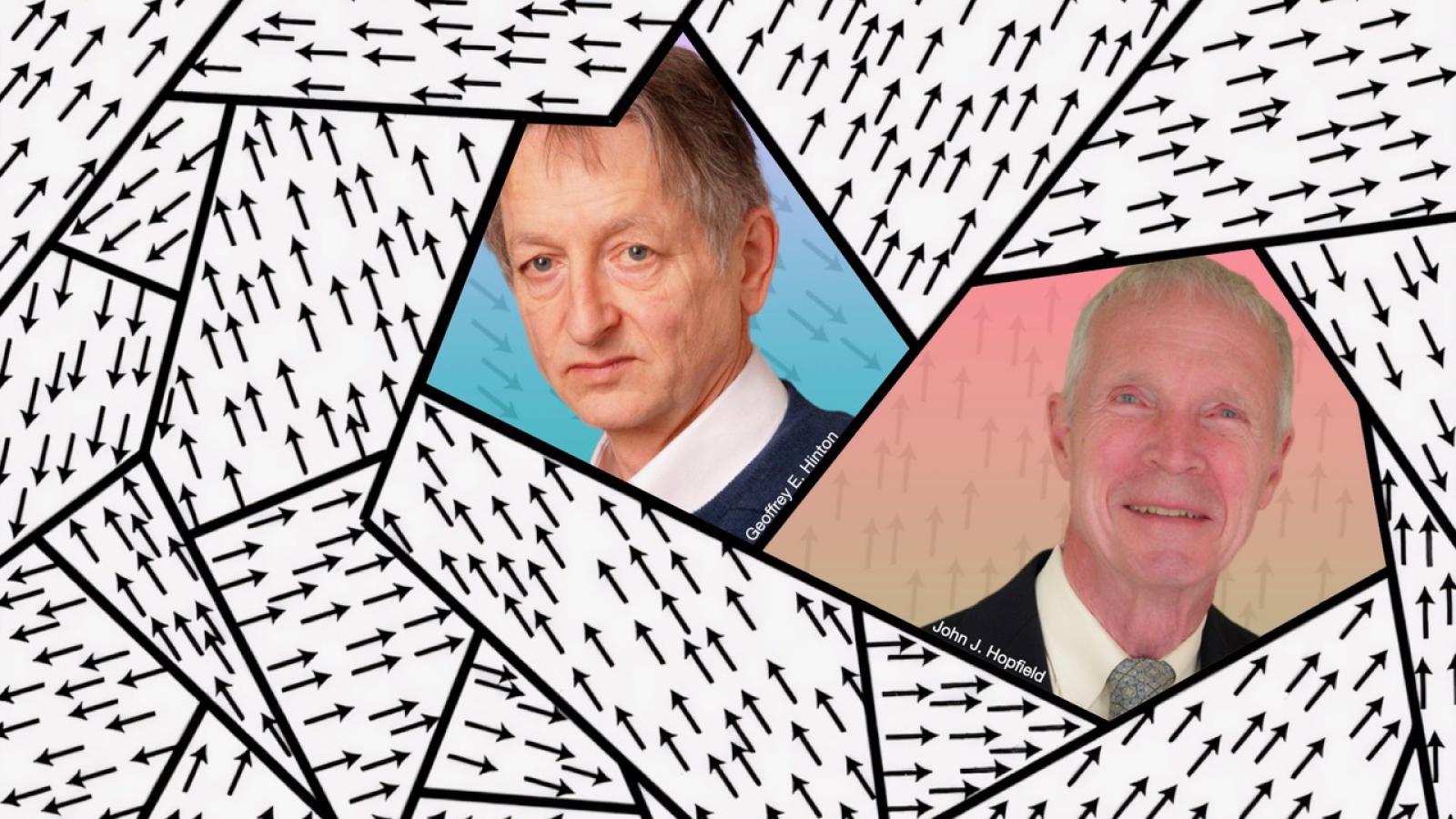
Why have neural networks won the Nobel Prizes in Physics and Chemistry?

This year, Artificial Intelligence played a leading role in the Nobel Prizes for Physics and Chemistry. More specifically, it would be better to say machine learning and neural networks, thanks to whose development we now have systems ranging from image recognition to generative AI like Chat-GPT. In this article, Chiara Sabelli tells the story of the research that led physicist and biologist John J. Hopfield and computer scientist and neuroscientist Geoffrey Hinton to lay the foundations of current machine learning.

Image modified from the article "Biohybrid and Bioinspired Magnetic Microswimmers" https://onlinelibrary.wiley.com/doi/epdf/10.1002/smll.201704374

The 2024 Nobel Prize in Physics was awarded to John J. Hopfield, an American physicist and biologist from Princeton University, and to Geoffrey Hinton, a British computer scientist and neuroscientist from the University of Toronto, for utilizing tools from statistical physics in the development of methods underlying today's powerful machine learning technologies.