fbpx An Italian lead for worldwide immunology | Page 9 | Science in the net

An Italian lead for worldwide immunology

Primary tabs

Read time: 1 min


Alberto Mantovani, Chief science officer of the Istituto Clinico Humanitas and Professor of General Pathology at the University of Milan, has been elected President of the International Union of Immunological Societies, which gathers all the immunological societies around the world.

Mantovani would then represent about 70,000 immunologists from more than 100 countries. The election occurred during the XV International Congress of Immunology, organized by the IUIS and the Italian Society of Immunology, Clinical Immunology and Allergology (SIICA), now ongoing in Milan.


Autori: 
Sezioni: 
Immunology

prossimo articolo

Why have neural networks won the Nobel Prizes in Physics and Chemistry?

This year, Artificial Intelligence played a leading role in the Nobel Prizes for Physics and Chemistry. More specifically, it would be better to say machine learning and neural networks, thanks to whose development we now have systems ranging from image recognition to generative AI like Chat-GPT. In this article, Chiara Sabelli tells the story of the research that led physicist and biologist John J. Hopfield and computer scientist and neuroscientist Geoffrey Hinton to lay the foundations of current machine learning.

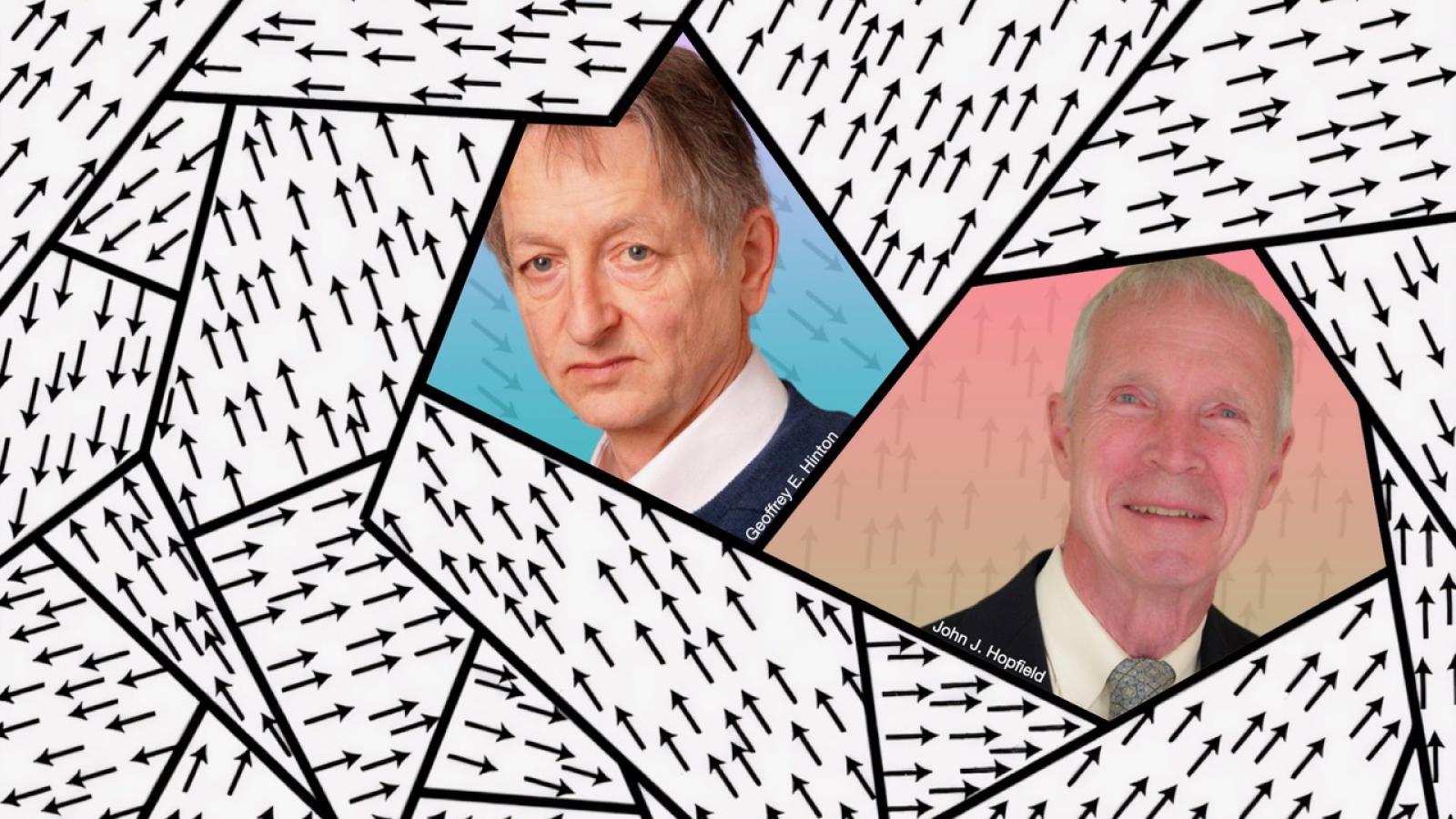
Image modified from the article "Biohybrid and Bioinspired Magnetic Microswimmers" https://onlinelibrary.wiley.com/doi/epdf/10.1002/smll.201704374

The 2024 Nobel Prize in Physics was awarded to John J. Hopfield, an American physicist and biologist from Princeton University, and to Geoffrey Hinton, a British computer scientist and neuroscientist from the University of Toronto, for utilizing tools from statistical physics in the development of methods underlying today's powerful machine learning technologies.