
fbpx Increase in the Midwest America | Page 9 | Science in the net

Increase in the Midwest America

Primary tabs

Read time: 1 min

A strong increase of cases of a novel swine-origin H3N2 influenza A virus has been reported in the USA, with Indiana and Ohio being the most affected states. First cases occurred in July 2011 and, since last week, only 29 people showed symptoms of this virus infection, but recently the count has quickly raised to 158 cases, mainly children. This flu spread from pigs to humans but had mild symptoms and did not cause any victim, with only very few patients that needed hospitalization. The more recent cases appear to have spread from pigs to humans but three cases, back in November 2011, suggested human-to-human transmission.

Dr. Joseph Bresee, epidemiologist of the Centers for Disease Control and Prevention (CDC), said that this H3N2 variant contained a gene from the 2009 pandemic virus that “may confirm increased transmissibility to and among humans compared with other variant influenza viruses”. However, he made clear that “this is not a pandemic situation” and strongly recommended to take some basilar precautions, like washing hands before and after contacts with pigs, and avoiding food and drinks into livestock barns. Pregnant women, young children and old people should be particularly careful, as everybody with a weakened immune systems.
Autori: 
Sezioni: 
Dossier: 
Swine flu

prossimo articolo

Why have neural networks won the Nobel Prizes in Physics and Chemistry?

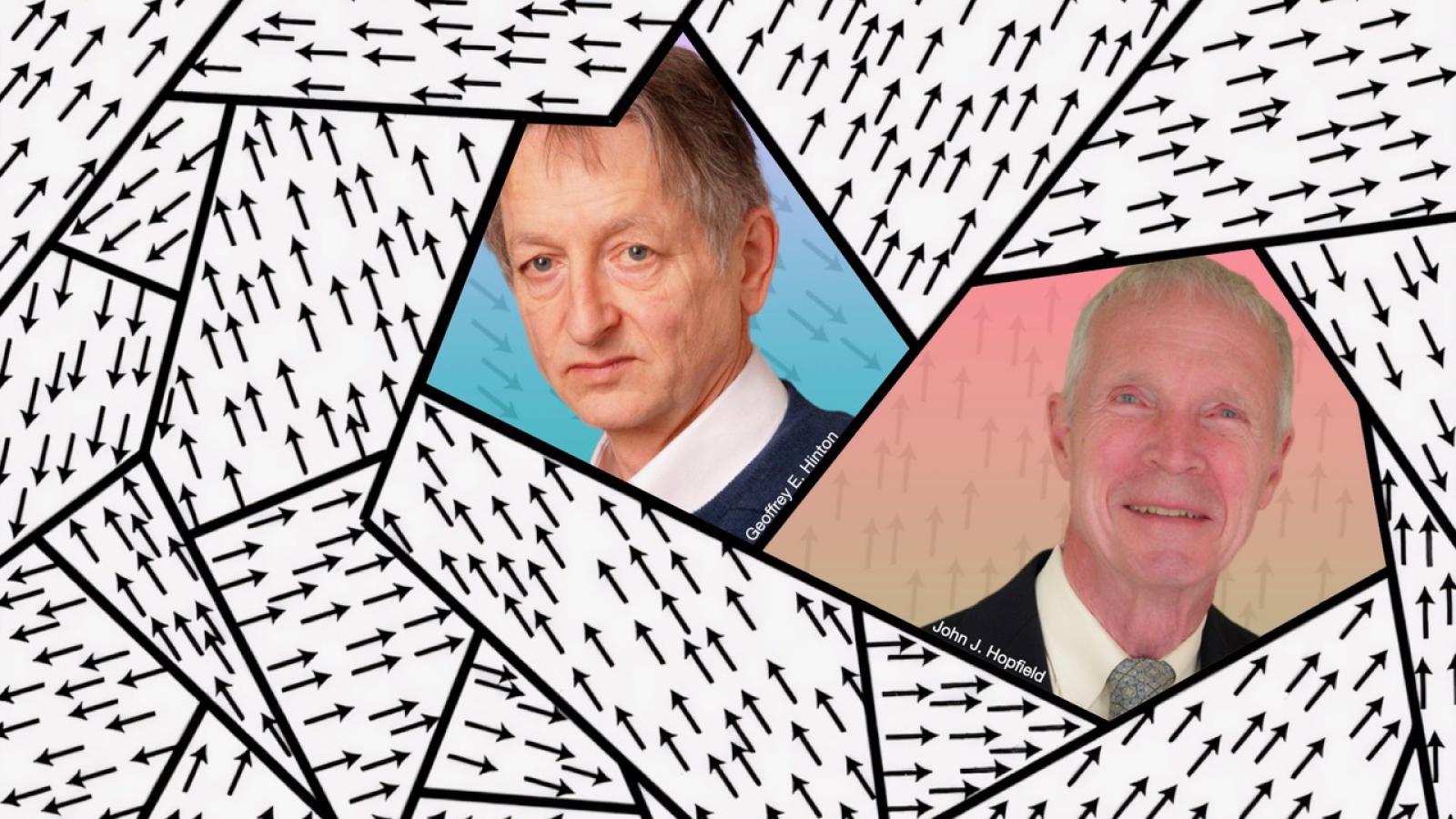
This year, Artificial Intelligence played a leading role in the Nobel Prizes for Physics and Chemistry. More specifically, it would be better to say machine learning and neural networks, thanks to whose development we now have systems ranging from image recognition to generative AI like Chat-GPT. In this article, Chiara Sabelli tells the story of the research that led physicist and biologist John J. Hopfield and computer scientist and neuroscientist Geoffrey Hinton to lay the foundations of current machine learning.

Image modified from the article "Biohybrid and Bioinspired Magnetic Microswimmers" https://onlinelibrary.wiley.com/doi/epdf/10.1002/smll.201704374

The 2024 Nobel Prize in Physics was awarded to John J. Hopfield, an American physicist and biologist from Princeton University, and to Geoffrey Hinton, a British computer scientist and neuroscientist from the University of Toronto, for utilizing tools from statistical physics in the development of methods underlying today's powerful machine learning technologies.