fbpx Fourteen Italian voices within the Horizon 2020 Committee | Page 6 | Science in the net

Fourteen Italian voices within the Horizon 2020 Committee

Read time: 1 min

The Italian Minister for Education, University and Research, Maria Chiara Carrozza, appointed the national representatives for the Horizon 2020 Committee, with the aim of preparing our country to the new Framework Programme for European Research (2014-2020).

According to the Minister, an active and continuous presence of our representatives is necessary to get a quote of the funding that, at least, equals the Italian budgetary contribute to the Programme – something that did not happen in the FP7. Also, the whole national systems of research, innovation and of course politics have to offer their support. The Minister for Education, University and Research will be on the frontline in Bruxelles, to highlight the role of country with such a remarkable scientific and industrial tradition as Italy.

The fourteen Italian members of the Committee (seven men and seven women) are thus called to represent Italy in Europe, within their specific fields of expertise.

Source: MIUR
Autori: 
Sezioni: 
Horizon 2020

prossimo articolo

The Log and the Speck: The True Causes of Wildfires and Floods

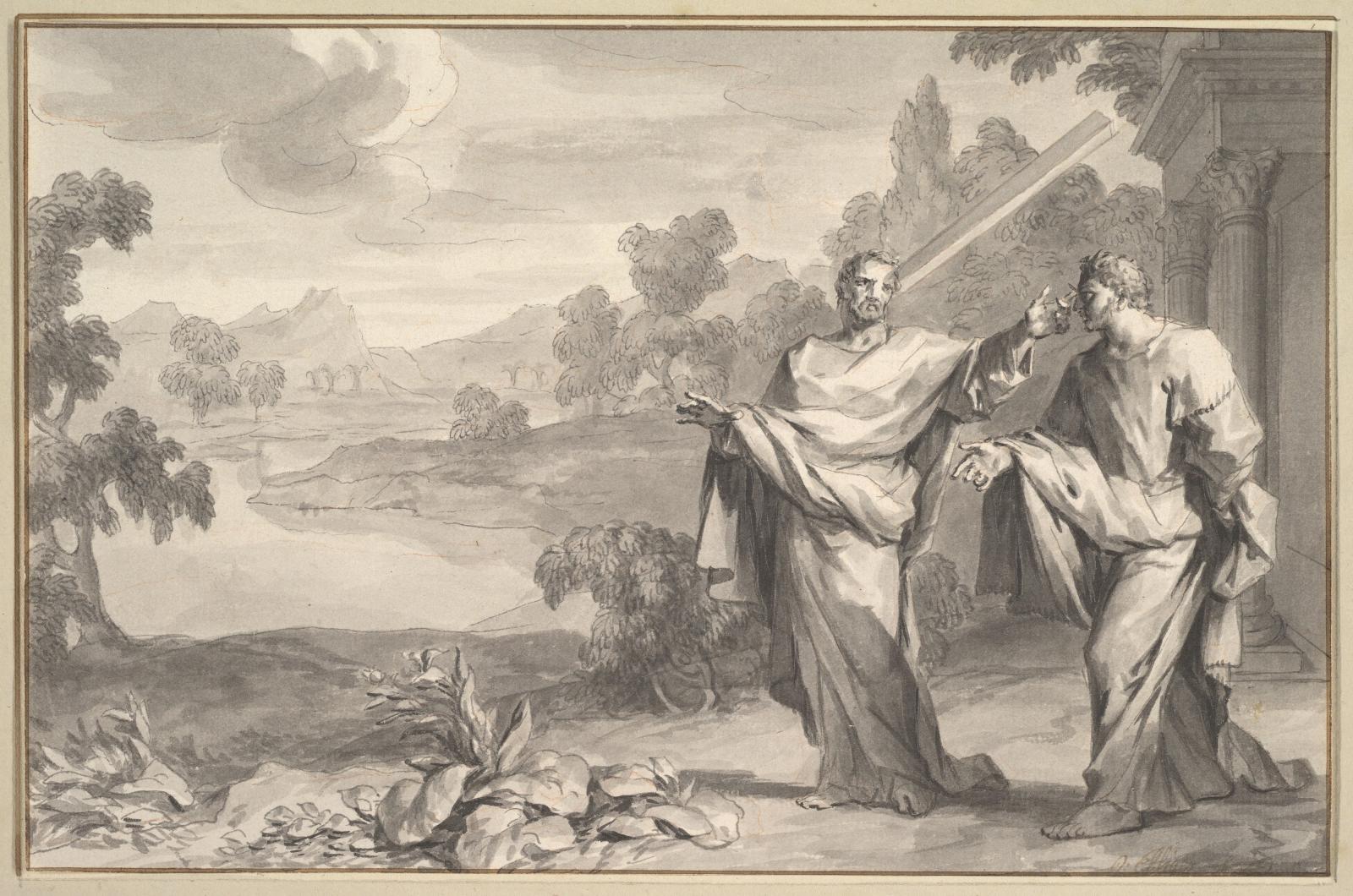
The Parable of the Speck and the Log. Ottmar Ellinger the Younger

The wildfires in Los Angeles and other extreme events, as well as their media coverage, highlight how immediate causes often overshadow the real issue: climate change, which increases the intensity and frequency of catastrophic phenomena. Tackling this crisis requires urgent action to reduce greenhouse gas emissions using already available technologies and investments to strengthen territorial resilience. Only a combination of mitigation and adaptation can prevent irreversible damage, ensuring a sustainable future for the next generations.

In the image: The Parable of the Speck and the Log. Ottmar Ellinger the Younger

Even in the face of the vast Los Angeles wildfires—still ongoing—as in other recent circumstances, the media's attention is primarily focused on the most immediate and “proximal” causes: the malfunctioning of the power grid, insufficient water reserves, the unpreparedness of newly hired firefighters, and so on.