
fbpx ERC annuonces Work Programme 2015 details | Page 8 | Science in the net

ERC annuonces Work Programme 2015 details

Primary tabs

Read time: 1 min

The European Commission has announced details of the 2015 Work Programme, including the ones for Horizon 2020.

The 2015 programme is allocating a total of 2.7 billion euros to the Excellent Science pillar, down from e billion in 2014, and 2.3 billion to the Societal Challenges, a decrease from 2.8 billion euros; the total budget of Horizon 2020 remains the same at 78.6 billion euors, but there are still annual fluctuations in funding.
Máire Geoghegan-Quinn, European Commissioner for Research, Innovation and Science, said: “We are also firing the starting gun on the 2015 calls, and I am confident they will meet equally strong demand.”

Within the Work Programme, the EU Commission has announced the opening and closing date of new 2015 calls as well:

STARTING GRANT

Opening:  october 7th2014
Closing:  febraury 3th 2015

CONSOLIDATOR GRANT:

Opening: november 13th 2014
Closing: march 12th 2015

ADVANCED GRANT:

Opening: febraury 10th 2015
Closing: june 2th 2015

PROOF OF CONCEPT:

Opening: november 7th 2014
Closing: febraury 5th 2015 - may 28th 2015 -  october 1st 2015

You can download the entire programme document here
Sezioni: 
Research Policy

prossimo articolo

Discovered a New Carbon-Carbon Chemical Bond

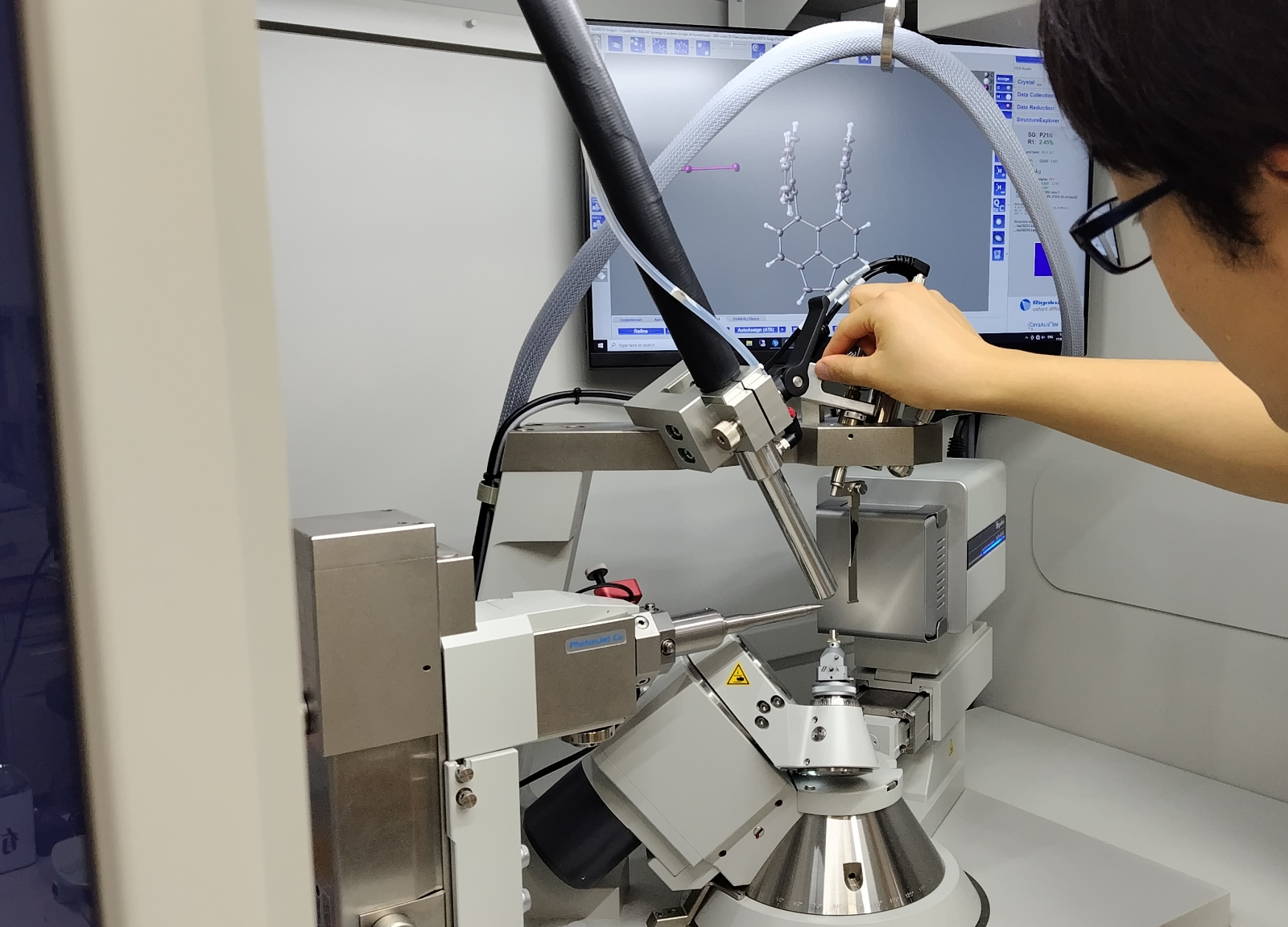
A group of researchers from Hokkaido University has provided the first experimental evidence of the existence of a new type of chemical bond: the single-electron covalent bond, theorized by Linus Pauling in 1931 but never verified until now. Using derivatives of hexaarylethane (HPE), the scientists were able to stabilize this unusual bond between two carbon atoms and study it with spectroscopic techniques and X-ray diffraction. This discovery opens new perspectives in understanding bond chemistry and could lead to the development of new materials with innovative applications.

In the cover image: study of the sigma bond with X-ray diffraction. Credits: Yusuke Ishigaki

After nearly a year of review, on September 25, a study was published in Nature that has sparked a lot of discussion, especially among chemists. A group of researchers from Hokkaido University synthesized a molecule that experimentally demonstrated the existence of a new type of chemical bond, something that does not happen very often.