
The mysterious disease that killed 14 people in Uganda since the beginning of July 2012 has finally been identified as the Ebola virus. The Ministry of Health (MoH) of Uganda and a World Health Organisation (WHO) representative reported the news after laboratory confirmation was done by the Uganda Virus Research Institute in Entebbe. A total of 20 total cases have been confirmed in Kibaale district, in the western part of Uganda, nine of which have occurred in a single household. Ebola virus causes haemorrhagic fever and internal bleeding; it is highly infectious as well as contagious.
The MoH coordinates a national task force and is cooperating with stakeholders, WHO and the Center for Disease Control and Prevention (CDC) in order to control the outbreak. Kibaale hospital has established a temporary isolation ward for suspected, probable and confirmed cases, with the collaboration of Médecins Sans Frontières (MSF).
At the moment, WHO does not recommend that any travel or trade restrictions are applied to Uganda.
Ebola outbreak in Uganda
Primary tabs
prossimo articolo
Why have neural networks won the Nobel Prizes in Physics and Chemistry?
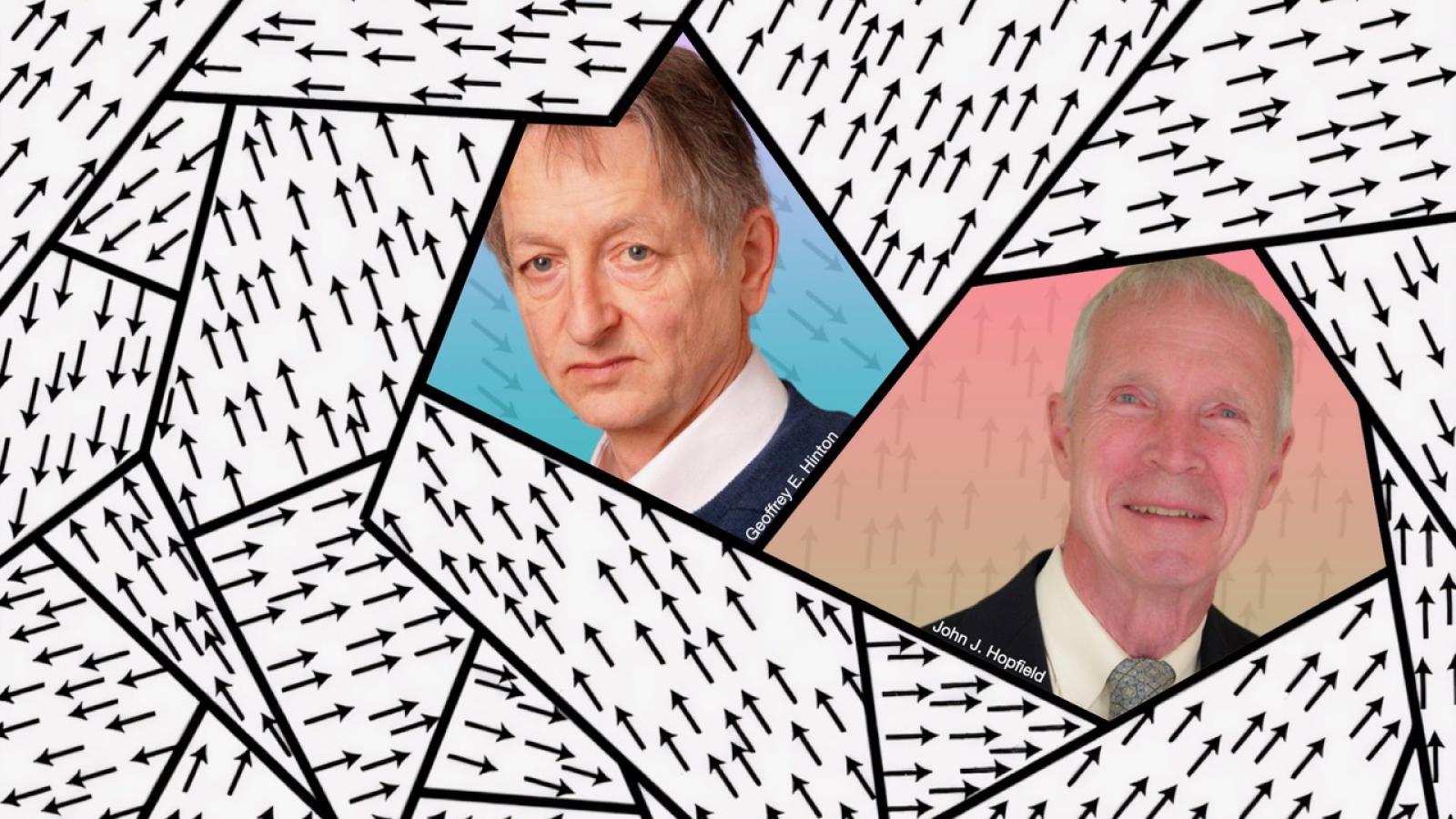
This year, Artificial Intelligence played a leading role in the Nobel Prizes for Physics and Chemistry. More specifically, it would be better to say machine learning and neural networks, thanks to whose development we now have systems ranging from image recognition to generative AI like Chat-GPT. In this article, Chiara Sabelli tells the story of the research that led physicist and biologist John J. Hopfield and computer scientist and neuroscientist Geoffrey Hinton to lay the foundations of current machine learning.
Image modified from the article "Biohybrid and Bioinspired Magnetic Microswimmers" https://onlinelibrary.wiley.com/doi/epdf/10.1002/smll.201704374
The 2024 Nobel Prize in Physics was awarded to John J. Hopfield, an American physicist and biologist from Princeton University, and to Geoffrey Hinton, a British computer scientist and neuroscientist from the University of Toronto, for utilizing tools from statistical physics in the development of methods underlying today's powerful machine learning technologies.