
The mysterious disease that killed 14 people in Uganda since the beginning of July 2012 has finally been identified as the Ebola virus. The Ministry of Health (MoH) of Uganda and a World Health Organisation (WHO) representative reported the news after laboratory confirmation was done by the Uganda Virus Research Institute in Entebbe. A total of 20 total cases have been confirmed in Kibaale district, in the western part of Uganda, nine of which have occurred in a single household. Ebola virus causes haemorrhagic fever and internal bleeding; it is highly infectious as well as contagious.
The MoH coordinates a national task force and is cooperating with stakeholders, WHO and the Center for Disease Control and Prevention (CDC) in order to control the outbreak. Kibaale hospital has established a temporary isolation ward for suspected, probable and confirmed cases, with the collaboration of Médecins Sans Frontières (MSF).
At the moment, WHO does not recommend that any travel or trade restrictions are applied to Uganda.
Ebola outbreak in Uganda
Primary tabs
prossimo articolo
No, the wildfires in California are not "ideological"
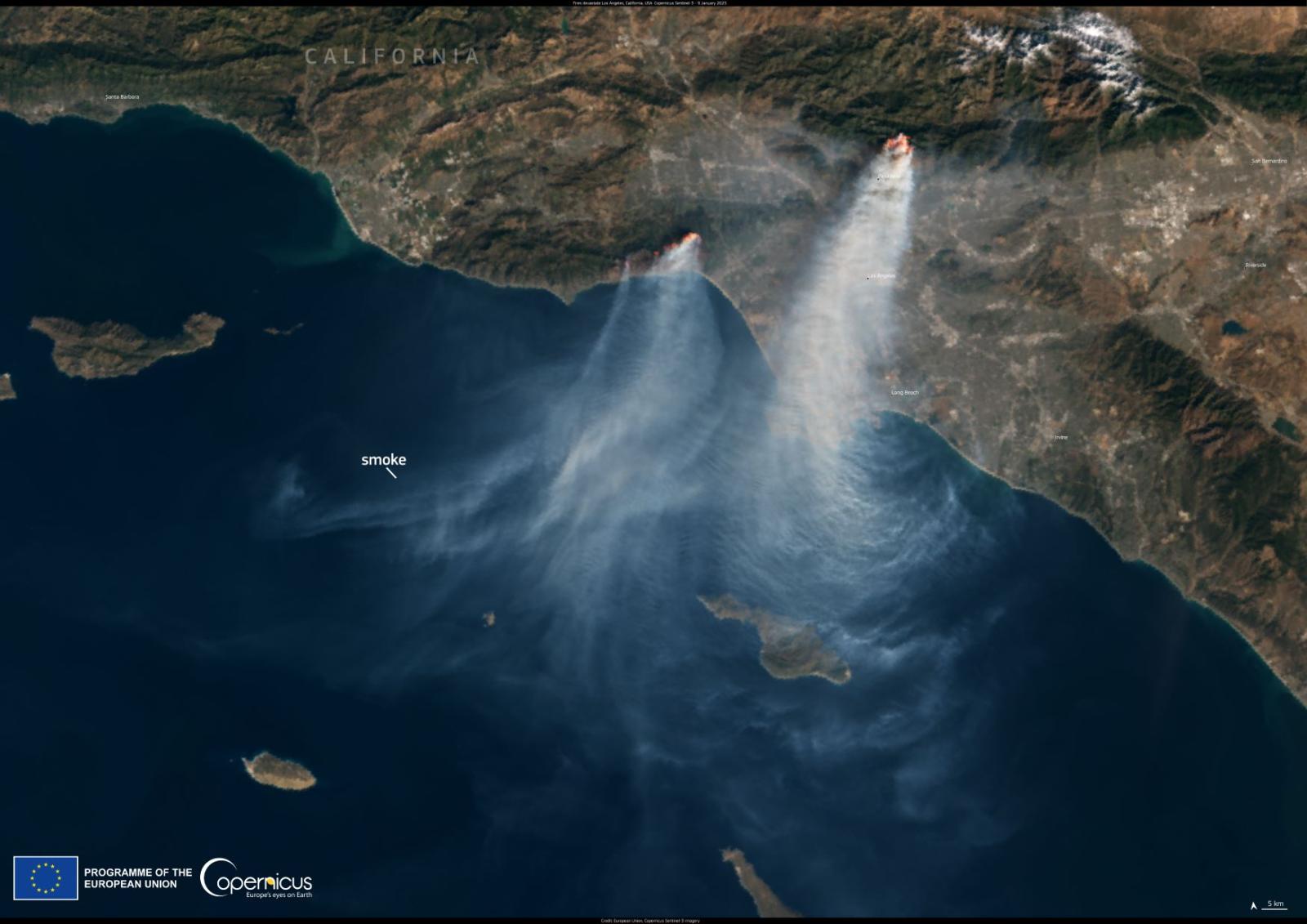
Rampini from the Corriere includes a series of errors and inaccuracies to support the unbearable rhetoric of “ideology” in the ecological transition and even in climate physics. Contrary to what he claims, the probability and intensity of wildfires are increasing due to the very "human" climate changes. Of course, solutions also involve proper management of vegetation and infrastructure, but this should not overshadow the goal of achieving net-zero emissions. Especially after 2024, which for the first time surpassed an average temperature of 1.5°C.
This topic is also addressed in the guide Extreme Weather Events and Climate Change: A Guide for Journalists, which the Climate Media Center Italia has translated into Italian from the original by World Weather Attribution.
Image: California wildfires photographed by the European Union, Copernicus Sentinel-3 imagery
Federico Rampini continues his battle against the “ideologies” of ecological transition.