fbpx Riveting talks by remarkable people, free to the world | Science in the net

Riveting talks by remarkable people, free to the world

Primary tabs

Read time: 2 mins

TED is a nonprofit devoted to Ideas Worth Spreading. It started out (in 1984) as a conference bringing together people from 3 worlds: Technology, Entertainment, Design. Since then its scope has become ever broader.

TED is owned by The Sapling Foundation, a private nonprofit foundation, a 501(c)3 organization under US tax code. It was established in 1996 by Chris Anderson, who was at that time a magazine publishing entrepreneur.

Along with 2 annual conferences, the TED Conference in Long Beach and Palm Springs each spring, and the TEDGlobal conference in Edinburgh UK each summer, TED includes the award-winning TEDTalks video site, the Open Translation Project and TED Conversations, the inspiring TED Fellows and TEDx programs, and the annual TED Prize.

Since June 2006, the talks have been offered for free viewing online, under a Creative Commons license, through TED.com. As of November 2011, over 1,050 talks are available free online. By January 2009 they had been viewed 50 million times. In June 2011, the viewing figure stood at more than 500 million.

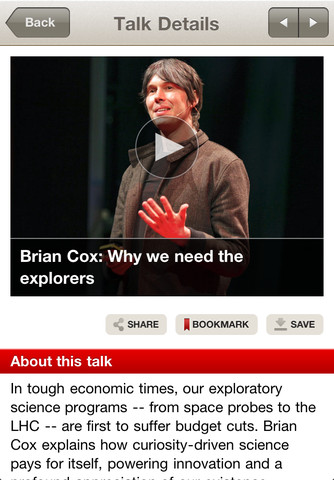
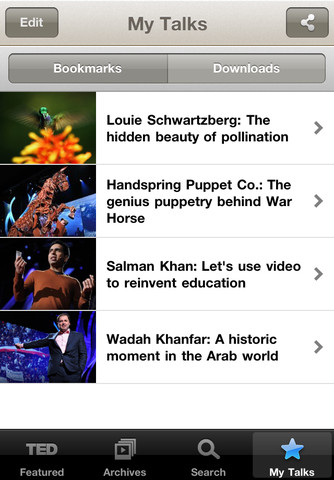
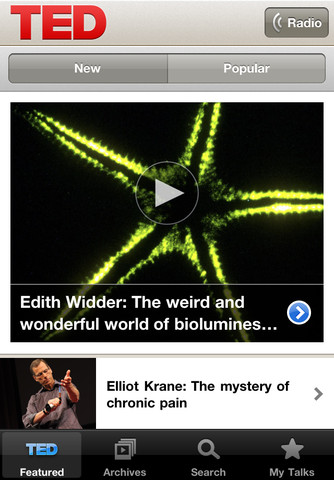
TED's official app offer more than 900 TEDTalk videos (with more added each week) for both iPad and iPhone.

For who is not familiar with english language in the AppStore there is an unofficial app TEDiSUB. Thanks to it, you can enjoy TED Talk videos with subtitles.

Video tutorial and previews of the app:

[video:http://www.youtube.com/watch?v=RBMEWlADhoA]
 TED 2 TED 3 TED 4 TED 1


Scienza in rete è un giornale senza pubblicità e aperto a tutti per garantire l’indipendenza dell’informazione e il diritto universale alla cittadinanza scientifica. Contribuisci a dar voce alla ricerca sostenendo Scienza in rete. In questo modo, potrai entrare a far parte della nostra comunità e condividere il nostro percorso. Clicca sul pulsante e scegli liberamente quanto donare! Anche una piccola somma è importante. Se vuoi fare una donazione ricorrente, ci consenti di programmare meglio il nostro lavoro e resti comunque libero di interromperla quando credi.


prossimo articolo

Oppenheimer, a film that equally addresses science and ethics

The story of the physicist Robert Oppenheimer is a controversial one, filled with both highlights and shadows. Although it has already been the subject of numerous biographies, it is now the focus of the eponymous film directed by Christopher Nolan. Fabio Terragni reviews it for 'Scienza in rete'.

It's true: Robert Oppenheimer didn't "invent" the atomic bomb. The most tragic achievement of 20th-century science and technology was the result of the first example of Big Science: the Manhattan Project, an unprecedented effort by the American government to outpace Nazi Germany, which cost over two billion dollars and involved tens of thousands of top-tier physicists, engineers, and technicians.