From Article 32 of the Italian Constitution to Article 72 of the Cuban Constitution, the universal right to health provides the common ground on which Italy and Cuba have built - despite profoundly different political and economic contexts - healthcare systems based on primary care, prevention, and community-based services. These models, while currently facing delays and significant challenges, invite reflection on how the protection of health remains one of the most important indicators of a country's level of civilization, social justice, and the quality of its democracy.
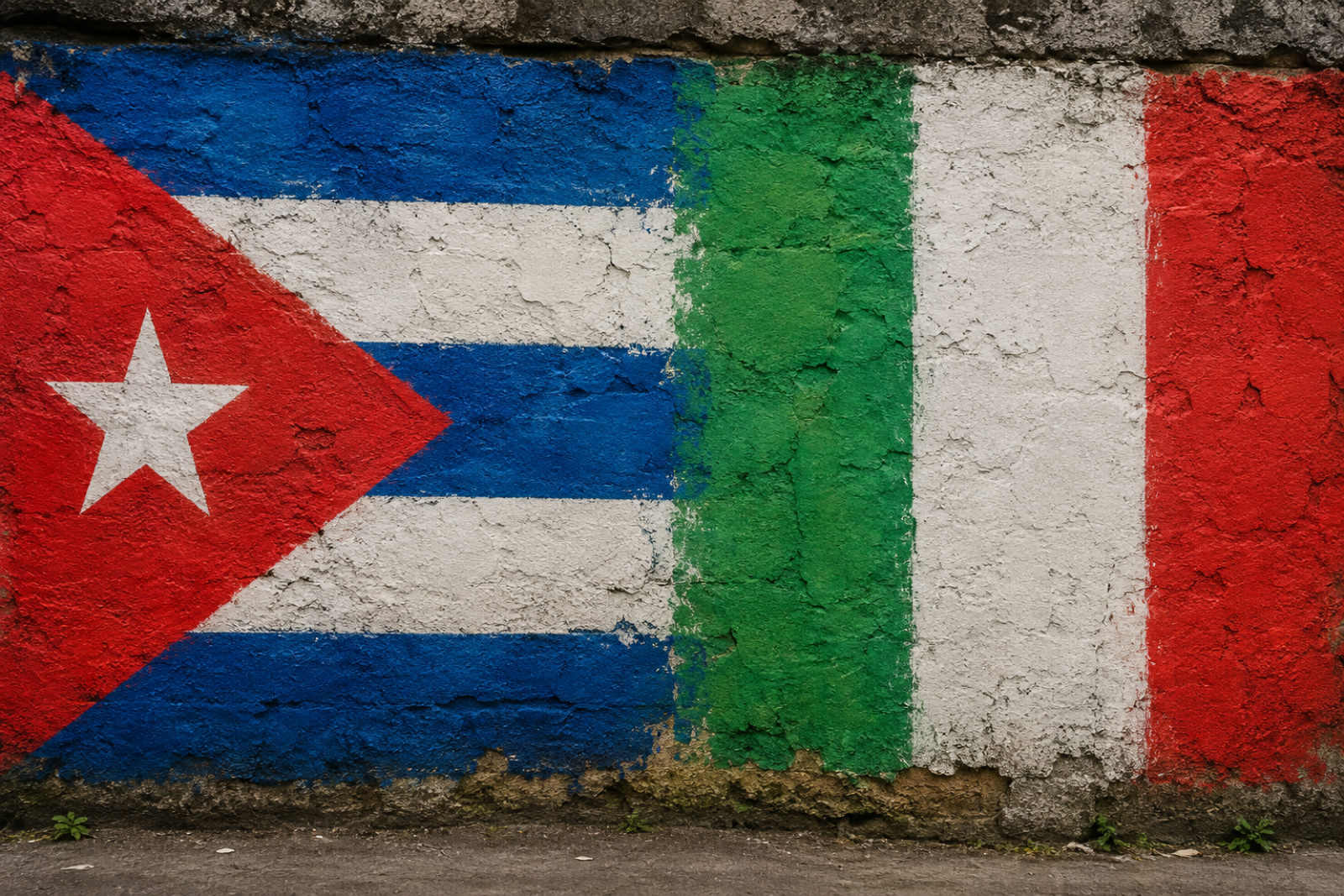
Cover image created with ChatGPT.
Article 32, paragraph 1 of the Constitution of the Italian Republic states that: health is a fundamental and collective right; the Republic guarantees access to care; the right to health cannot be transferred or ceded: it is inalienable and inalienable; it is a universal right, belonging to all, without discrimination; it is a subjective right of the individual; it is irreducible and essential. It took thirty years and the participation and willingness of all political parties to draft such a revolutionary law as Law No. 833 of 1978 implementing Article 32.
Article 72 of the Constitution of the Republic of Cuba states that: Public health is a right of all people, and it is the State's responsibility to guarantee free access and quality care, protection, and rehabilitation services. To implement this right, the State establishes a health system accessible to the population at all levels and develops prevention and education programs, to which society and families contribute.
Similar texts define and recognize the universal right to health.
With similar determination, both Italy and Cuba decided in 1978, along with 132 other states and 67 international agencies, to adopt the landmark Alma-Ata Declaration on Primary Health Care as a framework for achieving "health for all" by the year 2000. This commitment combined health with human rights and social justice to make essential health services universally accessible. This commitment was political, social, and professional, individual and institutional, in the areas of health and healthcare, social and healthcare, and well-being and improved well-being (welfare) in living and working environments. This commitment was demanding and ambitious, like all those aimed at guaranteeing human rights, the rights of a community and not just those of individuals. Both Italy and Cuba had undertaken a similar path long before, because health is also a project, a goal, an objective to be achieved and maintained, especially if it is to be for everyone. Health and healthcare are distinct concepts, but clearly interconnected: you cannot guarantee complete well-being unless you organize an adequate and appropriate system (a Service) to protect it.
Cuba
The development of a profound social revolution and political will led, starting in 1959 with the overthrow of the Fulgencio Batista regime and the proclamation of the Republic, to healthcare being based primarily on a primary care approach oriented towards equity. However, demographic changes and shifts in the population's morbidity and mortality patterns, the rise of its cultural level, the emergence of medical thought oriented towards a clinical, epidemiological, and social approach, and the need to achieve qualitative improvements in the population's health, required, for Cuba too, changes to the healthcare system to achieve and guarantee the right to universal healthcare. Thus, the family medicine model was launched, aimed at meeting the needs of the population's epidemiological profile and level of satisfaction.
120 Family Doctor Plan
On January 4, 1984, this model, also known as the 120 Family Doctor Plan (Plan del Médico de las 120 Familias), Family Doctor, or Community Doctor, was launched at the Lawton Polyclinic in the municipality of 10 de Octubre in Havana, the country's capital. The program began with ten pairs of doctors and nurses, who formed the first ten primary health teams (ESCs) working in family doctor clinics (MFCs). Each of these teams provided comprehensive medical care to an average of 600–700 people, approximately 120 families, hence the initial name. The program's primary objective was to improve the population's health through comprehensive interventions targeting the individual, family, community, and environment, in close collaboration with the community. Today there are 15,000 ESCs, which care for 140-180 families, without exceeding 1,500 patients. They are distributed throughout the country and constitute the backbone of the Cuban healthcare system.
Within these facilities, healthcare workers are responsible for the population's primary medical care, particularly those most vulnerable, such as children, the elderly, and pregnant women. Special emphasis is placed on preventive medicine, hygiene, nutrition, sports, and the management of risk factors. Prevention is the cornerstone of the Cuban healthcare system. Home care is provided by the ESC in the patient's home when the patient requires daily assessment, rest, bed rest, or isolation, but does not require hospitalization. The ESC manages its patients' medical records according to an organized, continuous, and dynamic process that allows for planned and scheduled assessments and interventions with minimum frequency based on the patient's group (presumably healthy, at-risk, sick, and disabled).
The second level of care is represented by the 436 community outpatient clinics. Each outpatient clinic serves a population of 30,000–60,000 people and collaborates closely with 20–40 ESCs. An average outpatient clinic offers around twenty different services: rehabilitation, radiology, ultrasound, endoscopy, emergency room, traumatology, clinical analysis laboratory, family planning, thrombolysis, medical and dental emergency room, maternal and child care, vaccinations and diabetes care, geriatrics, dermatology, psychiatry, cardiology, general medicine and internal medicine, pediatrics, obstetrics and gynecology.
To ensure continuity of care for the population, the Integrated Family Care Program, as its name suggests, involves the evaluation and development of actions between the members of the ESCs and the core working group of the outpatient clinic and the referral hospitals.
To achieve this goal, it was essential to have professionals trained to carry out the new missions of the service delivery system. This led to improved human resources training through the implementation of a new medical school curriculum, based on the identification of population health problems and with a graduate program focused on primary healthcare, and the development of a new specialty, integrated general medicine. The first specialists in this discipline graduated in 1987.
Italy
After 50 years, Law No. 833, which governs the entire and complex National Health Service, requires extensive updating. Once again, interventions are expected that are late, unsupported, partial, and sectoral. The last two are Ministerial Decrees 70/2015 and 77/2022. The former defines the qualitative, structural, technological, and quantitative standards of hospital care. The latter defines the models and standards for the development of community care within the National Health Service and is closely linked to the National Recovery and Resilience Plan (NRRP).
The implementation of both decrees is delayed due to staff shortages, the previous history of regional governance, uncertainties and critical issues in general practice, and the overgrowth and fragmentation of the hospital network. The application of Ministerial Decree 77 must necessarily include the application of Ministerial Decree 70, and therefore either the delays already accumulated are resolved or they will only increase, as is happening.
Community Homes
One of the essential elements of the 2022 reform implementation plan is the Community Home, defined as "the physical and easily identifiable place where citizens can access healthcare, social and health care needs, and the organizational model of local care for the target population." But exactly what type of Home is needed, for what needs, for which community, with what functions... this is unclear.
The decree has identified organizational standards for a Community Home hub for every 40,000-50,000 inhabitants, with 7-11 nurses, 1 social worker, and 5-8 support staff (social and health, administrative). The services provided in the Community Home are divided into mandatory, optional, and recommended. The main and essential services are primary care services provided by multi-professional teams (general practitioners, pediatricians, outpatient specialists, community nurses, etc).
The number of Community Homes has been set at 1,038, rising from 1,715 following an agreement with the EU. By June 30, 2026, funds from the National Recovery and Resilience Plan (NRRP) have been used for new facilities or the conversion of existing ones (such as hospitals, outpatient clinics, and local health authorities). Since the end of the NRRP, there has been a frenzy of activity to place plaques and signs at the entrances of existing outpatient clinics, including those in hospital areas, labeled "Community Home." The prevailing belief is that Community Homes are actually Community Homes, meaning that the standard prevails (the "of" instead of the "of"), and that the primary common good to be pursued is healthcare, not health. Therefore, Community Homes are simply outpatient clinics, Health Homes, and not always efficiently.
Italy and Cuba
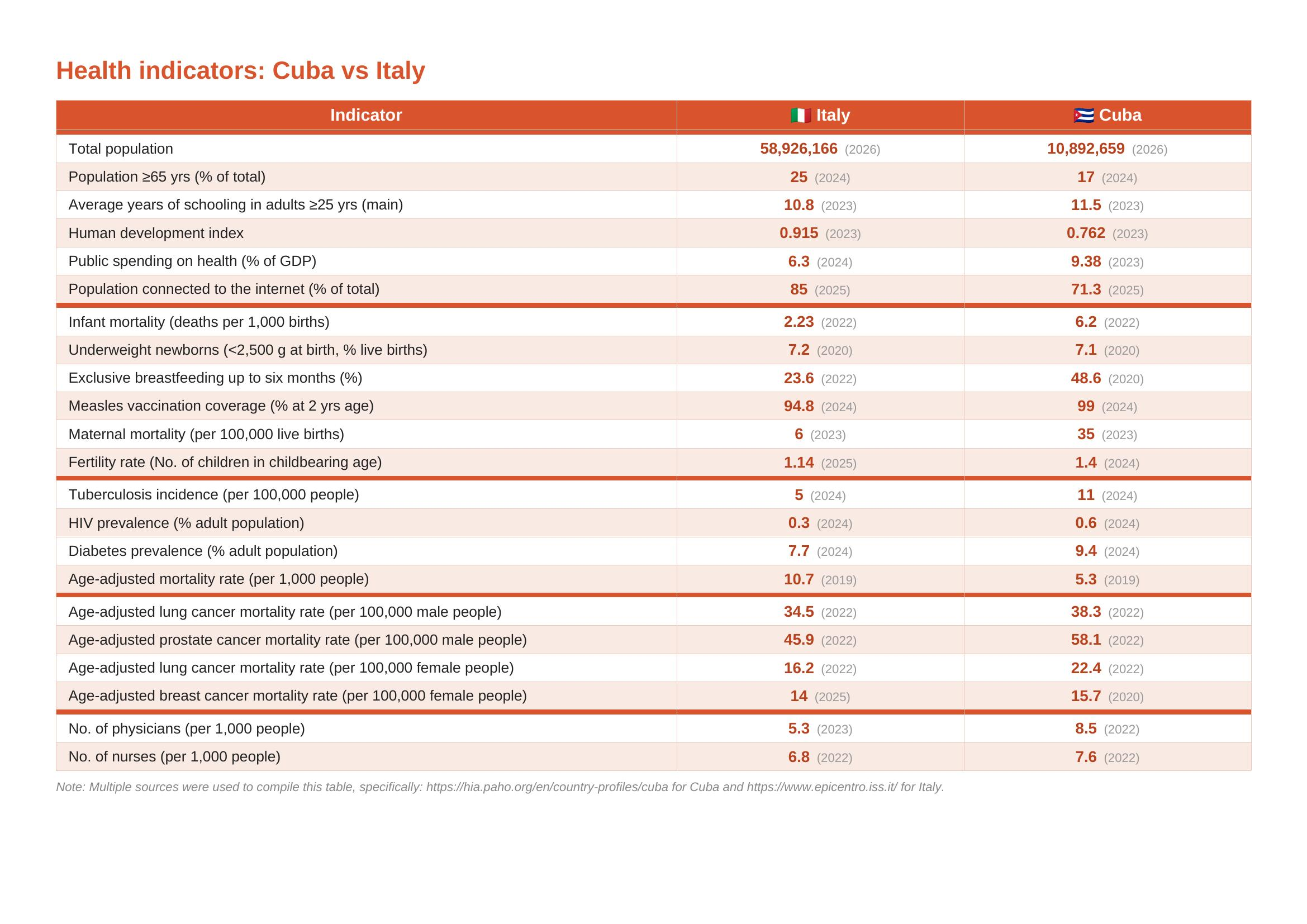
The health services of the two countries have much in common. The principles and objectives are identical. Governance is, of course, different, given the resources available and the policies implemented and also endured, particularly the blockade imposed on Cuba by then-US President John Fitzgerald Kennedy on February 7, 1962, with "Proclamation 3447."The tightening of the economic embargo during the first Trump administration, Covid-19, and, since January 2026, the near-total blockade of energy supplies resulting from the Venezuelan crisis have deprived the island of fuel, electricity, and access to international markets for drugs and medical devices. The collapse of a health system is not just a local tragedy: it is a violation of fundamental human rights that requires a response from the global community, regardless of any political considerations regarding the Cuban regime.
The commonality of Article 32 of the Italian Constitution and Article 72 of the Cuban Constitution, the focus and priority on primary care, the identification and designation of the community as the basic space and collective for social and health interventions, the Plan del Médico de las 120 Families and the Community Houses as models of intervention, the Cuban primary health care teams and the Italian multi-professional teams indicate that greater collaboration, sharing, and solidarity between the two countries would be beneficial to both peoples.
Italy also owes Cuba its support during the COVID-19 pandemic and the ongoing work of Cuban doctors in the Calabria Region to ensure the functioning of the local health service.
The organization of health services to ensure the right to healthcare is a powerful indicator of a country's progress or decline, and the level achieved by Italy and Cuba is similar. The fact that a quality health service like Cuba's is forced to fail to fulfill its functions should be of concern to anyone who cares about the universal right to healthcare.