
fbpx October 2024 | Science in the net

October 2024

Discovered a New Carbon-Carbon Chemical Bond
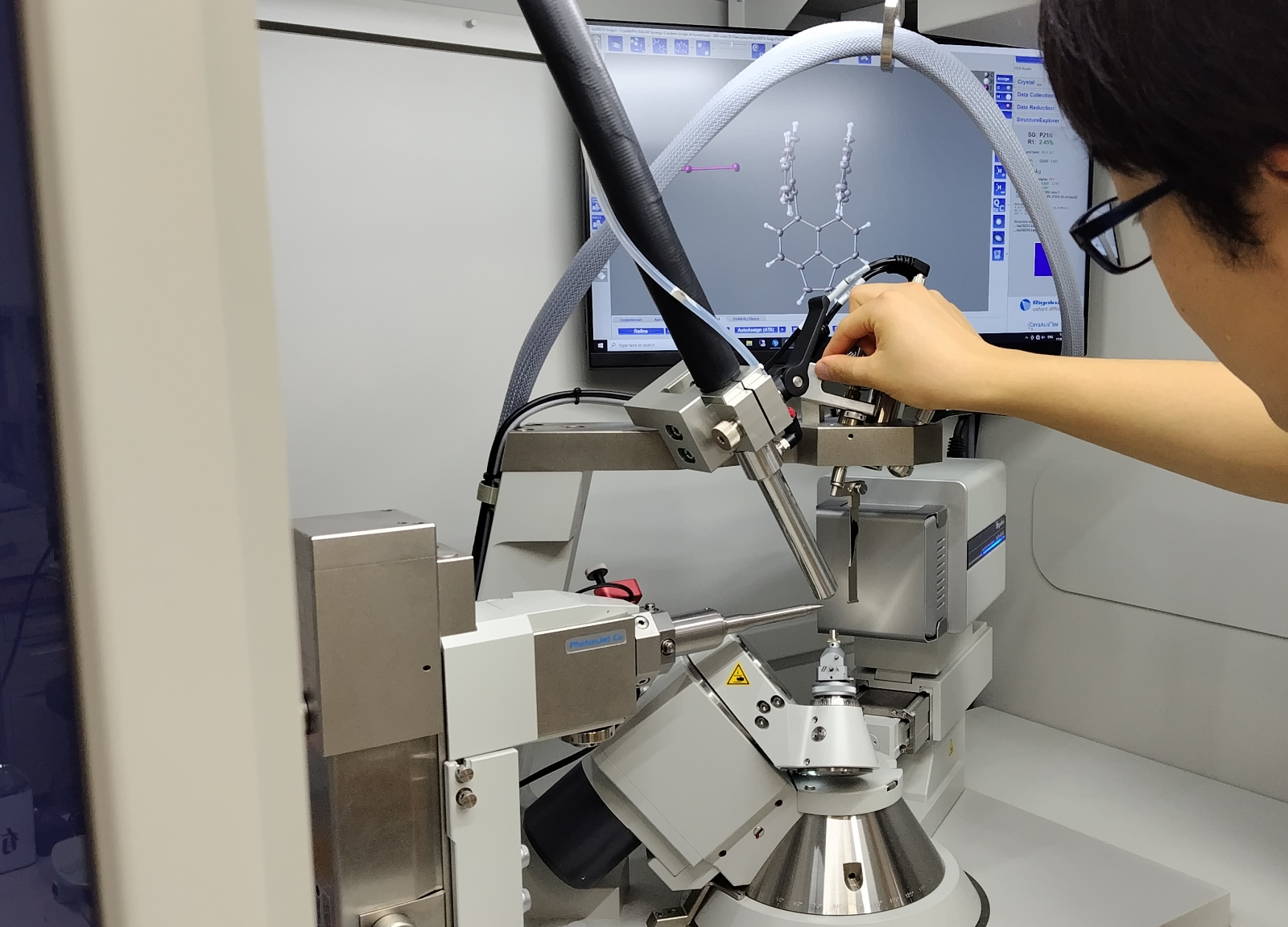
A group of researchers from Hokkaido University has provided the first experimental evidence of the existence of a new type of chemical bond: the single-electron covalent bond, theorized by Linus Pauling in 1931 but never verified until now. Using derivatives of hexaarylethane (HPE), the scientists were able to stabilize this unusual bond between two carbon atoms and study it with spectroscopic techniques and X-ray diffraction. This discovery opens new perspectives in understanding bond chemistry and could lead to the development of new materials with innovative applications.

In the cover image: study of the sigma bond with X-ray diffraction. Credits: Yusuke Ishigaki

After nearly a year of review, on September 25, a study was published in Nature that has sparked a lot of discussion, especially among chemists. A group of researchers from Hokkaido University synthesized a molecule that experimentally demonstrated the existence of a new type of chemical bond, something that does not happen very often.
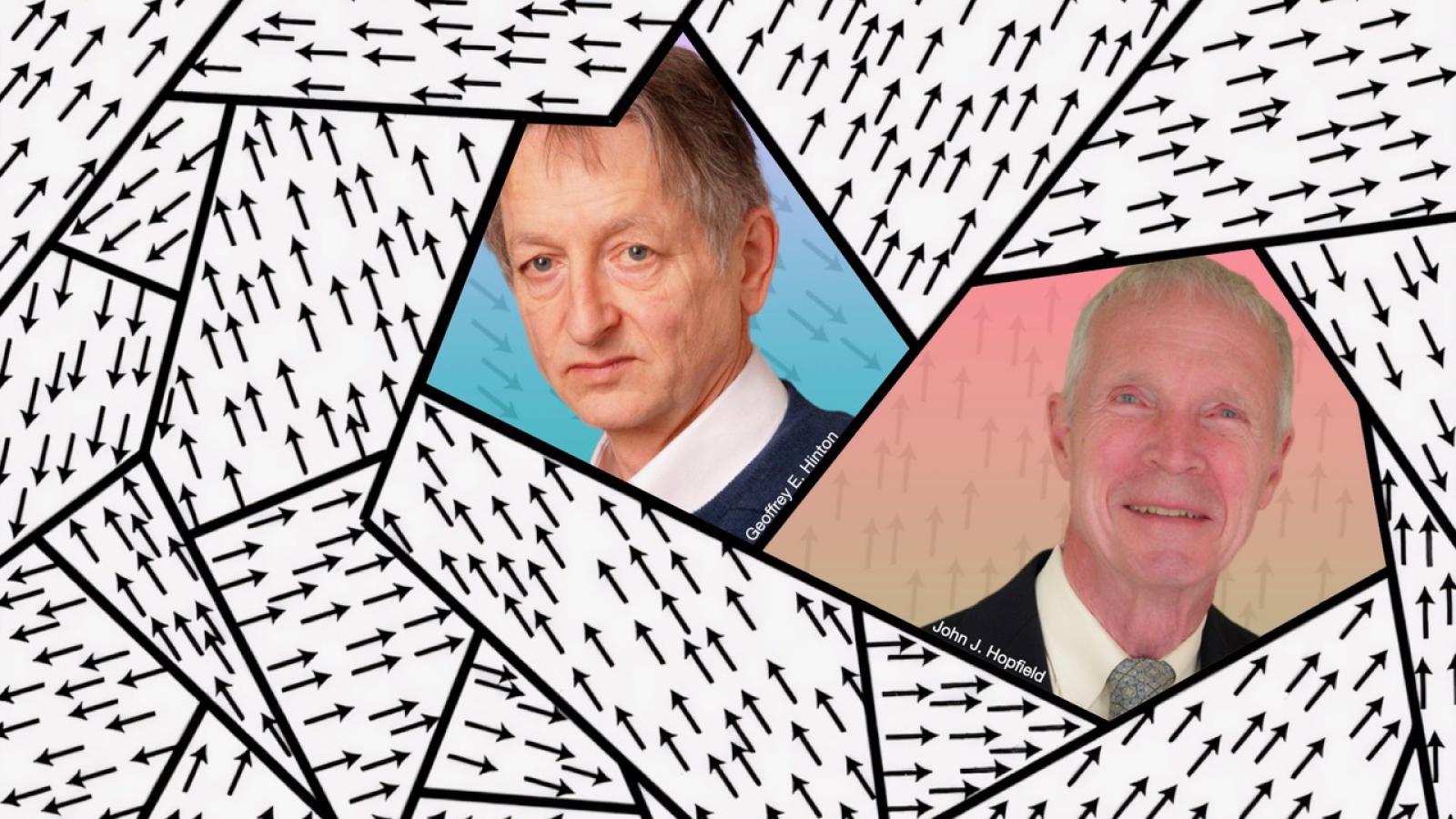
Why have neural networks won the Nobel Prizes in Physics and Chemistry?

This year, Artificial Intelligence played a leading role in the Nobel Prizes for Physics and Chemistry. More specifically, it would be better to say machine learning and neural networks, thanks to whose development we now have systems ranging from image recognition to generative AI like Chat-GPT. In this article, Chiara Sabelli tells the story of the research that led physicist and biologist John J. Hopfield and computer scientist and neuroscientist Geoffrey Hinton to lay the foundations of current machine learning.

Image modified from the article "Biohybrid and Bioinspired Magnetic Microswimmers" https://onlinelibrary.wiley.com/doi/epdf/10.1002/smll.201704374

The 2024 Nobel Prize in Physics was awarded to John J. Hopfield, an American physicist and biologist from Princeton University, and to Geoffrey Hinton, a British computer scientist and neuroscientist from the University of Toronto, for utilizing tools from statistical physics in the development of methods underlying today's powerful machine learning technologies.

Why science cannot prove the existence of God

The demonstration of God's existence on scientific and mathematical grounds is a topic that, after captivating thinkers like Anselm and Gödel, reappears in the recent book by Bolloré and Bonnassies. However, the book makes a completely inadequate use of science and falls into the logical error common to all arguments in support of so-called "intelligent design."

In the image: detail from *The Creation of Adam* by Michelangelo. Credits: Wikimedia Commons. License: public domain

The demonstration of God's existence on rational grounds is a subject tackled by intellectual giants, from Anselm of Canterbury to Gödel, including Thomas Aquinas, Descartes, Leibniz, and Kant. However, as is well known, these arguments are not conclusive. It is not surprising, then, that this old problem, evidently poorly posed, periodically resurfaces.