
Le previsioni sul riscaldamento globale sono state finora troppo ottimistiche. Lo ha dichiarato Chris Field, dell'Intergovernmental Panel on Climate Change, premio Nobel 2007 insieme con Al Gore. Il riscaldamento stesso infatti può innescare un circolo vizioso favorendo a sua volta la liberazione di anidride carbonica nell'atmosfera. Prima di tutto a partire dai grandi incendi che si potrebbero verificare per autocombustione nelle foreste tropicali, sommandosi ai danni della deforestazione. Il cambiamento nei venti sull'oceano che circonda l'Antartide potrebbero inoltre far risalire in superficie l'acqua più ricca di CO2 che si trova sul fondo, rilasciandola a contatto con l'atmosfera. Ma l'effetto più clamoroso potrebbe venire dallo scioglimento del permafrost della tundra artica, con la decomposizione del materiale organico intrappolato lì sotto da decine di migliaia di anni. Un serbatoio che si calcola conterrebbe fino a 1.000 miliardi di tonnellate di carbonio.
E' scientifico essere pessimisti
prossimo articolo
Why have neural networks won the Nobel Prizes in Physics and Chemistry?
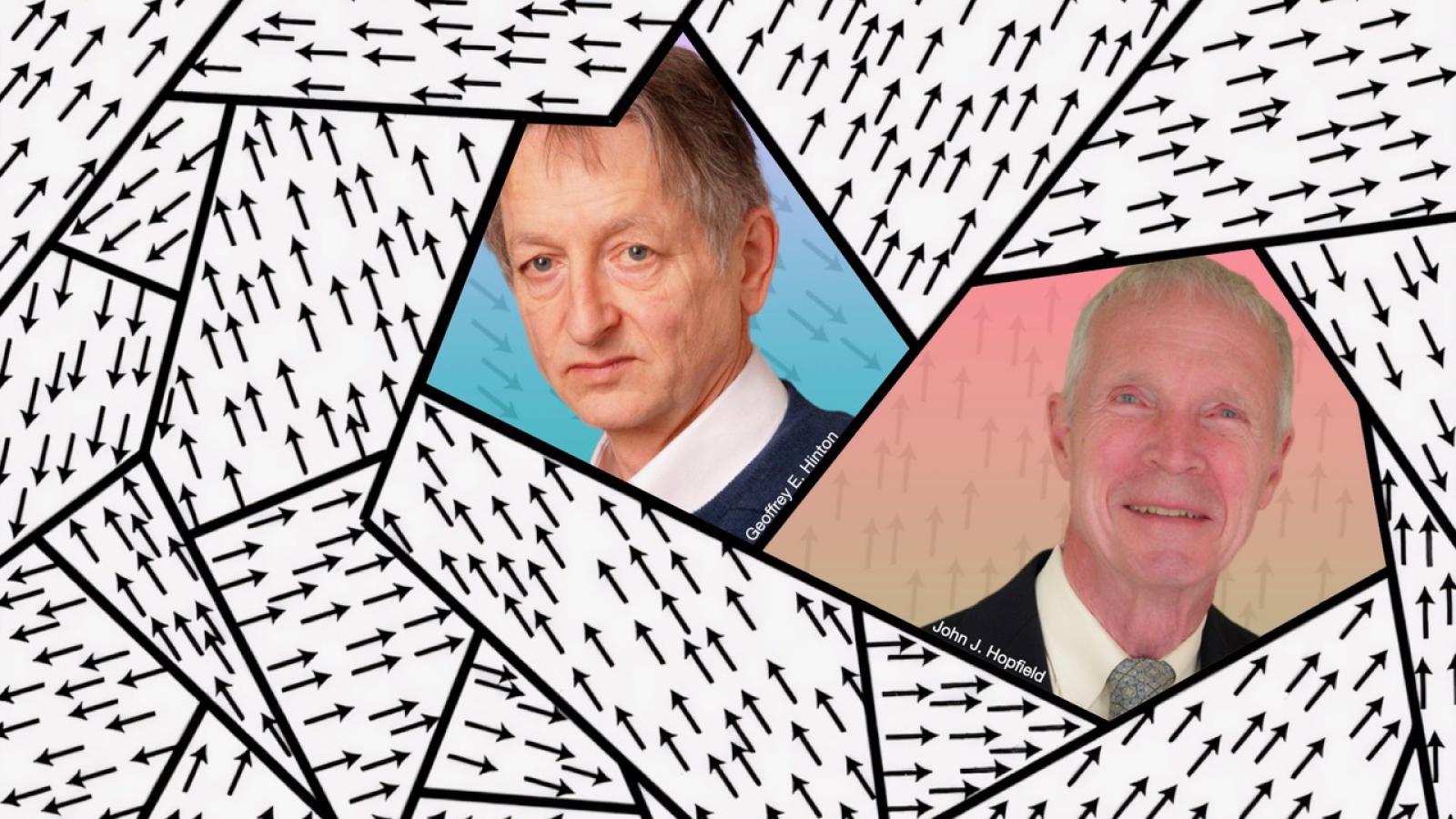
This year, Artificial Intelligence played a leading role in the Nobel Prizes for Physics and Chemistry. More specifically, it would be better to say machine learning and neural networks, thanks to whose development we now have systems ranging from image recognition to generative AI like Chat-GPT. In this article, Chiara Sabelli tells the story of the research that led physicist and biologist John J. Hopfield and computer scientist and neuroscientist Geoffrey Hinton to lay the foundations of current machine learning.
Image modified from the article "Biohybrid and Bioinspired Magnetic Microswimmers" https://onlinelibrary.wiley.com/doi/epdf/10.1002/smll.201704374
The 2024 Nobel Prize in Physics was awarded to John J. Hopfield, an American physicist and biologist from Princeton University, and to Geoffrey Hinton, a British computer scientist and neuroscientist from the University of Toronto, for utilizing tools from statistical physics in the development of methods underlying today's powerful machine learning technologies.