
fbpx Capodanno sul tetto | Page 9 | Science in the net

Capodanno sul tetto

Read time: 1 min

Dopo quella di Natale, i ricercatori dell’ISPRA, l´Istituto superiore per la protezione e la ricerca ambientale, -- salvo novità dell’ultim’ora -- passeranno sul tetto dell'edificio di via di Casalotti 300, a Roma, anche la notte di San Silvestro. In attesa di ottenere un incontro col ministro dell’ambiente Stefania Prestigiacomo, sono ormai quasi quaranta giorni che i trenta studiosi portano avanti la loro protesta, sfidando il freddo con due tende, sacchi a pelo e fornelli a gas. Proprio oggi scadono i contratti di circa 200 studiosi: nell’anno che si sta chiudendo ne sono già stati mandati a casa 250 e le prospettive per quello che si apre non sono rosee. Si parla infatti di un altro 50 per cento di tagli. A meno, appunto, di un botto a sorpresa alle soglie di Capodanno.

Intanto domani 1 gennaio, alle ore 16, partirà da piazza Ormea una fiaccolata a sostegno dei ricercatori, che attraverserà via Casalotti e si concluderà davanti ai cancelli dell´ente.
 La Repubblica, Roma


Autori: 
Sezioni: 
Proteste

prossimo articolo

Why have neural networks won the Nobel Prizes in Physics and Chemistry?

This year, Artificial Intelligence played a leading role in the Nobel Prizes for Physics and Chemistry. More specifically, it would be better to say machine learning and neural networks, thanks to whose development we now have systems ranging from image recognition to generative AI like Chat-GPT. In this article, Chiara Sabelli tells the story of the research that led physicist and biologist John J. Hopfield and computer scientist and neuroscientist Geoffrey Hinton to lay the foundations of current machine learning.

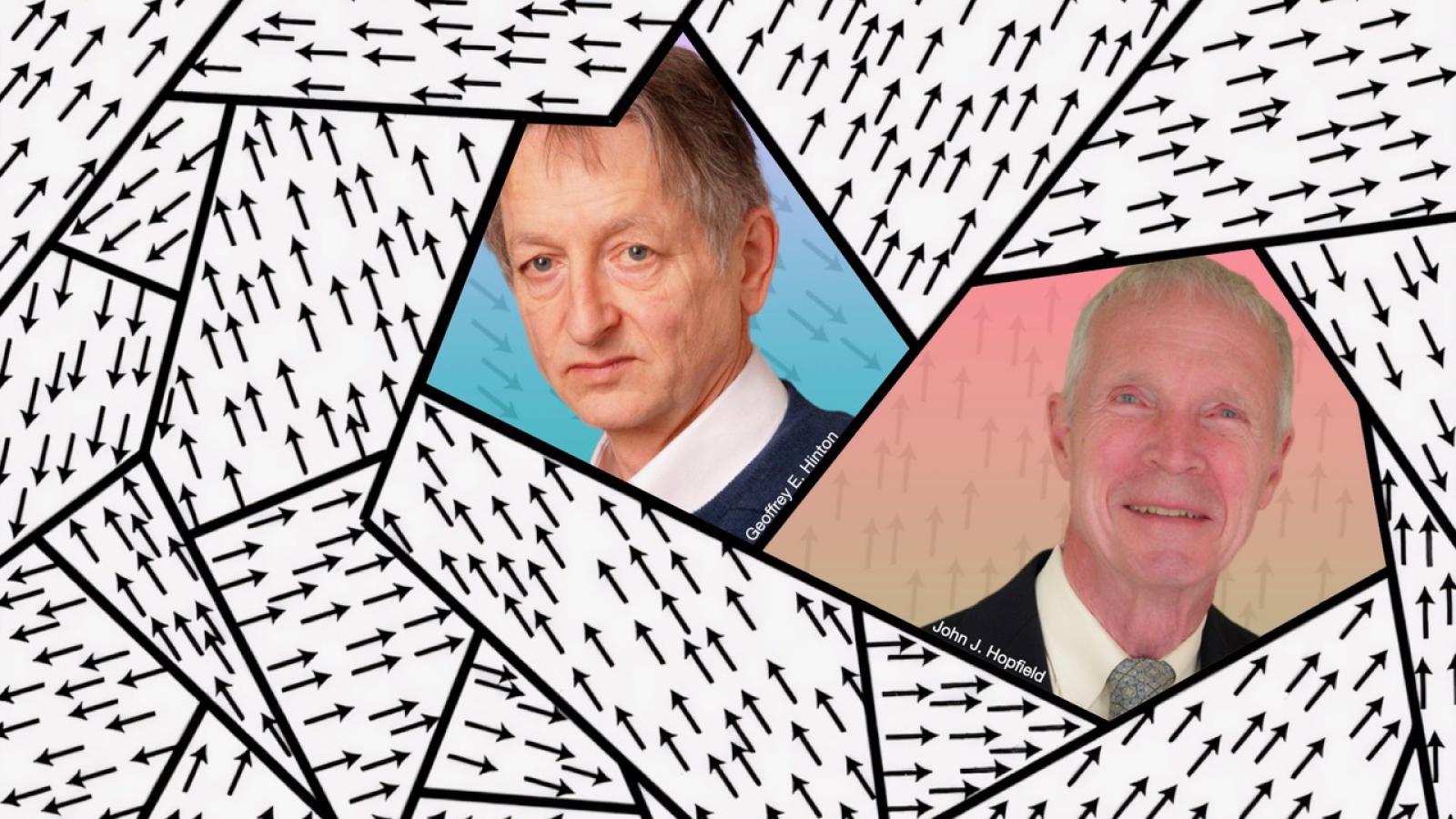
Image modified from the article "Biohybrid and Bioinspired Magnetic Microswimmers" https://onlinelibrary.wiley.com/doi/epdf/10.1002/smll.201704374

The 2024 Nobel Prize in Physics was awarded to John J. Hopfield, an American physicist and biologist from Princeton University, and to Geoffrey Hinton, a British computer scientist and neuroscientist from the University of Toronto, for utilizing tools from statistical physics in the development of methods underlying today's powerful machine learning technologies.